We continue to have a teaching shortage in Queensland – see the stats below… And I’ve got some big suggestions for how the Queensland Department of Education can encourage and enable people to become teachers.
Specifically, people like me, who already have degrees and decades of work experience. These are career-changers who want to become mature-aged student teachers.
So I’m going to talk about how long postgraduate students need to study at university before they get into Queensland classrooms.
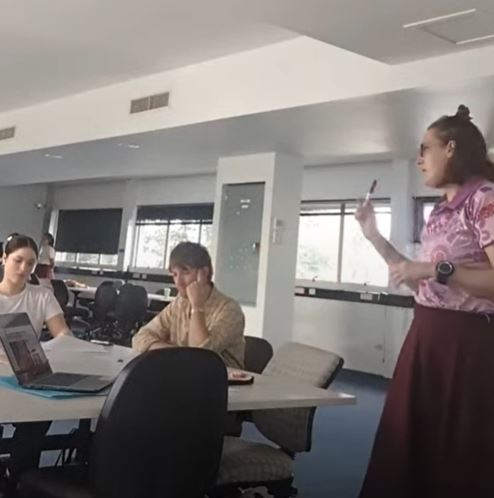
For full disclosure, I recently submitted a written piece similar to this as a policy critique for assessment, as part of my Master of Teaching (Secondary). And I got a surprisingly high mark, given that I’m criticising the fundamental structure of the degree!
How long does it take to become a teacher in Queensland?
Summarise…
Standards 3.7 and 4.1 (“the policy”) in the Accreditation of initial teacher education programs in Australia: Standards and Procedures (Australian Institute for Teaching and School Leadership Limited (AITSL), 2015, pp. 14–15) requires 2 years of full-time study (EFTSL) for postgraduate initial teacher education (ITE). This affects teacher registration (Queensland College of Teachers (QCT), 2024c), deterring professionals (“career-changers”) (Joseph, 2022). The policy aimed to improve teaching quality, through “rigorous and nationally consistent” accreditation and the Australian Professional Standards for Teachers (APSTs) (AITSL, 2015, p. 3). The policy uses 3-step governance of career-changers: individuation, differentiation, and normalisation (Tait et al., 2023, pp. 116–117).
Section 2. Literature Review
1. Tait, G., Gillett-Swan, J., OBrien, P., Spina, N., Cambridge University Press & Assessment., & Cambridge University Press & Assessment. (2023). Making sense of mass education (Fourth edition.). Cambridge University Press.
Review
Chapter 5: Governance explains how mass schooling transformed teaching, through neoliberal governance “at a distance” (Tait et al., 2023, p. 116). Governance, the “conduct of conduct”, involves individuation, separating and measuring individuals; differentiation, managing groups by classification; and normalisation, setting enforceable norms (ibid., p. 117). Examples provided include Australia’s F-10 curriculum (ACARA, 2024), Queensland’s senior curriculum (QCAA, 2024), and the APSTs (AITSL, 2024b) – learning sequences that are structured, time-boxed, and assessed (Tait et al., 2023, p. 117). Chapter 7 examines the APSTs as neoliberal social governance that enables professional freedom and marketisation.
Explanation
Viewed using this literature, the policy problematises teachers (ibid., p. 161) as needing “improvement” and “development”, prescribing ITE structure as a solution (AITSL, 2015, pp. 3, 14–18). Australia’s compulsory education system demonstrates governance in a disciplinary society, using time management to control students’ activities and time (Tait et al., 2023, p. 117, quoting Foucault, 1977). Likewise, AITSL’s policy normalises a 2-year EFTSL for postgraduate ITE accreditation, imposing disciplinary time management over career-changers (ibid., p. 163).
The policy makes individuals train to meet standards (individuation), differentiating between older and newer cohorts (ibid., p. 116). However, Chapter 7 says even socially progressive standards encourage strict compliance (p. 157), and this policy suppresses differentiation by not reducing EFTSL for career-changers with relevant expertise. Although universities can shorten ITE length through recognised prior learning (RPL), this is rare (QTC, 2024c; QUT, 2024).
Historically, teachers used monitorial methods with minimal regulation (Tait et al., 2023, p. 105), while today’s teachers are extensively educated, assessed in academics and practical experience (“PEX”), and heavily-regulated (ibid., citing Stevenson, 2017). As social calculation turns schools into data farms for differentiating population groups (ibid., p. 110), we track ITE applicants, students, and teachers (AITSL, 2024a). With COVID-19, came new forms of governance through digital surveillance and measurement (Tait et al., 2023, p. 118), while enabling marketisation of online options to increase enrolments.
2. Joseph, R. (2022). A shorter path to teaching: Exploring one-year postgraduate qualifications. Centre for Independent Studies. https://www.cis.org.au/publication/a-shorter-path-to-teaching-exploring-one-year-postgraduate-qualifications/
Review
This literature critiqued the Australian policy of 2-year EFTSL for career-changers, contending that historic ITE changes caused systemic teacher shortages and out-of-field teaching (Joseph, 2022). They discussed disincentives for career-changers, including doubled fees, time, and debts. They presented data proving falling postgraduate completion rates, consistent teaching quality, and the cost-benefit equation for career-changers. They argued 1-year EFTSL ITE programs would be low-risk and comply with the APSTs, the Literacy and Numeracy Test for Initial Teacher Education (LANTITE), Teaching Performance Assessments (TPA), minimum ATARs, ongoing professional development, and legislated school funding. Their proposed 1-year EFTSL Graduate Diploma in Teaching utilises statutory discretion for Teacher Regulatory Authorities, distinguishing it from the 2-year Master, accelerated 1.5-year Master, and the historic Diploma of Education (“DipEd”).
Explanation
This literature problematised ITE length by highlighting the policy’s unintended effects and lack of intended results (Joseph, 2022). Graphs that visualised increasing teacher attrition rates and decreasing ITE enrolments created persuasive pathos (emotional response) (Morin & Renvoise, 2018). Quotes from government and industry bodies supporting 1-year EFTSL pathways added persuasive ethos (credibility) (Manzoor et al., 2024). They explained the policy failed to address well-documented systemic issues in Australian education, such as funding and workload, which are primary drivers of teachers leaving the profession (“attrition”) (QCT, 2013). This highlights the myth, stemming from marketisation and individuation, that teaching success is an individual’s personal responsibility (Tait et al., 2023, p. 139).
This literature discussed the policy being informed by the Queensland Government’s 2009 Masters review and the Commonwealth Government’s 2014 “TEMAG” review (Joseph, 2022). These reviews exemplified governance by mass schooling: new application criteria and ITE assessments (individuation and normalisation by measurement); structured PEX (governing time and space); and workforce planning (cohort differentiation) (Craven et al, 2014; QCT, 2021a). The literature argues the detailed rationale for these changes was “not well-documented” and provided inadequate differentiation for career-changers’ wide variety of skills and expertise, leading to STEM teacher shortages (Joseph, 2022). This subtly critiqued AITL’s attempts to normalise the ITE student as a standardised persona.
Section 3. Research Methodology
Before applying for postgraduate ITE, this naive author was unaware that workforce experience would not reduce the 2-year EFTSL. Family and friends had completed a 1-year DipEd or 3-year Bachelor of Education, with PEX beginning immediately. Searching the keywords “becoming a teacher Queensland” and “why no more DipEd” uncovered gradual shifts in ITE structure, length, and regulation (QCT, 2021b; Stevenson, 2017). The accelerated 1.5-year option, condensing the 2-year EFTSL workload, appeared even more challenging (Curtin University, 2024; ECU, 2024; Flinders University, 2024; SCU, 2024; UNSW Sydney, 2024; UWA, 2024). Literature recommending 1-year pathways (Joseph, 2022) led to scouring government databases for positive and negative effects of career-changer policies, then applying the 3-step governance framework described by Tait et al. (2023); see Section 4.
Section 4. Policy Analysis and Critique
The policy (Standards 3.7, 4.1) governs career-changers by standardising 2-year EFTSL ITE programs (AITSL, 2015, pp. 14–15). Problematising teacher quality would be admirable, if quality was lacking (Joseph, 2022); instead, Queensland experienced unintended effects.
Policy development
In the 1970s and 1980s, ITE moved from state-run teachers’ colleges under the Board of Teacher Education (QCT, 2021b), with PEX beginning immediately (Sato & Austin, 2024), into Centres of Advanced Education (CAE) including Kelvin Grove (now QUT KG) (Anderson, 1981). By the 1990s, teachers had to provide “quasi-legal levels” of qualifications (Tait et al., 2023, p. 163). Postgraduates preferred the 1-year “DipEd” (86%) over the 2-year Master of Teaching (14%) (QCT, 2021b), but the government phased out the DipEd from 2014. Government attempts to reintroduce the DipEd in 2022 were unsuccessful (Joseph, 2022; QCT, 2021a). Western Australia announced a DipEd (Tetlow, 2023), but this is an accelerated 2-year EFTSL (Curtin University, 2024; Edith Cowan University, 2024).
These changes reflect increasing marketisation, with universities competing for enrolments, states/territories competing through NAPLAN and MySchool (Tait et al., 2023, Chapter 7), and ITE students competing academically for longer. Career-changers are governed by (Tait et al., 2023, p. 116): individuation measuring and governing their conduct individually; differentiation where newer cohorts study for longer (QCT, 2024c); and normalisation by completing accredited ITE programs (QCT, 2024c) and evidencing AITSL’s Graduate standard (AITSL, 2024b). Permission to teach (PTT) could allow schools to hire unregistered professionals (QCT, 2023), but this has been rare (Ruttiman, 2024).
Intended effects
Although longer ITE aimed to improve teaching quality, no correlation was proven (NSW Productivity Commission, 2023, pp. 8, 61). More than 60,000 Australian teachers hold a DipEd – 29% of secondary teachers and 12% of primary teachers – without proven inferiority (Joseph, 2022). The vast majority of empirical evidence in Australia and internationally, including randomised controlled trials and longitudinal studies, found little to no relationship between teacher qualifications and student outcomes (NSW Productivity Commission, 2023; Fahey, 2022). Instead, additional years of on-the-job teaching experience improves all outcomes (NSW Productivity Commission, 2023). Similarly, teacher attrition is primarily driven by insufficient early-career mentorship, not insufficient ITE training (QCT, 2013).
Unintended effects
The following research shows worsening teacher shortages and fewer career-changers under the policy.
a) Teacher shortage
Australia boasted better availability of teaching and support staff than other countries until COVID-19 (OECD, 2020; Ross, 2024). In 2020, government modelling predicted shortages of 4,100 teachers by 2025 (Joseph, 2022; Hinchliffe & Rose, 2022). The majority of schools surveyed in 2024 (68%) have up to 11 unfilled teaching positions (Ruttiman, Queensland Teachers’ Union (QTU), 2024), often for several consecutive years (O’Flaherty, 2024). Two in five Mathematics classes are taught out-of-field (40%), much higher than the international average (10%) (Joseph, 2022). Although STEM career-changers want to help society and share their expertise, full-time ITE is incompatible with their life demands (Siostrom et al., 2024; Whiteford et al., 2021).
Shortages may worsen, as 34% of teachers intend to leave the profession before retirement, and 20% intend to leave within 10 years (AITSL, 2022). For teachers under 30 years, more than half are considering leaving (AITSL, 2022), meaning we could potentially lose 70% of teachers (Longmuir et al., 2022). More than 12,000 Queensland teachers and teacher aides quit between 2020 and 2024, but the government only committed to replacing 7,200 (Sato & Austin, 2024; see Figure 2). Queensland’s remaining workforce is also ageing (QCT, 2021a); half of registered teachers are over 45 years (51%) (QCT, 2021a).

Figure 2. Teacher resignations. Source: Sato, K. & Austin, S. (2024). Government data shows more than 12,000 Queensland teaching employees have quit since 2020. ABC Radio Brisbane. https://www.abc.net.au/news/2024-04-09/queensland-parliament-figures-12000-teachers-quit-since-2020/103680968
ITE completion rates have lowered for 8 consecutive postgraduate cohorts (6 undergraduate), while numbers of school students increased (AITSL, 2024a). Career-changer graduations were 75% and increasing in 2012-13, but dropped to 63% by 2019 after the DipEd disappeared (AITSL, 2024a; Joseph, 2022; see Figure 1). Meanwhile, postgraduate graduations in other industries increased (Joseph, 2022).

Figure 1. ITE completions. Source: AITSL. (2024). National Trends: Initial Teacher Education Pipeline (Dec 2024 ed., 2005-2022). Australian Teacher Workforce Data. https://www.aitsl.edu.au/research/australian-teacher-workforce-data/atwd-reports/national-trends-ite-pipeline-dec2024
ITE enrolments fell by 24% from 2017 to 2022 (AITSL, 2024a). In 2022, the National Teacher Workforce Action Plan was introduced to increase university places, Commonwealth scholarships, and employment-based pathways, thereby reducing workloads (Department of Education, 2024b), and a trial increasing allowable LANTITE attempts in 2025 (Department of Education, 2023b). This has not yet made an impact (Department of Education, 2023a).
b) Disincentives for career-changers
Currently, nearly one in four ITE students (24%) are career-changers aged 31 years or older (AITSL, 2024). Despite career-changers being common, with most Australians (57%) staying less than 5 years in a job (ABS, 2024a), fewer career-changers are choosing teaching (Joseph, 2022). The Behavioural Economics Team of the Australian Government (BETA) surveyed 2,000 professionals not currently studying, and 72% of those open to teaching significantly underestimated ITE program length.
EFTSL requirements make career-changers over 30 years old less likely to complete 2-year ITE, accelerated 1.5-year ITE, or the 2-year Turn to Teaching (TTT) program (AITSL, 2024a). Most career-changers surveyed during PEX struggled with “juggling financial, family-related and study demands” (Joseph, 2022). Since the majority of student teachers (74%) are women and non-binary people (AITSL, 2024a), gendered disadvantages include more often being primary carers for children, parents, siblings, and people with disabilities (ABS, 2024b; WGEA, 2021), and impacts from Australia’s 21% gender pay gap (WGEA, 2024).
Career-changers face financial hardship during 2-year ITE (Gardner & Hume, 2024). Cost-benefit analyses uncovered a personal cost of $60,000 per career-changer, with an extra year/s of lost income, extra student debt, and the delay in gaining on-the-job experience (NSW Productivity Commission, 2023). The BETA survey found that 1-year EFTSL ITE is as attractive as a $20,000 pay rise (Joseph, 2022). Authorities recognised ITE length as exacerbating falling completion rates, teacher shortages, and out-of-field teaching in core subjects such as Mathematics and Science (NSW Productivity Commission, 2023).
The TEMAG recommendations for 2-year ITE focussed on successes in Finland’s education workforce, ignoring the enabling factors (Joseph, 2022). Finnish career-changers enjoy financial security, job security, and psychological safety because of free teaching degrees (Darling-Hammond, 2024); 1-year postgraduate ITE; high early-career wages; union-negotiated, 3-year contracts; and higher volumes of teacher aides, special needs teachers, and learning assistants (European Commission, 2024).
Evidence-based recommendations for change
Three major changes to ITE requirements are recommended. First, change AITSL’s policy to create a 1-year EFTSL postgraduate course (not an accelerated 2-year EFTSL), recommended by the NSW Productivity Commission (2023; 2021) and industry bodies such as Catholic Schools NSW (Joseph, 2022). This 1-year EFTSL pathway would reduce further for career-changers with specialised experience, training, or skills (Australian Department of Education, 2022).
Secondly, restructure career-changer ITE into year-long, part-time PEX, as a paid position, with an assigned mentor (AITSL, 2024a; McCollow, 2010), perhaps expanding the Commonwealth Prac Payment starting July 2025 (Department of Education, 2024a). This addresses early-career teachers’ desire for more PEX and prevents financial hardship (Haythorpe, 2023).
Thirdly, fully fund ITE, to eliminate student loan debt for those meeting vital societal needs (Longmuir, 2022; Whiteford, 2021). Teachers’ Union students and teachers ranked cutting Higher Education Loan Payments (HECS-HELP) as the second-highest incentive, after scholarships and higher pay, free teacher housing, and extended Recognition of Remote and Rural Service (RORR) (QTU, 2024).
These changes will improve teacher shortages, while maintaining governance and marketisation.
Section 5. References
Anderson, N. (1981). Kelvin Grove: Forty Years 1942-1981 From Teachers’ College to C.A.E. – A Short History of Transition. Kelvin Grove College of Advanced Education.
Australian Bureau of Statistics. (2024a). Job mobility. ABS. https://www.abs.gov.au/statistics/labour/jobs/job-mobility/latest-release
Australian Bureau of Statistics. (2024b). Disability, Ageing and Carers, Australia: Summary of findings. ABS. https://www.abs.gov.au/statistics/health/disability/disability-ageing-and-carers-australia-summary-findings/latest-release
Australian Curriculum, Assessment and Reporting Authority. (2024). The Australian Curriculum: Version 9.0. https://v9.australiancurriculum.edu.au/
Australian Institute for Teaching and School Leadership Limited (AITSL). (2015). Accreditation of initial teacher education programs in Australia: Standards and Procedures. AITSL, Melbourne. ISBN 978 1 925192 67 4. https://www.aitsl.edu.au/docs/default-source/national-policy-framework/accreditation-of-initial-teacher-education-programs-in-australia.pdf?sfvrsn=e87cff3c_48 (Policy Document)
Australian Institute for Teaching and School Leadership Limited (AITSL). (2022). National Trends: Teacher Workforce. Australian Teacher Workforce Data. https://www.aitsl.edu.au/research/australian-teacher-workforce-data/atwd-reports/national-trends-teacher-workforce
Australian Institute for Teaching and School Leadership Limited (AITSL). (2024a). National Trends: Initial Teacher Education Pipeline (Dec 2024 ed., 2005-2022). Australian Teacher Workforce Data. https://www.aitsl.edu.au/research/australian-teacher-workforce-data/atwd-reports/national-trends-ite-pipeline-dec2024
Australian Institute for Teaching and School Leadership Limited (AITSL). (2024b). Australian professional standards for teachers. https://www.aitsl.edu.au/teach/standards
Craven, G., Beswick, K., Fleming, J., Fletcher, T., Green, M., Jensen, B., & Rickards, F. (2014). Action Now: Classroom ready teachers. Australian Government. https://www.education.gov.au/teaching-and-school-leadership/resources/action-now-classroom-ready-teachers-report-0
Curtin University. (2024). Education: Graduate Diploma. https://www.curtin.edu.au/study/offering/course-pg-graduate-diploma-in-education–gd-educ/
Darling-Hammond, L. (2024). Steady Work: Finland builds a strong teaching and learning system. Big Picture Learning Australia. https://www.bigpicture.org.au/steady-work-finland-builds-strong-teaching-and-learning-system
Department of Education and Training (EdQld). (2010). A Flying Start for Queensland Children — Green Paper. Queensland Government. https://cabinet.qld.gov.au/documents/2010/Feb/Flying%20Start%20for%20Children%20Discussion%20Paper/Attachments/discussion%20paper%20flying%20start.pdf
Department of Education, Australian Government. (2022). Report of the Quality Initial Teacher Teacher Education Review (QITE). https://www.education.gov.au/quality-initial-teacher-education-review
Department of Education, Australian Government. (2023a). Key findings from the 2023 Higher Education Student Statistics. https://www.education.gov.au/higher-education-statistics/student-data/selected-higher-education-statistics-2023-student-data/key-findings-2023-student-data
Department of Education, Australian Government. (2023b). Changes to be trialled for the Literacy and Numeracy Test for Initial Teacher Education (LANTITE). Newsroom. https://www.education.gov.au/newsroom/articles/lantite-trial
Department of Education, Australian Government. (2024a). Commonwealth Prac Payment. https://www.education.gov.au/higher-education/commonwealth-prac-payment
Department of Education, Australian Government. (2024b). National Teacher Workforce Action Plan. https://www.education.gov.au/national-teacher-workforce-action-plan
Department of Education (WA). (2024). Teacher qualifications and registration. Government of Western Australia. https://www.education.wa.edu.au/en/teacher-qualifications-and-registration
Edith Cowan University Australia (ECU). (2023). ECU to offer one year graduate diplomas to help meet demand for Australian teachers. ECU Newsroom. https://www.ecu.edu.au/newsroom/articles/news/ecu-to-offer-one-year-graduate-diplomas-to-help-meet-demand-for-australian-teachers?utm_source=chatgpt.com
European Commission. (2024). Finland: 9. Teachers and education staff. Eurydice. https://eurydice.eacea.ec.europa.eu/national-education-systems/finland/initial-education-teachers-working-early-childhood-and-school
Fahey, G. (2022). Teacher workforce: fiction vs fact. The Centre for Independent Studies. https://www.cis.org.au/wp-content/uploads/2022/03/rr43v2.pdf and/or https://www.cis.org.au/publication/teacher-workforce-fiction-vs-fact/
Flinders University. (2024). Teaching (Secondary). https://www.flinders.edu.au/study/courses/postgraduate-teaching-secondary
Gardner, G., & Hume, J. (2024). Cost of living inquiry: A federal inquiry into the cost of living in Australia has tabled its third and final report on the crisis. Nine News. https://search.informit.org/doi/10.3316/TVNEWS.TSM202411150160
Haythorpe, C. (2023). [Public Quotes as representative of Australian Education Union]. Student teachers should spend more time on practical skills, less time on philosophy of education, panel recommends. The Guardian. https://www.theguardian.com/australia-news/2023/mar/23/students-teachers-should-spend-more-time-on-practical-skills-less-time-on-philosophy-of-education
Hinchliffe, J. & Rose, T. (2022). Queensland to have one of nation’s worst teacher shortages, modelling suggests; Modelling shows a 25% decline in the state’s high school teaching graduates over five years. The Guardian. London, England. https://link.gale.com/apps/doc/A696853531/AONE?u=qut&sid=bookmark-AONE&xid=eb3160e3
Joseph, R. (2022). A shorter path to teaching: Exploring one-year postgraduate qualifications. The Centre for Independent Studies. https://www.cis.org.au/publication/a-shorter-path-to-teaching-exploring-one-year-postgraduate-qualifications/ Accessible through QUT at https://global-factiva-com.eu1.proxy.openathens.net/ha/default.aspx#./!?&_suid=173572320601602700220878116779
Longmuir, F., Gallo Cordoba, B., Phillips, M., Allen, K-A., & Moharami, M. (2022). Australian teachers’ perceptions of their work in 2022. Monash University. https://doi.org/10.26180/21212891
Manzoor, E., Chen, G. H., Lee, D., & Smith, M. D. (2023). Influence via Ethos: On the persuasive power of reputation in deliberation online. Management Science 70(3): pp. 1613–1634, 2024, doi: 10.1287/mnsc.2023.4762. https://pubsonline.informs.org/doi/abs/10.1287/mnsc.2023.4762
McCollow, J. (2010). Does green paper really offer kids a Flying Start? Queensland Teachers’ Union Journal 33(2). https://stacks.qtu.asn.au/collections/queensland-teachers-journal/vol-33-2010/qtj-mar-2010/does-green-paper-really-offer-kids-a-flying-start/
Morin, C., & Renvoise, P. (2018). The Persuasion Code: How neuromarketing can help you persuade anyone, anywhere, anytime. John Wiley & Sons, Incorporated. ISBN 9781119440758 accessible via https://ebookcentral.proquest.com/lib/qut/detail.action?docID=5515192
NSW Productivity Commission. (2023). The economic impacts of longer postgraduate initial teacher education: A cost-benefit analysis. NSW Government. https://www.productivity.nsw.gov.au/sites/default/files/2023-03/20230125_1-the-economic-impacts-of-longer-postgraduate-initial-teacher-education.pdf
NSW Productivity Commission. (2021). White Paper: Rebooting the Economy. https://www.productivity.nsw.gov.au/white-paper
OECD. (2020). PISA 2018 Volume V, Figure V.4.2. Quoted in Fahey, G. (2022). Teacher workforce: fiction vs fact [Book]. The Centre for Independent Studies. https://www.cis.org.au/wp-content/uploads/2022/03/rr43v2.pdf
O’Flaherty, A. (2024). Queensland teacher shortage sees students miss out on electives, class sizes double, says union: Students are missing out on elective subjects and teachers are taking on subjects they are not qualified to teach, because of significant staff shortages at some state schools. ABC Premium News. Australian Broadcasting Corporation. https://www.proquest.com/docview/2921155736
Queensland College of Teachers (QCT). (2013). Attrition of recent Queensland graduate teachers: Report November 2013. Brisbane, Australia. https://cdn.qct.edu.au/pdf/Retention_Research_Report_RP01.pdf
Queensland College of Teachers (QCT). (2021a). Queensland College of Teachers (QCT) 2010–2019. https://www.qct.edu.au/50Years/decade-2010-2019
Queensland College of Teachers (QCT). (2021b). The Board of Teacher Education (BTE) in the early 1980s. https://www.qct.edu.au/50Years/decade-1980
Queensland College of Teachers (QCT). (2023). Permission to teach. https://www.qct.edu.au/registration/other-approval-permission-to-teach
Queensland College of Teachers (QCT). (2024a). Approved or accredited initial teacher education programs. https://www.qct.edu.au/teaching-in-queensland/approved-accredited-teacher-education-programs
Queensland College of Teachers (QCT). (2024b). Accreditation of Initial Teacher Education Programs: Teacher education programs. https://www.qct.edu.au/teaching-in-queensland/accreditation-of-initial-teacher-education-programs
Queensland College of Teachers (QCT). (2024c). Becoming a teacher. https://www.qct.edu.au/teaching-in-queensland/becoming-a-teacher
Queensland Curriculum & Assessment Authority (QCAA). (2024). Senior secondary. https://www.qcaa.qld.edu.au/senior
Queensland Government. (2013). Queensland teachers get a fresh start. The Queensland Cabinet and Ministerial Directory. https://statements.qld.gov.au/statements/72830
Queensland Teachers’ Union (QTU). (2024). Survey reveals true extent of teacher shortage. Queensland Teachers’ Journal 129(3): 13. https://www.qtu.asn.au/qtj1293-survey-reveals-true-extent-teacher-shortage
Queensland University of Technology (QUT). (2024). Advanced standing (credit). https://www.qut.edu.au/study/applying/advanced-standing
Ross, E. (2024). Curriculum, workload and wellbeing: complexities and nuances of workforce crisis. Curriculum Perspectives 44: 551–553. https://doi.org/10.1007/s41297-024-00277-4
Ruttiman, K. (2024). Survey reveals true extent of teacher shortage. Queensland Teachers’ Journal 129(3): 13. https://www.qtu.asn.au/qtj1293-survey-reveals-true-extent-teacher-shortage
Sato, K. & Austin, S. (2024). Government data shows more than 12,000 Queensland teaching employees have quit since 2020. ABC Radio Brisbane. https://www.abc.net.au/news/2024-04-09/queensland-parliament-figures-12000-teachers-quit-since-2020/103680968
Siostrom, E., Mills, R. & Bourke, T. (2024). Understanding the reasons why career changers pursue or pass on a STEM teaching career: a Best–Worst Scaling (BWS) approach. The Australian Educational Researcher. https://doi.org/10.1007/s13384-024-00712-5
Southern Cross University (SCU). (2024). Master of Teaching. https://www.scu.edu.au/study/courses/master-of-teaching-1209001/
Stevenson, H. (2017). The ‘datafication’ of teaching: Can teachers speak back to the numbers? Peabody Journal of Education 92(4): 537–557.
Tait, G., Gillett-Swan, J., OBrien, P., Spina, N., Cambridge University Press & Assessment., & Cambridge University Press & Assessment. (2023). Making sense of mass education (Fourth edition.). Cambridge University Press. (Unit Literature)
Tetlow, M. (2023). WA universities bring back the DipEd, offering a faster, cheaper pathway to teaching careers. ABC Radio Perth: ABC Perth. https://www.abc.net.au/listen/programs/wa-afternoons/curtin-ecu-bring-back-dip-ed/103187412
UNSW Sydney. (2024). Master of Teaching (Secondary). https://www.unsw.edu.au/study/postgraduate/master-of-teaching-secondary
University of Western Australia (UWA). (2024). Postgraduate: Graduate Diploma in Educational Studies. https://www.uwa.edu.au/study/courses/graduate-diploma-in-educational-studies
Vick, M. (2001). More than just classroom teaching: Teachers and teachers’ work in a changing society. In Sociology of education: Possibilities and practices, ed. J. Allen. Katoomba: Social Science Press, 65–87.
Whiteford, C., Kelly, N., & Dawes, L. (2021). Why Become a Teacher? Exploring Motivations for Becoming Science and Mathematics Teachers in Australia. Australian Journal of Teacher Education 46(3). http://dx.doi.org/10.14221/ajte.2021v46n3.1
Workplace Gender Equality Agency (WGEA). (2021, last updated 31 December 2024). Gender equality and caring. Australian Government. https://www.wgea.gov.au/gender-equality-and-caring
Workplace Gender Equality Agency (WGEA). (2024). Gender pay gap data. Australian Government of Australia. https://www.wgea.gov.au/pay-and-gender/gender-pay-gap-data
Appendix: Copy of Standards 3.7 and 4.1 from policy document
p. 14:
“3.7 Entrants to graduate entry programs have a discipline-specific bachelor or equivalent qualification relevant to the Australian Curriculum or other recognised areas of schooling provision including: a. for secondary teaching, at least a major study in one teaching area and, preferably, a second teaching area comprising at least a minor study, or b. for primary teaching, at least one year of full-time equivalent study relevant to one or more learning areas of the primary school curriculum.9”
p. 15:
“Standard 4: Program structure and content 4.1 Programs comprise at least two years of full-time equivalent professional studies10 in education and are structured so that a graduate has undertaken a four-year or longer full-time equivalent program(s) that leads to a higher education qualification(s) in one of the following configurations: a. a three-year undergraduate degree providing the required discipline knowledge, plus a two-year graduate entry professional qualification b. an integrated degree of at least four years comprising discipline studies and professional studies c. combined degrees of at least four years comprising discipline studies and professional studies d. other combinations of qualifications proposed by the provider and approved by the Authority in consultation with AITSL as equivalent to the above that enable alternative or flexible pathways into the teaching profession.”
 TJ Withers