Happiness and creativity: Why you shouldn’t write a sad song until you’re feeling better

“I can shake off everything as I write; my sorrows disappear, my courage is reborn.” ― Anne Frank


Happy lightbulb man from Scientific American

Image Source: Scientific American

Do you need to be happy to be inspired? Or do you need to be a tortured artist in order to be inspired? It’s an age-old question, and there’s a growing body of science providing answers to it.


I’ve been studying a psychology unit through edX Berkeley online called GG101 ‘The Science of Happiness’, and the experimental studies that have been performed in this area of creativity-and-happiness have been fascinating.

Continue reading

Go where you find inspiration: Part 2: Real live animals that should be in fantasy novels

Go where you find inspiration, and go there often


My previous post was about the Art Gallery Museum and the intriguing characters I uncovered in the old portrait paintings there. Now let me tell you about the incredible animals I discovered, many for the first time, at the South Australian Museum.

The Mouflon, found in the Caucasus, northern and eastern Iraq, and northwestern Iran

The Mouflon, found in the Caucasus, northern and eastern Iraq, and northwestern Iran

Some of these guys really look like they should be in a fantasy or sci-fi novel, not in the real world. For that reason, I found these animals awakened in me again the desire to write fantasy, a genre I’ve spent many years in but often abandon for “more grown-up” genres like science fiction (haha) or drama.

I spent a few hours over three days walking through the ‘Mammals of the World’ taxidermy exhibit, because I just loved it the first day, but there was so much that I just felt I hadn’t taken it all in, needed another hit.

I was pacing back and forth behind the glass, getting a bit upset that these gorgeous things were dead, just carcasses posed for my viewing pleasure, and most of the living versions were endangered anyway, when it hit me. I wanted to write fantasy animals based on these real animals. Think about it – if I describe an animal to you just using the description, not labelling it by the name we know it, it would be harder for you to imagine, wouldn’t it? You might even think I was making it up.

My first mammal looks like some medieval fantasy writer got really tired of writing ad nauseum about wolves howling at the moon and running in packs and chasing our heroes through the woods, so he elongated the nose and tale of a fox and gave it giant ears, then shrunk it to cat size, and…

The Fennec Fox, found in the Sahara of North Africa

The Fennec Fox, found in the Sahara of North Africa

BAM! Fennec Fox. (Seriously, what’s with these adorable little guys? They’re so darn cute!)

Here are some of the other animals that inspired me:

Continue reading

How not to write a speech

Disclaimer: In this post, I use a real speech as an example of how to write a better speech. If you were at the wedding and heard the speech I’m referring to, you know that it was a beautiful wedding, for a beautiful couple, and that I intend no personal offense to the speech writer or anyone else involved.

I did two subjects in uni that were all about speech writing and persuasive speaking for different purposes. I did well, so I’d happily say that it’s taught me how to structure a basic speech to make an effective effort, at least, to persuade my listeners to my point of view.

Image source: Corey Ann, "How to give a best man speech"

Image source: Corey Ann, “How to give a best man speech”

Then I went to a wedding recently, and I learnt how not to write a speech.

Continue reading

The power of the spoken word

Reading Aloud - from Douglas School PTO

Reading Aloud – from Douglas School PTO

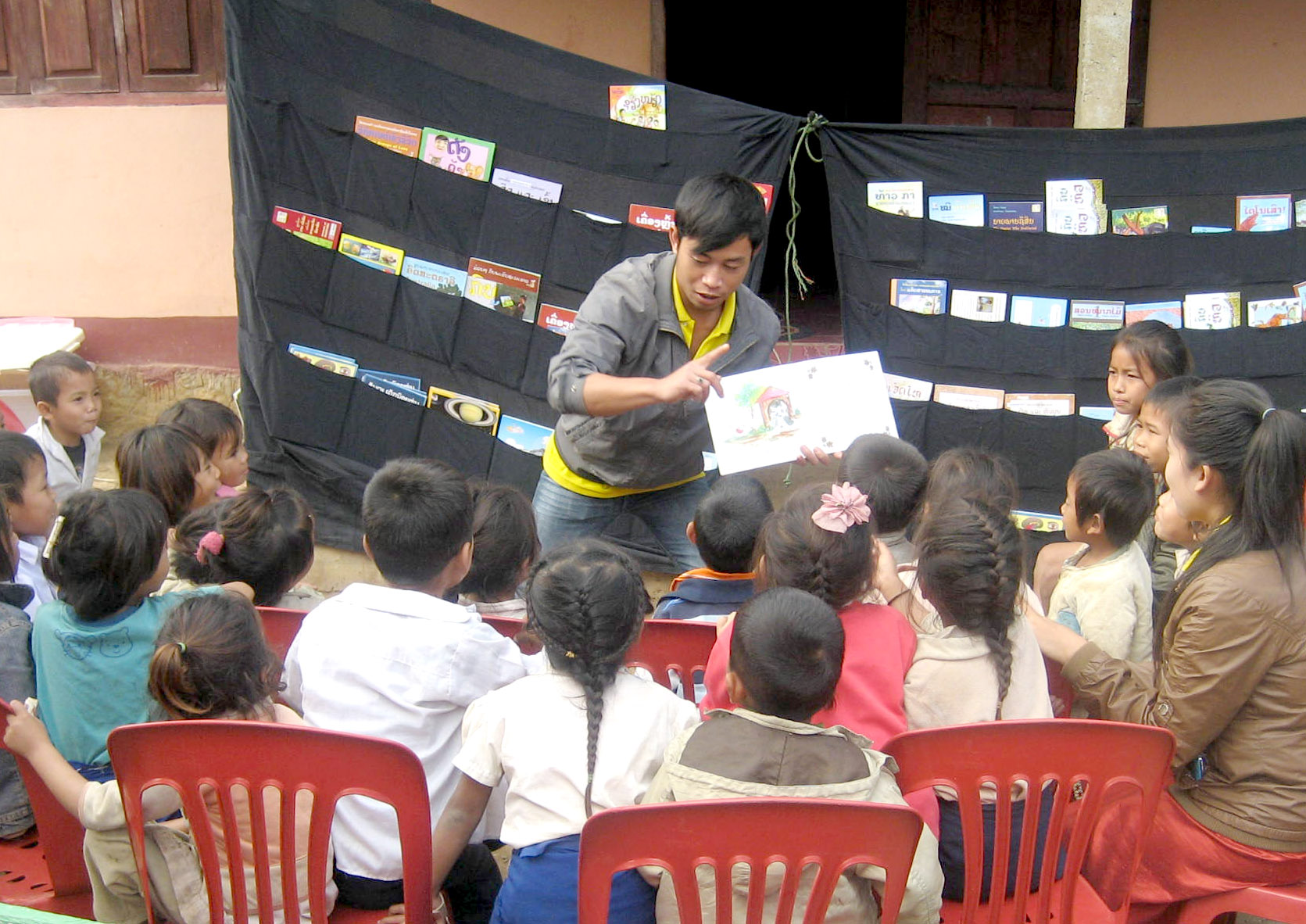
The one piece of writing advice that’s been most useful to me over the years is very simple: Read it aloud first.

Whether it’s dialogue or description in a short story or novel, arguments in an essay, or jokes at the start of a speech, I’ve picked up many errors just by reading my own work aloud as I’m drafting it.  There’s no way to know if your dialogue is forced or unnatural unless you’re literally speaking out what your characters would be.  If your 5-year-old’s dialogue isn’t right, you’ll hear immediately if it sounds like a 12-year-old when you have to say it.

I can’t imagine a children’s book being written – to be read aloud by parents to kids, or vice versa – without being read aloud first.  Oh, the delight of alliteration, of rhyme!  I may wax lyrical.

Addy Vannasy reads to village children on Discovery Day in Laos

Volunteer Addy Vannasy reads to village children on Discovery Day in Laos

Research has shown that young kids who don’t learn to “sound it out” find it harder to learn to read (sob), to master our complicated English spelling, and to create coherent sentences themselves when reading or speaking.  (See Blevins, W. Phonemic Awareness Activities for Early Reading Success for more detail.)

I will always remember one of my primary school principals, Mr O’Brien, reading out some of Shakespeare’s G-rated sonnets and complaining that no one used the verb “impignorate” anymore (no, I don’t know which one).   I think this “out loud” advice first came to my ears from him, in fact, this poetic principal who roamed the halls teaching poetry and theatre classes instead of filling in his endless paperwork.  I don’t know how efficient it was, but he inspired hundreds of Tamagotchi-obsessed children to read difficult and beautiful poetry – no mean feat.

These days, when I’m proofreading, I often mutter the words under my breath.  It must look and sound weird, but I usually work from home, so nobody sees it anyway.  Reading aloud as I’m proofreading makes sure that I don’t miss anything.  Your brain is happy to fill in the gaps if you’ve [left] out a word, or if you’ve misspelled something improtant [sic], or if there’s no full-stop.  (I simply cannot force myself to do that, even just for an example, sorry.)  But reading aloud makes your brain sloooow down to the pace of your mouth.  And your mouth won’t fill in gaps.  Sometimes it even trips over words, forcing you to reconsider your use of a certain adjective.

On a deeper note, when I think about the most powerful conversations in my life – the most encouraging, and the most damaging – they have all been literal, spoken conversations.  I remember them word for word.  And that says a lot, because I’m a letter-writer, preferring to hand someone my written words than work up the courage to say things out loud.

The “out loud” principle is true in our faith practices, as well.  I was at a workshop this week about conquering sin for women, and one of the most powerful things we talked about – among many helpful tips – was declaring God’s truths (scripture) out loud, and refuting the power of sin out loud.

The spiritual battle we face is real, and odd as it sounds, the devil who’s trying to tempt us doesn’t know what we’re thinking; he can only see our actions in giving in to temptation or hear us when we proclaim Jesus’ victory over ourselves and resist temptation.  James 4:7 says, “Submit yourselves, then, to God. Resist the devil, and he will flee from you.”

Drafting your novel?  Start drafting it out loud.  Thinking about telling someone they did an awesome job?  Don’t shoot them that five second email; have that five second conversation face-to-face if you can.  You’ll enjoy it more, and so will they.


Did I read this blog post aloud before I posted it?  You betcha.  And I definitely tripped over “impignorate”, but you can bet it’s staying!


This post was written by TJ Withers-Ryan © 2014. Reblogging is highly encouraged as long as you credit me as the author.

Do sci-fi and fantasy do what real life drama can’t? Decreasing bigotry and prejudice through reading

I’ve been thinking about how kids books can make a difference for disadvantaged people groups. The poor, the oppressed, the marginalised. Those starving in a third world, or held captive by a regime of fundamentalist beliefs, the homeless, the refugees, those who come here not speaking our language.

But I don’t think the best way to do it is to directly target those issues.

There are many award-winning, real-life dramas for kids that address racism or other forms of prejudice, like the multi-award-winning The Little Refugeeby famous refugee Ahn Do, or The Curious Incident of the Dog in the Night-Time by Mark Haddon, or the more recent The Invisible Hero by Elizabeth Fensham. These are books that many kids read in school; in my day, it was To Kill A Mockingbird for anti-racism, and I Capture the Castle or A Little Princess for accepting poverty.

Wonderful as these books all are at persuading their child audience to be more welcoming and accepting of certain people groups, I think they can never be as successful at persuading their child audience to be more welcoming and accepting generally, as stories told through the from-out-of-left-field genres of fantasy and sci-fi.

An article yesterday on the topic (this one is from Arts Mic; read its other variations in most other major news outlets, e.g. Sydney Morning Herald) discussed a series of three studies of Italian kids who had to read Harry Potter for school. This study showed that kids who identified with Harry Potter had significantly stronger tolerance for minority groups such as refugees, other immigrants, and gay people. The more HP books they had read, the more tolerant they were. And in contrast, kids who identified in any way with Voldemort showed less tolerance for refugees and other minority groups.

It’s simple if you think about it. Harry befriends Hermione, a ‘mudblood’ (a Muggle-born witch); Ron, the son of a very poor family; Hagrid, a half-giant ostracised by non-giants and giants alike; and Neville, who due to no fault of his own shows less aptitude for their magical studies.

J.K. Rowling said in 2003 that she never set out to teach kids anything, but she did say at the conclusion of the series that she considered it “a prolonged plea for an end to bigotry”.

Harry with Hermione, Ron and Neville - from Arts Mic - image source: AP

Harry with Hermione, Ron and Neville – from Arts Mic – image source: AP

This revolution in kids, started by a fantasy book series, reminded me of a powerful sci-fi movement that changed how we think about minority groups in the Western World.
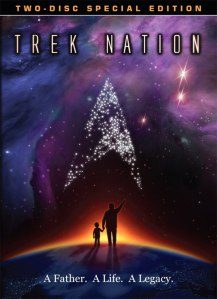
Trek Nation poster

Trek Nation – documentary, 2011

I was recently watching a 2011 documentary by Rod Roddenberry, the son of Eugene Roddenberry, creator of Star Trek: Trek Nation. A lot of the documentary focussed on how Star Trek allowed its viewers to feel like it was okay to be different.

No, Star Trek wasn’t written specifically for kids, but a lot of kids watched it. It was clean – very little bad language, violence, or adult themes. And it changed how they grew up.

In one powerful line, Rod said the thing that struck me the most: that Star Trek viewers had been consistently shown to be more tolerant people in general. They were more tolerant and accepting towards other races, other genders or sexualities, and other worldviews, better than the average person.

Part of the reason for this is because the show was, from the beginning, multicultural in its choice of actors. At a time when there were few non-white or foreign roles in American television dramas (the UK did a little better), Roddenberry chose an African woman to play Uhura, a Scotsman for Scotty, a Japanese-American for Hikaru Sulu, and a half-Vulcan alien for Spock.

Do you think books about real-life drama can achieve the same thing in kids through such subtle methods, such subconscious and long-lasting success?

On a faith note, Jesus embraced the outsider everywhere he went, and supported multicultural attitudes and interfaith communication whole-heartedly.

In John 4:7, he talks with the Samaritan woman at the well.  In Luke 10 he tells the parable of the good Samaritan, which basically says, “Who is my neighbour?” “Everyone, even my enemies, people whose beliefs are totally the opposite of mine.”  And what does he say about enemies?  “Love your enemies.”

Then in Luke 9:54, Jesus and the disciples are looking down at a Samaritan village that has rejected the message of Jesus and thrown them out of town.  James and John turn to Jesus and say, “Lord, do you want us to call down fire from heaven to destroy them?”  But what does Jesus do?  It says in verse 55, “But he rebuked them [the disciples].”  And this obviously has a huge impact on John, because later, in Acts 8:14, the disciples hear that Samaria has “accepted the word of God”, and as they’re deciding who to send there as missionaries, they choose Peter and John.

Continue reading

Never hold back – Daniel – “Even if…”

When is faith in action ever easy?  But the Bible has some incredible stories about faith in action being rewarded by God!

In Daniel 3:16 – 18, Daniel’s mates (Shadrach, Meshach, and Abednego, aka Hananiah, Mishael and Azariah) are about to get thrown in the fire, and they give one of the best speeches I’ve ever heard:

“The three of them replied to the king, “King Nebuchadnezzar, we do not need to defend ourselves before you about this anymore.  If we get chucked into the blazing furnace that you’ve made, the God we serve is able to deliver us from it.  He will save us from Your Majesty’s power.   But we want you to know this: Even if we knew that our God wouldn’t save us, we still wouldn’t serve your gods and worship them instead.

Woah!

Even if God won’t save me, I’ll still call him my number one God?  I’ll still trust and worship him?

It’s crazy stuff.

It’s awesome stuff.

And God did save them – even more awesome! He provided an angel who stood with them in the fire so that they wouldn’t be burned up. By contrast, the soldiers who had to throw them into the furnace were all burned up immediately by the incredible heat.

Four in the fire from Keith Nicolas WordPress blog

Four in the fire from Keith Nicolas WordPress blog

There have been several moments in my life where God has said, “Even if *this bad thing happens* or *this good thing never happens*, will you still follow me?  Will you still worship me?” and I’ve said yes!  And I’ve known some great friends who’ve had the absolute worst happen and still love and trust God with everything they have.

But today isn’t about me or them or the past – although we’d happily give you details of what God’s done in our lives any time.  It’s about right now, your present situation.

Where is God asking you to let go of control of your life?

Where can you see God asking, “Even if the worst should happen, will you still trust me?”


This post was written by TJ Withers-Ryan © 2013. Reblogging is highly encouraged as long as you credit me as the author.

The last leg of the race

The victorious woman crosses the finish line - Eshet Chayil!

The victorious woman crosses the finish line – Eshet Chayil!

Ever struggled to finish a project?  Yeah, me neither…

I’ve been thinking lately about how crazy busy this year has been, and how I haven’t finished the novel I was working on, although the beginning and the middle are definitely somewhat there…

The point of my post today is that often the hardest part of trying to get somewhere / waiting to achieve something is that last leg of the race.  The week before your loved ones return home.  The last year of uni.  The last month of work before you resign from your old job and start your new one.

Our writing projects often get abandoned right at the end.  I’ve written 42 / 50 chapters for a book that I told everyone I was going to finish in 2011 – now that’s awkward!  And the reason why is that I know how to start with a bang, and the middle is the crux of the story, so that’s pretty set in my mind, but wrapping it all up just looks too big.  I don’t know how to reach those last things that are needed for each of my characters to say, “My part in this story is done, and I’m happy with where I’ve ended up.”  For some characters, I don’t even know what is needed to finish their part.

Jeff Manion spoke at the 2010 Willow Creek Global Leadership Summit about his book, ‘The Land Between: Finding God in difficult transitions’.  He said that the point at which leaders’ plans fail, and people stop volunteering to help, and churches dissolve, is not when you expect.

It’s not at the beginning, because even though looking at a blank slate is scary, most people will be able to imagine the vision that you are setting forth as leader, and it’s exciting to look forward to a future full of hope and promises.  People are happy to give time and money and effort to help a new project get off the ground.  And even in the middle, it’s easy to stay committed, because you can see progress in the steps along the way.

But in that last leg, it’s often hard to see whether or not it is the last leg.  If it looks just like the middle is continuing on forever, then it’s easy to get discouraged.  The last few steps just look too big, and getting through the middle may have drained your resources and energy and passion for the project.

We can fall with the finish line in sight, when we do it in our own strength.

I drove a friend home from a meeting recently and he was reminding me of others who have fallen near the end of their personal race.  He spoke of the Israelites wandering through the wilderness of the Sinai Desert, and how when God first promised to give the promised land to this slave people, they said, “No way, we can’t do that.”  And when they were nearly there, they blew it many times by rebelling against God, even though the end was in sight.  Moses was literally up the mountain fine-tuning the Ten Commandments when the people decided it was never going to happen and made themselves a golden calf idol to worship instead.

I want to keep running with perseverance the race that God has set before me (Hebrews 12).  In the writing context, this means that I want to finish the projects that I start.

1 Corinthians 9:24-25:  “24 Do you not know that in a race all the runners run, but only one gets the prize? Run in such a way as to get the prize.  25 Everyone who competes in the games goes into strict training. They do it to get a crown that will not last, but we do it to get a crown that will last forever.”


This post was written by TJ Withers-Ryan © 2012. Reblogging is highly encouraged as long as you credit me as the author.