
Reading Aloud – from Douglas School PTO
The one piece of writing advice that’s been most useful to me over the years is very simple: Read it aloud first.
Whether it’s dialogue or description in a short story or novel, arguments in an essay, or jokes at the start of a speech, I’ve picked up many errors just by reading my own work aloud as I’m drafting it. There’s no way to know if your dialogue is forced or unnatural unless you’re literally speaking out what your characters would be. If your 5-year-old’s dialogue isn’t right, you’ll hear immediately if it sounds like a 12-year-old when you have to say it.
I can’t imagine a children’s book being written – to be read aloud by parents to kids, or vice versa – without being read aloud first. Oh, the delight of alliteration, of rhyme! I may wax lyrical.

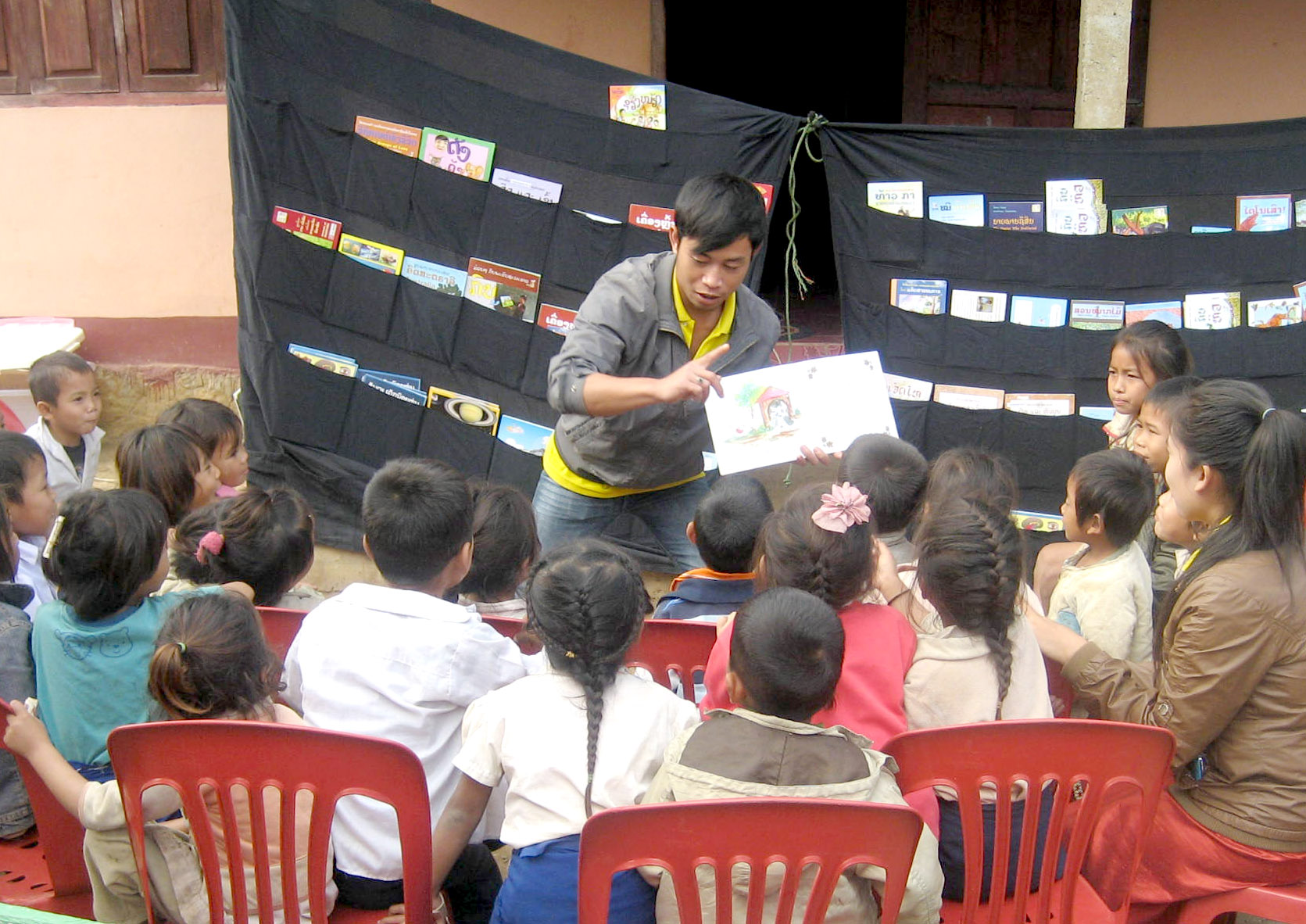
Volunteer Addy Vannasy reads to village children on Discovery Day in Laos
Research has shown that young kids who don’t learn to “sound it out” find it harder to learn to read (sob), to master our complicated English spelling, and to create coherent sentences themselves when reading or speaking. (See Blevins, W. Phonemic Awareness Activities for Early Reading Success for more detail.)
I will always remember one of my primary school principals, Mr O’Brien, reading out some of Shakespeare’s G-rated sonnets and complaining that no one used the verb “impignorate” anymore (no, I don’t know which one). I think this “out loud” advice first came to my ears from him, in fact, this poetic principal who roamed the halls teaching poetry and theatre classes instead of filling in his endless paperwork. I don’t know how efficient it was, but he inspired hundreds of Tamagotchi-obsessed children to read difficult and beautiful poetry – no mean feat.
These days, when I’m proofreading, I often mutter the words under my breath. It must look and sound weird, but I usually work from home, so nobody sees it anyway. Reading aloud as I’m proofreading makes sure that I don’t miss anything. Your brain is happy to fill in the gaps if you’ve [left] out a word, or if you’ve misspelled something improtant [sic], or if there’s no full-stop. (I simply cannot force myself to do that, even just for an example, sorry.) But reading aloud makes your brain sloooow down to the pace of your mouth. And your mouth won’t fill in gaps. Sometimes it even trips over words, forcing you to reconsider your use of a certain adjective.
On a deeper note, when I think about the most powerful conversations in my life – the most encouraging, and the most damaging – they have all been literal, spoken conversations. I remember them word for word. And that says a lot, because I’m a letter-writer, preferring to hand someone my written words than work up the courage to say things out loud.
The “out loud” principle is true in our faith practices, as well. I was at a workshop this week about conquering sin for women, and one of the most powerful things we talked about – among many helpful tips – was declaring God’s truths (scripture) out loud, and refuting the power of sin out loud.
The spiritual battle we face is real, and odd as it sounds, the devil who’s trying to tempt us doesn’t know what we’re thinking; he can only see our actions in giving in to temptation or hear us when we proclaim Jesus’ victory over ourselves and resist temptation. James 4:7 says, “Submit yourselves, then, to God. Resist the devil, and he will flee from you.”
Drafting your novel? Start drafting it out loud. Thinking about telling someone they did an awesome job? Don’t shoot them that five second email; have that five second conversation face-to-face if you can. You’ll enjoy it more, and so will they.
Did I read this blog post aloud before I posted it? You betcha. And I definitely tripped over “impignorate”, but you can bet it’s staying!
This post was written by TJ Withers-Ryan © 2014. Reblogging is highly encouraged as long as you credit me as the author.



 TJ Withers