Welcome to 2025.
It’s harder to say “happy new year” when you remember that 101 women were killed by men in 2024 (Femicide Watch Australia, 2024).
It might not sound like a huge number, until you compare it to the 46 women who were killed by men in the 2022-23 financial year (AIHW, 2024).
Men killing 101 women in 12 months is horrific because it is a doubling of violence against women in Australia.
Domestic and family violence is a national emergency, with 1 in 4 Australian women having experienced violence from a male partner (White Ribbon, 2024).
With that in mind, I read the following books last year, and I believe they would help any Australian man who wants to understand the current war on women and children in our nation.
More importantly, this information can help any person who wants to help us end the war on women.
I was thoroughly impressed by the way these writers gathered measurable data and research from all around Australia and sometimes internationally.
I’m sure you’ll find the statistics astounding – because I did, and I’ve already been reading on these topics for 20 years.
For example, for women with disabilities, the rate of men’s violence is doubled (Scope Disability Services Australia, 2024).
A note on gender references: All references in this article to “women” include trans women. Much of the data on “women” also includes non-binary people, who are routinely marked as female “for insurance purposes”.
How Many More Women? Exposing how the law silences women, by Jennifer Robinson and Keina Yoshia (2022)
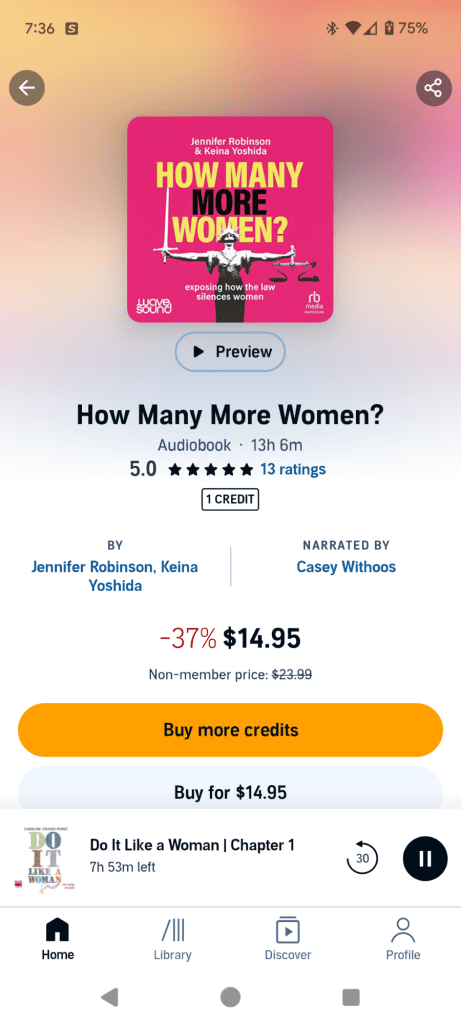
This neutrally-worded but absolutely astounding review comes from two internationally-acclaimed lawyers, experts in their field.
You will be shocked by the data they’ve uncovered about how Australia’s legal system continues to systematically silence – and brutally punish – any woman brave enough to speak out about men’s violence against women and children.
(Or at least, you’ll be shocked if you haven’t already read some of the Australian legislation that make this possible.)
Currently on sale at Booktopia: How Many More Women?, from Australia’s local bookstore (NOT SPONSORED).
Bite Back: Feminism, media, politics, and our power to change it all, by Hannah Ferguson (2023)
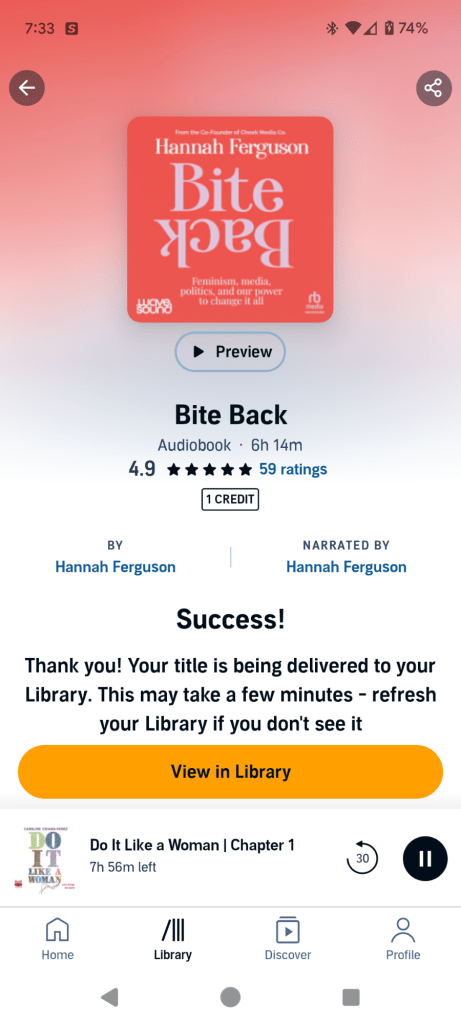
If you only read or listen to one chapter of this book, make it Chapter 3, which examines how men are the most likely to be both perpetrators and victims of violence in Australia. So they should stop saying “not all men” and start caring about eliminating men’s violence.
Chapter 3 also explains through reputable statistics why men don’t actually have any need to fear the #MeToo movement.
You can find Bite Back on Booktopia (not sponsored).
Invisible Women: Exposing data bias in a world designed for men, by Caroline Criado Perez (2019)
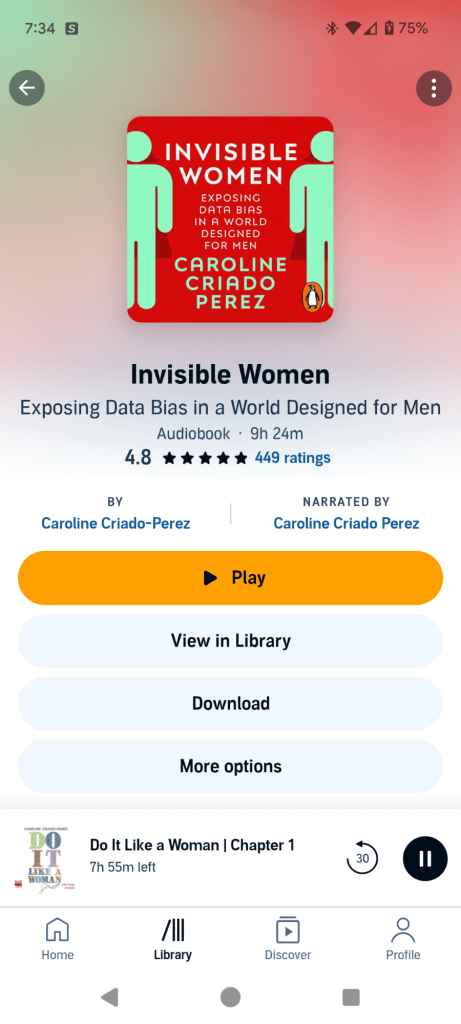
Why are prescription drugs less effective on women? Why are women more likely to die in a car crash? Why do apartment blocks cause such social isolation for the women who are its tenants?
This book contains a broad range of data from both Australia and other international countries, but with a few quick Google searches, it was easy to confirm that almost every international data point was (unfortunately) the same here in Australia as well.
A few key facts I took away from Invisible Women:
- Unpaid work: Women around the world perform 75% of unpaid work such as childcare, cooking, and cleaning, spending an average of 3 to 6 hours a day on this activity. Meanwhile, men contribute between 30 minutes to 2 hours on average.
- Healthcare inequity: Women are 50% more likely to be misdiagnosed and/or die following a heart attack, because common symptoms for women are different to the common male symptoms. Despite readily-available information on the front page of Google about all symptoms, globally-respected hospitals continue to rely on a limited list of male symptoms.
- Toilets as a safety risk: It’s not a coincidence that there are never enough toilets for women, while men rarely face a queue. It leads to assaults and harassment against women when waiting in a queue, visiting public toilets, or travelling home to use their own toilet. It causes serious health conditions such as UTIs and kidney failure when women cannot access sanitation outside the home.
- Designed by men for men: In Australia, engineers (87% are men) and company leaders (77% of management are men) continue to be almost exclusively men, creating products and services that do not consider or meet women’s needs. Mobile phones sold in Australia are too wide for women’s hands, leading to increased rates of repetitive strain injury (RSI) and carpal tunnel syndrome (CTS). Are you a man in tech? Take this list of discussion questions based on Invisible Women to your next Product meeting.
- Inaccessible transport: Urban infrastructure like public transport and public parks often overlook women’s needs, even when gendered surveys are conducted. Men have access to household cars more often than women, even when women own the household car. Lack of accessibility in transport can therefore make it difficult or inaccessible for women, especially mothers or disabled women, to stay in the workforce.
Currently on sale at Booktopia: Invisible Women (not sponsored).
See What You Made Me Do: Power, control and domestic violence, by Jess Hill (2019)
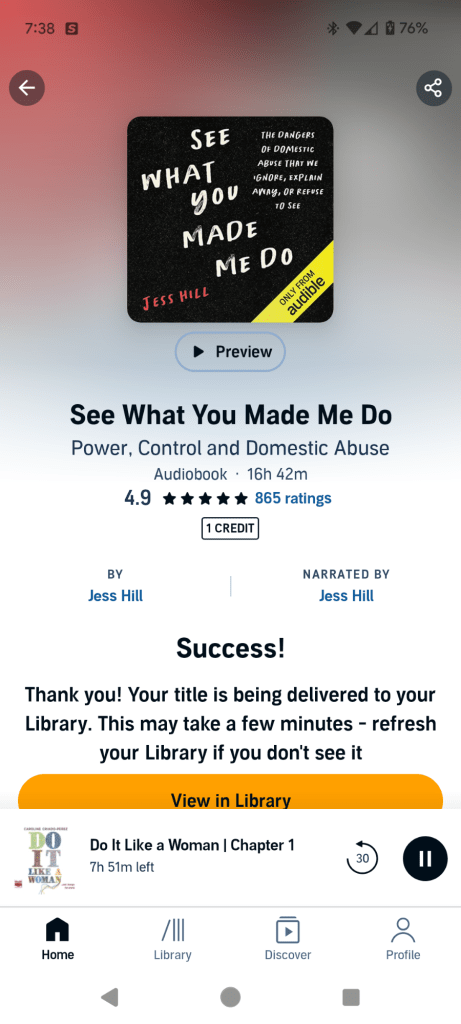
Investigative journalist Jess Hill won the Stella Prize in 2020 for this deep dive into how the justice system harms the women and children it is meant to protect.
Most importantly, it lists what we can change NOW in these systems.
Find See What You Made Me Do on Booktopia (not sponsored).
Not Now, Not Ever: Ten years on from the misogyny speech, by Julia Gillard (2022)
This incisive memoir is as powerful as Prime Minister Julia Gillard’s “not now, not ever” speech against misogyny in Australian politics was back in 2012. There’s a reason why her speech continues to go viral on every social media platform today, and why women tattoo her words on their bodies.
Every Australian man should read this, to understand how the media unjustly crucified Julia Gillard during and after her time as our nation’s leader, the amazing things she achieved in spite of ongoing misogynistic persecution, and why they should vote for more women to be leaders of Australia.
Find Not Now, Not Ever on Booktopia (not sponsored).
Fixed It: Violence and the representation of women in the media, by Jane Gilmore (2019)
On average, every week, at least one woman is murdered by their current or former male partner in Australia.
But while the media often neglects to report these murders at all, they report on almost every murder of a male (usually murdered by another man).
And when the media does report on women who are murdered by men, the male is the focus – and how they committed the horrendous act. The male’s motivations to kill, what job they did, their mental health, and even their height, are given more attention than the life of the woman they killed.
Jane Gilmore has been correcting media reporters since 2015, and I’ve been loving it.
You can find some examples of #fixedit on social media or Gilmore’s website, and buy Fixed It on Booktopia (not sponsored).
Fix the System, Not the Women, by Laura Bates (2022)
This book explains why men blame women…
“She was walking home alone at night.”
“Women make false rape allegations if they don’t like a man.”
“She was power hungry and making demands.”
…and why we need to stop believing these myths, based on the data.
As with Invisible Women (above), this book contains a mix of data from countries including Australia, but upon some quick Google searches, it is easy to confirm that the international data is (sadly) the same here, too.
Find Fix the System, Not the Women on Booktopia (not sponsored).
I Don’t: The case against marriage, by Clementine Ford (2023)
Ford is powerfully-persuasive in listing the reasons why women in Australia have been conditioned to marry, and why women are safer and healthier when they are single.
If you’re a man in a heterosexual relationship, this book explains what being an “equal partner” to a woman really means.
If you’re a man who is single, this book explains what kind of self-reflection and personal work may be needed before you try to seek a partner, regardless of their gender.
Buy I Don’t on Booktopia (not sponsored).
Men Who Hate Women, by Laura Bates (2020)
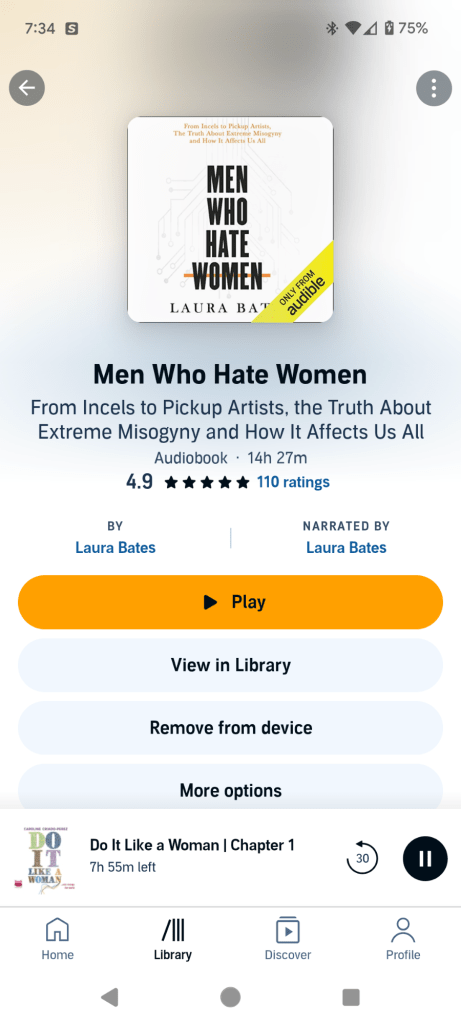
I believe every man should read this book.
This book may seem extreme, but it shows just how easy it is for any man to become an active perpetrator of violence against women.
Laura Bates spent a year as “Alex”, with a fake digital identity and a variety of incognito digital browsing techniques, being passively led by the algorithms of social media and the internet, into increasingly misogynistic and violent male groups.
Many of the case studies and data in this book comes from the UK and other countries, but the principles are universal and apply to any man with access to the internet.
Avoid becoming a killer, by reading Men Who Hate Women on Booktopia (not sponsored).
The Patriarchs: How men came to rule, by Angela Saini (2023)
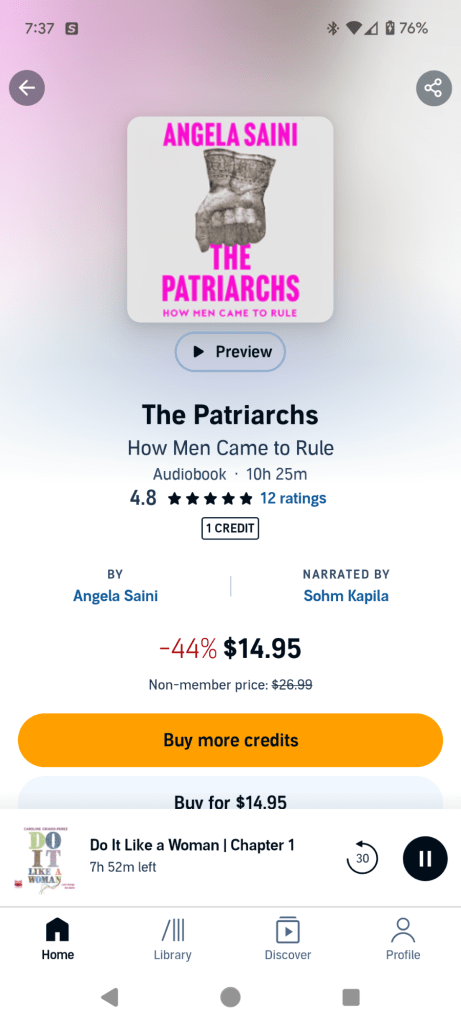
Is it really true that men have always been in charge? Did they begin as violent overlords ruling over groups of women and children, who were later domesticated into husbands and fathers? No!
Go on a journey from before the dawn of agriculture in neolithic 4,000 BCE, to the United Nations in 2024, to find out how man became “head of the house”, and why we still do not have freedom and safety for women.
This book contains the latest in archaeological research, population data, and case studies from every continent of our planet, including Australia. It won the Book of the Year for Politics in 2023, and was shortlisted for the Orwell Prize.
Find it on Booktopia: The Patriarchs (not sponsored).
The Ninth Life of a Diamond Miner, by Grace Tame (2022)
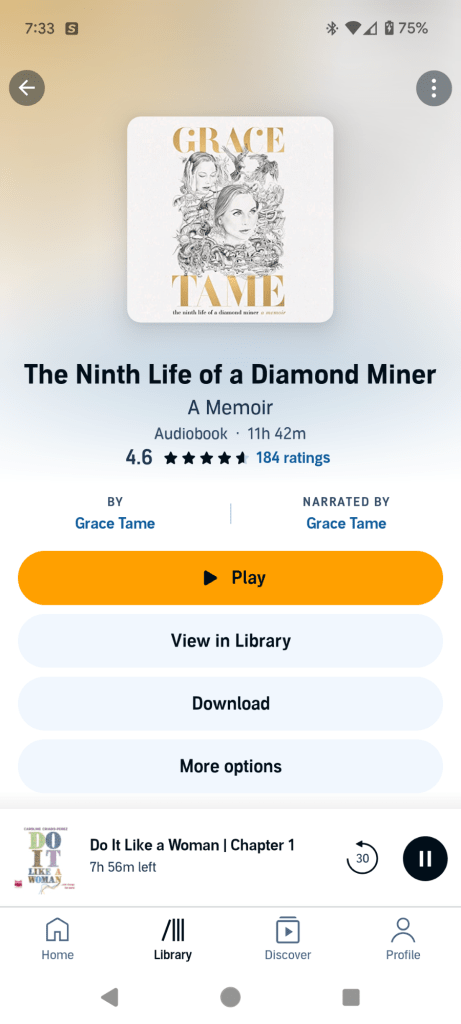
Australian of the Year and artist Grace Tame succeeded in gaining the legal right for childhood sexual abuse survivors in Tasmania to speak about their experiences.
It is not an easy read, but it’s so important, because it will help men understand the huge variety of ways that men’s violence against women and children affects survivors’ lives. And that not all victims sound the same or act the same.
I’m so grateful to Grace Tame for everything she has done, and continues to do, for victim-survivors in Australia.
Find Grace Tame’s memoir at Booktopia: Ninth Life of a Diamond Miner (not sponsored).
Tell Me Again, by Amy Thunig (2022) (First Nations author)
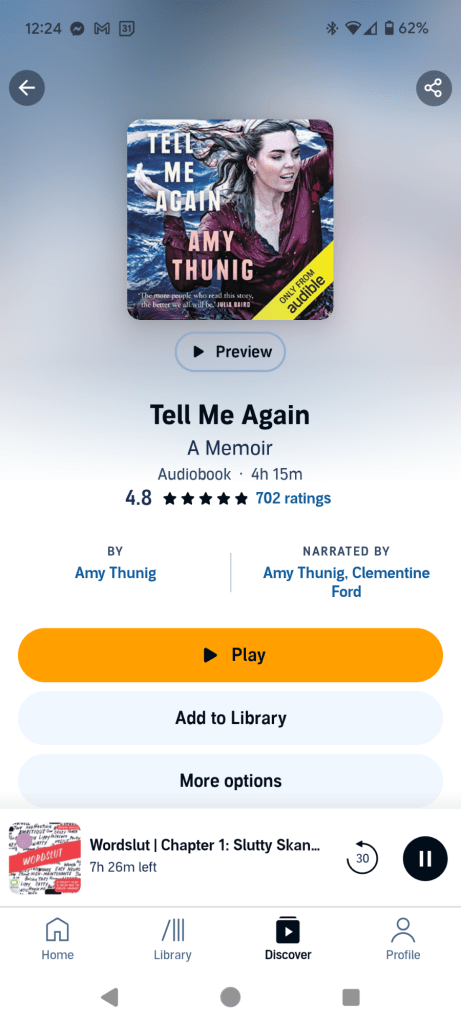
It was only when Amy Thunig became pregnant with her own child that she learned the truth about the day she herself was born, and why she had a different legal last name to her family.
This memoir explains how intergenerational trauma and poverty affects families and communities, linking to addiction, incarceration, and violence. I found these personal stories so moving, and I know it will change how you think about how we treat First Nations people in Australia.
You can get Tell Me Again from Booktopia (not sponsored).
Too Much Lip, by Melissa Lucashenko (2018) (First Nations author)

I found this a brutal story of both the ways men silence women – “too much lip” – even when they are barely speaking up at all. And it is an especially good look at men’s violence against First Nations women, whom are abused by men at a much higher rate than white women like me.
I recommend it to men who would find it easier to read a fictional story before they dive into the reality of the statistics in the books I’ve listed above.
This book won the prestigious Miles Franklin Award in 2019.
You can find Too Much Lip on Booktopia (not sponsored).
Bonus round: More books I read and you should read because I ran out of time to summarise it for you
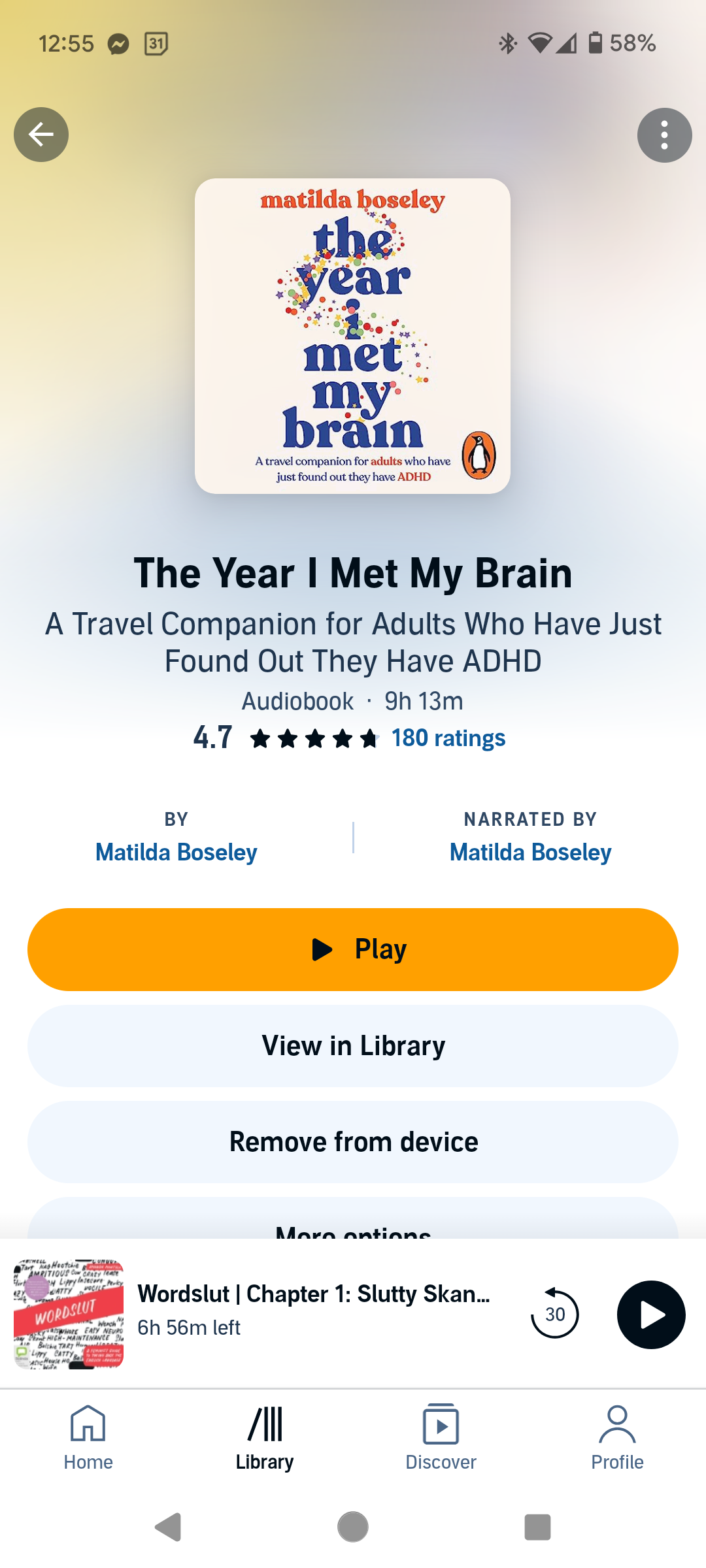
The Year I Met My Brain by Matilda Boseley – why women in their 30s are finally getting diagnosed with ADHD, and how the patriarchy and misogyny in the medical field leads to health risks for disabled women.
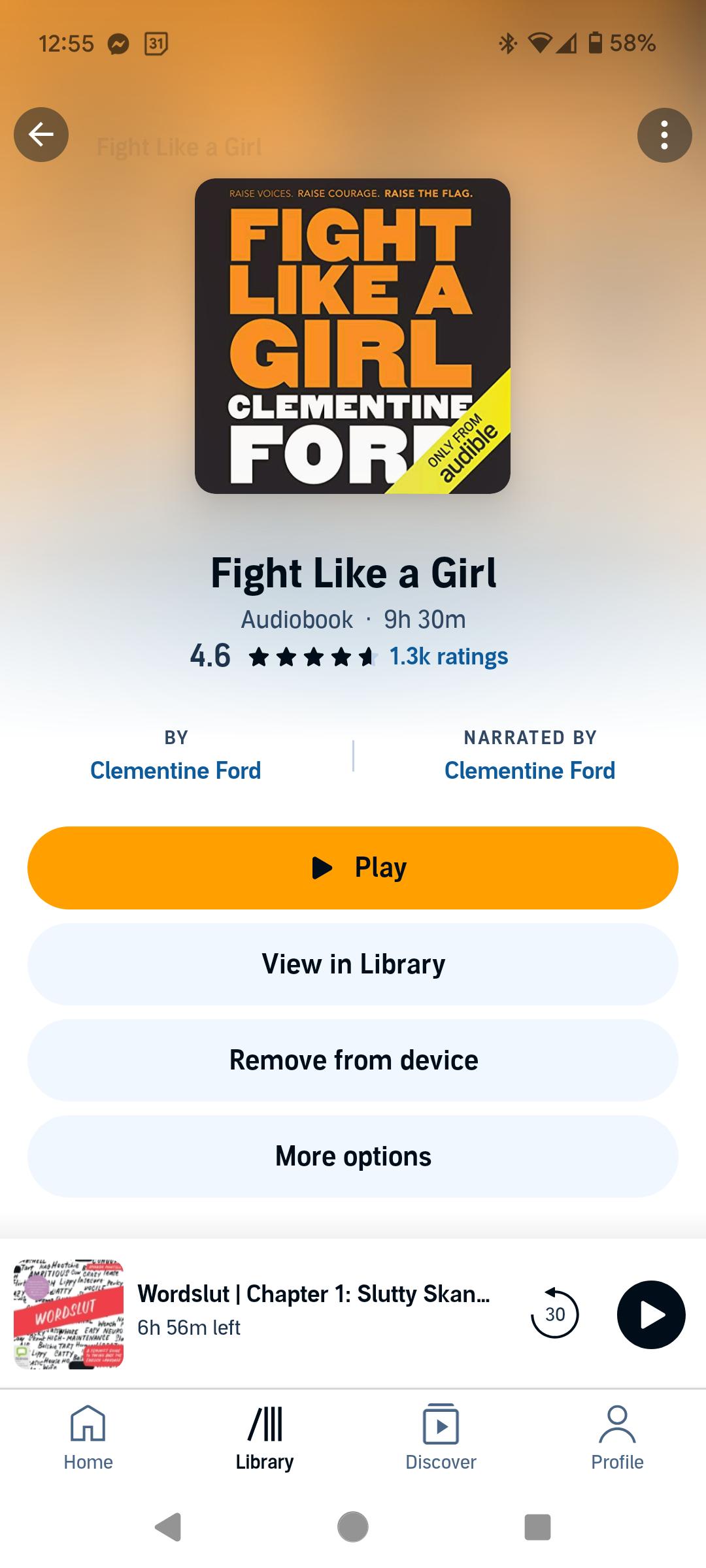
Fight Like A Girl by Clementine Ford – learn the basics of how the patriarchy affects girls and young women from the day we are born.
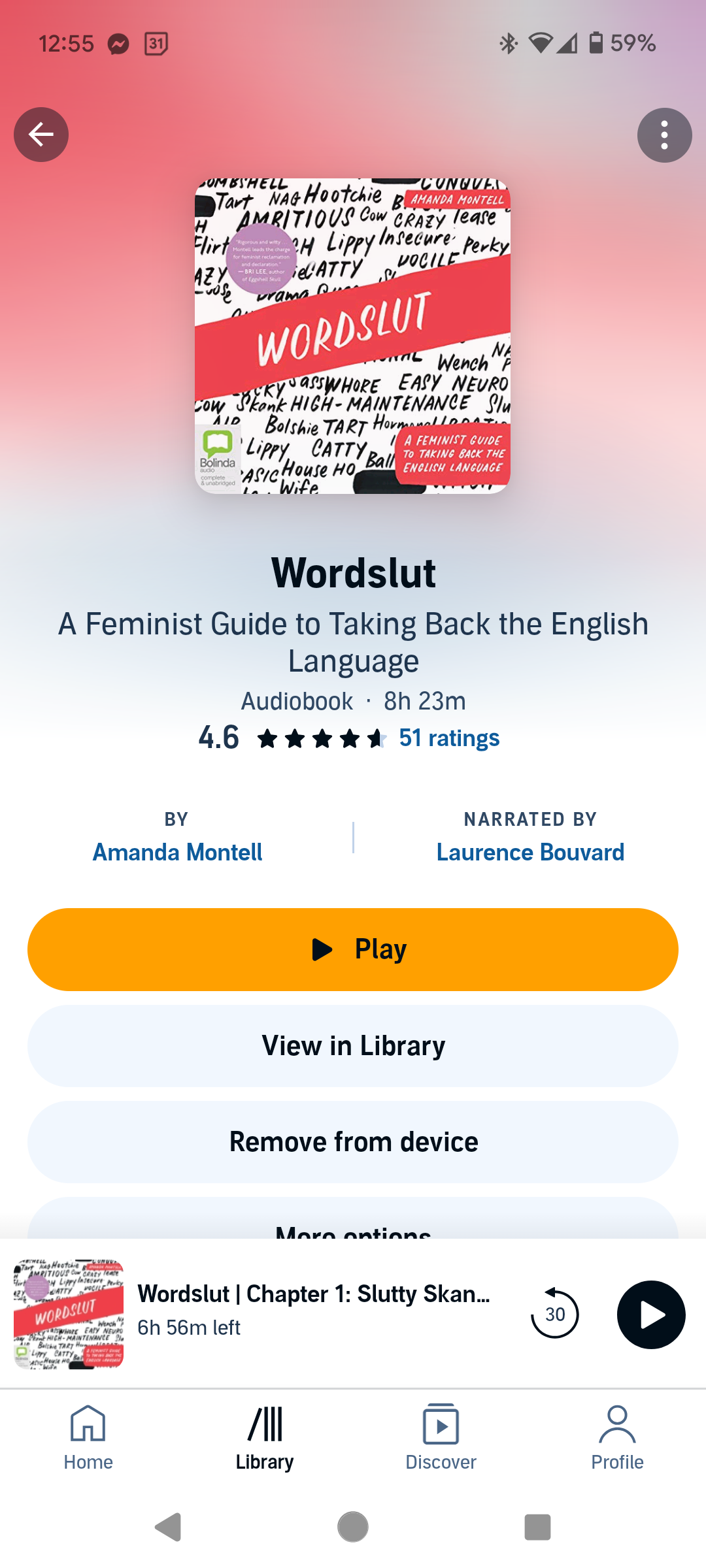
Wordslut by Amanda Montell – to understand why the words you use affect how the men around you think about women, leading to men’s violence against women, and rationalising it after the fact.
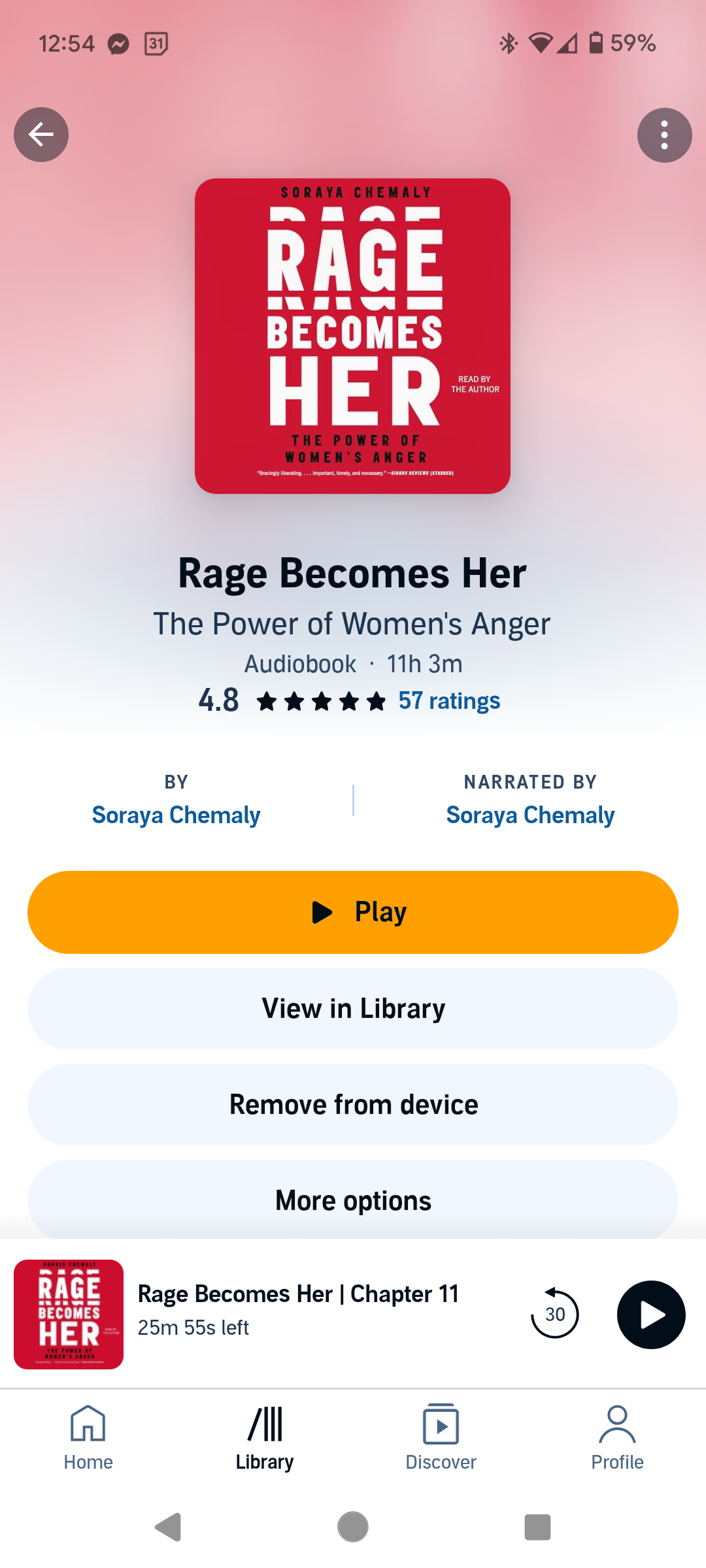
Rage Becomes Her by Soraya Chemaly – to understand how the patriarchy actively punishes any woman who expresses anger, or even dissatisfaction, with their lot in life. And to learn why you should allow women to express their anger!
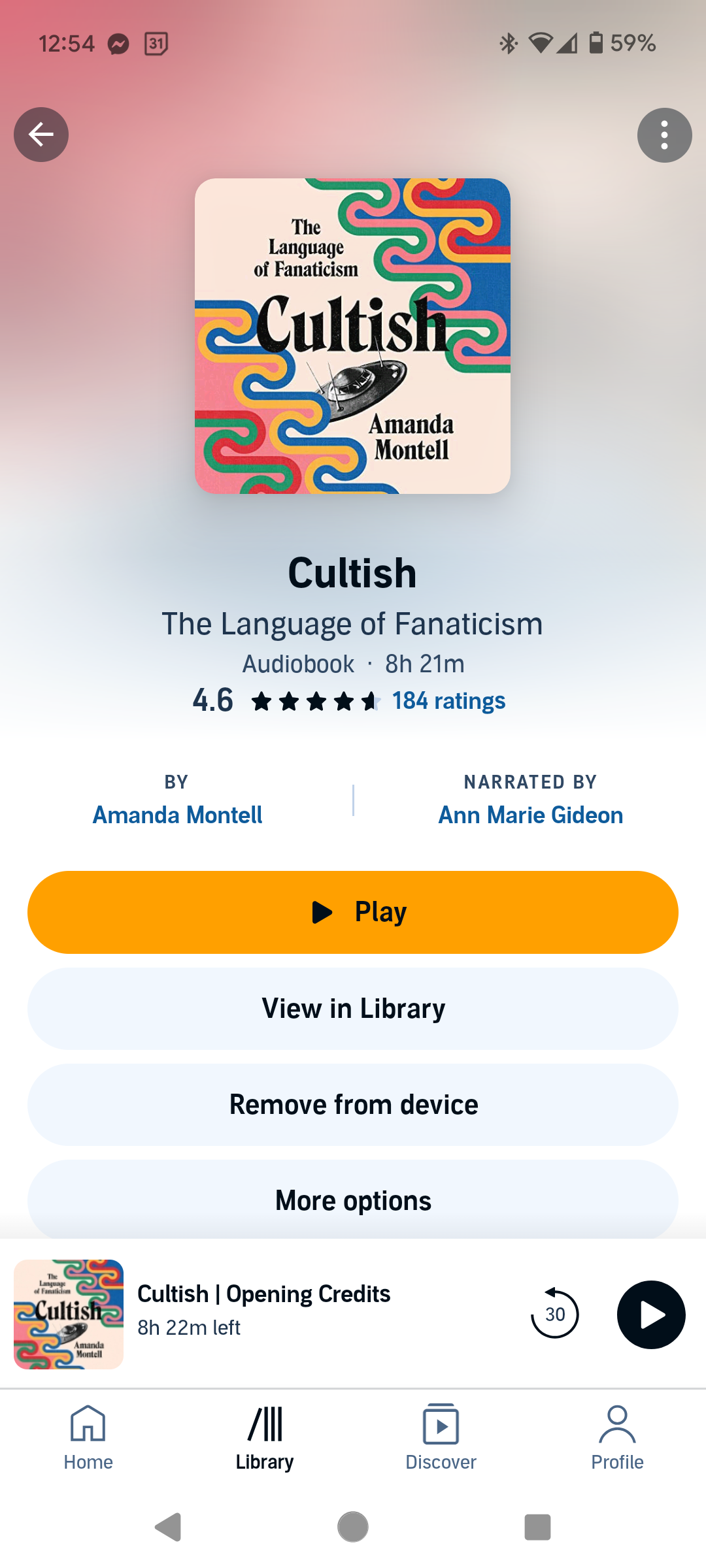
Cultish by Amanda Montell – to understand how the patriarchy creates and benefits from cults from Jonestown to Peloton, using the English language to silence women, take away women’s power, and ultimately killing women and children.
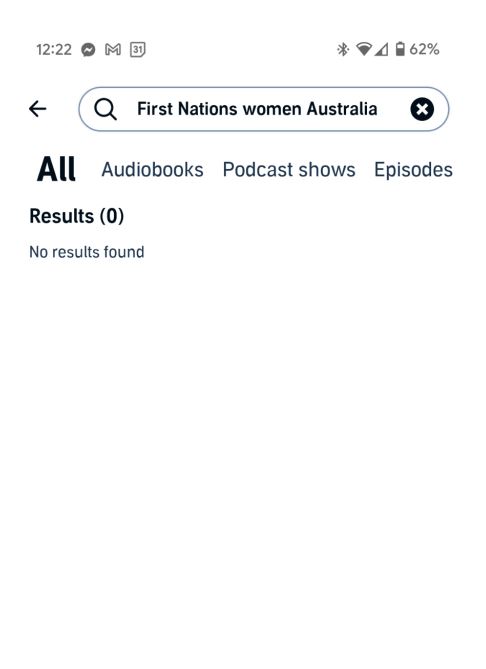
Why are there only 2 books by First Nations authors on your list?
I have no excuse, except that I haven’t tried searching in enough different ways yet!
Take a look what happens when I try to search by author type in Audible’s “Discover” mode, using a variety of search keywords:
If all this is true, why have I never heard of these books?
If you’re asking this question, it’s simply because the internet thinks you don’t care.
The algorithm in Google and social media knows that I want to find more information about how the patriarchy works and why it’s never “just that woman’s one experience”… But only because I’ve spent ~20 years searching almost every day for this type of data, from a wide variety of sources.
The same algorithms that help me find this data, won’t bring that data to your attention unless you deliberately go looking for it.
These algorithms are designed to lead you down variations of the paths you’ve already taken, forever onward.
Unless you’re a young man, in which case certain apps like YouTube have specific algorithms set up to lead you into the “manosphere”, discussed in Men Who Hate Women by Laura Bates (recommended above).
Did you only read man-hating books this year?
Hahahaha, no. And to be clear, I don’t hate men.
Some of my favourite people are men. ❤️
But I know from conversation that most of those men have never been introduced to the data about how the world really treats women.
We all have to do better.
The thing I’m doing is being brave enough to post this, because every time I do, I get the same negative online comments that every other vocal woman gets, from offended men and trolls. I hope you don’t see them – I have several filters working hard to screen them from your and my view. 😉
So I’m asking you, if you’re a man, to consider what you can do. (Because if it’s not already clear, the patriarchy also harms you as a man, and men are often the only ones who really get heard.)
- Read a few of the books I’ve recommended.
- Start looking for the data.
- If any of the data surprises you, tell other men.
- Keep listening to women, and believe them, and ask yourself whether it is possible that more than just that one woman has had these experiences.
- Request one small change in a system you know women and children use. Even the tiniest changes at a systemic level has vast, important consequences for people you may never meet.
Thank you to anyone who made it to the end of this epic post! xx TJ
(C) TJ Withers, 2025. Please credit the author when sharing and reposting.
 TJ Withers
Thanks for sharing all this from your research and reading TJ,
A lot to take in! I also read your previous blog of 64 women killed after being failed by police to protect them. I hope your research is finding a wide audience. Keep up the good work. I’m very proud of you.
love you!
LikeLike