How to keep healthy as a writer: body, mind and soul

'The happy writer' Image source: ToneBlog

‘The happy writer’
Image source: ToneBlog

This post is something different for me – a collation of all the research I’ve done into how I can stay happy and healthy as a writer and editor. We live in a stress-filled age, and writing requires us to not be stressed, because stressed people aren’t creative, as I’ve previously explained.

All the “health” tips here are ones that I personally have tried and found helpful, so I hope they help you, too!


Body:

At BWF in the Burbs this year, Australian fantasy author Trudi Canavan gave us this invaluable tip:

“Look after your bodies. Writing is hunched over a computer, fingers working furiously for extended periods. It’s an unnatural position that soon leads to RSI if you do it for years on end.”

She recommended we take lots of breaks from the hunched, sitting position.

For her, unfortunately, RSI is a daily issue, which is inconvenient now that she’s a full-time writer (the dream!). Because of the pain, she can now only sit down to write for half an hour at a time before getting up from the computer again. She does that over and over all day, because she has to. (Gosh! It takes me at least ten minutes just to get into the swing of things with my story again after a break – imagine only having twenty useful writing minutes each time you sit down to write.)

So don’t make the same mistake as Trudi and let it get too late to avoid RSI. Get up and walk around. Pat the dog. Do some quick yoga stretches at your computer! I got into this when I was working a job that was 8 hours a day at a computer, and it worked wonders for my lower back pain.

‘5 Office Yoga Poses (That Won't Freak Out Your Coworkers)’ Image source: Meredith Nordhem, Huffington Post http://www.huffingtonpost.com/meredith-nordhem/office-yoga-poses_b_5604195.html

‘5 Office Yoga Poses (That Won’t Freak Out Your Coworkers)’
Image source: Meredith Nordhem, Huffington Post
http://www.huffingtonpost.com/meredith-nordhem/office-yoga-poses_b_5604195.html

Continue reading

Commiserations over the struggle of writing, and how to keep going!

‘Mimi Does NaNoWriMo’ Image source: InkyGirl at http://inkygirl.com/wwfc/2011/11/9/mimi-does-nanowrimo.html

‘Mimi Does NaNoWriMo’
Image source: InkyGirl at http://inkygirl.com/wwfc/2011/11/9/mimi-does-nanowrimo.html

Today I’ll be talking about my two favourite web comics that provide inspiration or commiseration for writers – yay! And how to keep going when you feel like giving up (“halfway through NaNoWriMo” blues, anyone?).

Continue reading

Bible stories you should read if you want to be a great storyteller

No matter what genre you’re writing in, you’ll want to be reading other stories in your genre.

Something I’ve wanted to write about for some time is what a writer can learn about writing in their genre from reading one of the oldest books ever written – the Bible.

The truth is, it has so much to teach storytellers like us.

Yes, I know, reading the Bible isn’t terribly easy going. But if you treat it as one big collection of short stories, then you can read a little chunk at a time and not be overwhelmed by trying to read it as a single epic tale.

One of my esteemed friends, Josh Bartlett has a wonderful YouTube channel, Storytime with Josh, where he features regular videos of dramatically-narrated Bible stories. This guy has a real flair for bringing out the real life drama of these stories – some that you might have heard many times, and some that even well-versed Bible readers will find surprising.

Storytellers should always be looking for the human side in stories. Many characters in stories never get their side of the story heard, or their point of view is always sidelined because the main hero’s actions are seen as more important. But the truth is that every character has an interesting story, even if it’s only about how the hero’s actions affected them and how they responded to that.

A guide to where you can find all the genres in the Bible:

Continue reading

Reblog: Tamora Pierce and how to trip your character – in a good way

So this week has been full-on!, and NaNoWriMo is taking all my writing energy (!!!! 😀 ), so this post will be super short – cheers! But today’s “tip link” is something I know you’ll enjoy and find useful:

TIPS FOR BREAKING THROUGH the writer’s block wall.

Tamora Pierce from NNMW

Tamora Pierce
Image source: NNMW

In this great post in ‘NaNoWriMo pep talks’, Tamora Pierce talks about trying two super simple things to get your character moving again.

As for Tamora’s credentials, she is one of my favourite authors, and her writing is legitimately incredible! Her characters are believable and her plots are fantastic examples of medieval fantasy written for a younger audience that doesn’t dumb it down. I discovered her when I was ten and I’ve read almost every book she’s ever penned – which is a LOOOOOT of books.

Her idea #1 is my favourite:

Trip them up.

On the sidewalk. In a forest. Getting out of a swimming pool.

Tripping, no matter when or where it happens, is by nature an unexpected event. Depending on how tired they are, how many resources they have left, it’s something that can make your character overreact completely, do something crazy and uncharacteristic, or make them realise their newfound strength and rise to the challenge.

e.g. Whoops, my character broke their leg. Now they can either react by punching in the face the person who tripped them over, or my character can react by using the time off to do something they’ve always wanted to, accomplish a dream. Like painting a beautiful sunset. Or watching a Firefly marathon interrupted.

'The slip horse falling off a cliff' by Sidney Nolan

‘The slip horse falling off a cliff’ by Sidney Nolan

This horse (painted by the odd-but-amazing Sidney Nolan) fell off a cliff, poor fellow. Now that’s a bad day!


What’s a memorable time you tripped? Can you work it into your story somehow?


This post was written by TJ Withers-Ryan © 2014. Reblogging is highly encouraged as long as you credit me as the author.

Why editors can – and should – keep writing

Graphophobia - fear of writing. Image source: WeirdPhobia.com

Did you know this is a real thing? Woah!
Image source: WeirdPhobia.com

I recently interviewed for a position at a great publishing house (the dream job – ah!).

As the head editors were interviewing me, at one point, they said:

“So, it says here that you are also a writer?”

“Yes, absolutely; I’ve been writing since I could hold a pen. My first words were literally, ‘Book’ and ‘Read’. I wrote my first ‘book’ when I was four years old. ‘The Adventures of Freddy Fish’.”

“Wow!” said one.

“How do you do that?” asked the other.

I was surprised. “Um, I just love writing. It’s why I became an editor at all; I love reading and writing and I just want to make stories better wherever I can.”

“Wow,” said the first again. “I don’t think I could write anything anymore. Probably ever.”

“I haven’t read a book for fun in years, let alone written one.”

“Yeah, I mean, you’re reading other peoples’ writing all day, it just gets… It would be completely intimidating now to try and write something of my own. Because I know what it’s like, who’s going to be reading what I write. I’m used to sitting on this side of the desk now.”

“I don’t think I could take the rejection. Writers are very brave, I think.”

“Well, thank you,” I said.

And we moved on. Phew!

My point…

Editors are afraid to write because of their inner editors – just like normal writers. But we shouldn’t be, whether we’re a writer or an editor!

'Fear'. Image source: Kathy Coatney and Lisa Sorensen via Jean Oram via fellow blogger Jodie Llewellyn’s blog:

Image source: Kathy Coatney and Lisa Sorensen
via Jean Oram
via fellow blogger Jodie Llewellyn’s blog post

Whether you’re a writer or an editor, you should also be an editor and a writer. (Ooh, see what I did there?)

Writer, I really hope you’re self-editing your stuff before you show it around to people. Otherwise, I’m sorry, but you’re probably a really really poor writer. Sad face. 😦

And Editor, I really hope that you read and write as well. Otherwise, you just don’t know what it’s like for us writers. You don’t know what it took to get our babies – I mean, books – out of our heads and into the world, so you don’t treat our babies – books! (Wow, that keeps happening!) – as kindly as you could.

(Hey, if you could use the extra push, why not use NaNoWriMo to get you writing again this month? It’s fun!)

Editors in big firms and magazines don’t usually have time to write, I know, if you want to have any kind of home life and actually speak to your family once a day. You work long hours at the office and you don’t always get home for dinner. But J.K. Rowling was a waitress supporting her kids as a single mum when she wrote Harry Potter and the Philosopher’s Stone, so not having enough time is not really a good excuse.

If you want to write, you don’t have time to write; you make time to write.

For more info, the Department of English at Florida Atlantic University pointed me to this great post, ‘Who edits the editors?’ by Mark Medley, which talks about famous editors who have become published authors. Cordite Poetry Review even published a poetry collection, Editorial Intervention, entirely made up of the poems written by poetry editors.

So, in summary, writers, take a deep breath and get to that self-editing; editors, be bold and get writing again. As the great Mark Twain once said:

“Courage is resistance to fear, mastery of fear, not absence of fear.”

'Just Write'. Image source: Trent M Kays on Rhetorical Rumination

Image source: Trent M Kays on Rhetorical Rumination


Writers, how do you get past your fear and start editing your own work? Editors, how do you get past your fear and start writing?


This post was written by TJ Withers-Ryan © 2014. Reblogging is highly encouraged as long as you credit me as the author.

Children’s books with bite

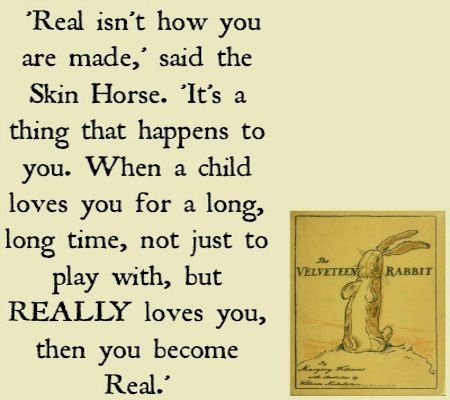
Quote from The Velveteen Rabbit. Image source: DisneyBaby.com on Pinterest

Quote from The Velveteen Rabbit.
Image source: DisneyBaby.com on Pinterest


A few years ago, I wrote a Terzanelle poem that I’m thinking I might turn into a hilarious children’s book – a children’s book to be reckoned with!

It was for uni, and I had to write a ‘fixed structure’ poem with a set rhyming scheme. I saw in the list of examples of fixed structures this ‘Terzanelle’ and I was like, WOAH! Because I have a beautifully weird real name (yes, TJ is my working nickname) and people will always try to mispronounce it as ‘terzah’ (ugh, that is not beautiful).

So what is a Terzanelle? I didn’t really care, since I picked it for its awesome name, but I soon learned that it is made up of five triplets and a Sicilian quatrain in a terza rima rhyme scheme: ABA BCB CDC DED EFE FGFG. (I cheated on the last line and made my rhyme scheme end AEAE, but I still passed the assessment item.) The key is that in a Terzanelle, the second line of each stanza becomes the last line of the next.

So here’s my poem:

Continue reading

NaNoWriMo storyboarding for plotters and pantsers

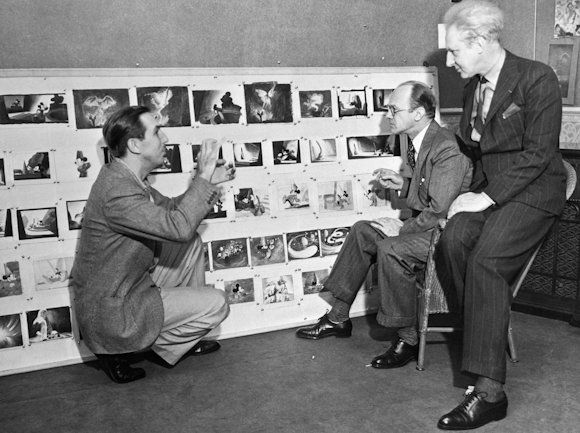
Walt Disney running through a storyboard with colleagues Image source: Kashinterest

Walt Disney running through a storyboard with Deems Taylor and Leopold Stokowski, music directors, in 1940, Burbank, California
Image source: Bettman/CORBIS

“A blank piece of paper is God’s way of telling us how hard it is to be God.” – Sidney Sheldon

If you’re eagerly gearing up for NaNoWriMo (National Novel Writing Month) [nanowrimo.org], like me, you’re probably counting down the days! Deciding who your main character will be. Picking a location. And getting ready for this weekend, when you and thousands of others worldwide will start writing furiously.

So, is writer’s block easier to get past for plotters or pantsers? And how can we get past writer’s block during NaNoWriMo, whether we’re a plotter or a pantser? Will storyboarding really help me or is it a waste of precious time?

If you’re saying, “Woah, woah, woah. What are ‘plotters’ and ‘pantsers’?”, let me tell you. (You can skip ahead if you know this bit.)

Someone who plans the plot and even the dialogue for every scene before they begin writing any words of their novel is called a plotter.

“The first sentence can’t be written until the final sentence is written.” —Joyce Carol Oates, WD

Someone who just starts writing and “goes with the flow” is a pantser, someone who flies by the seat of their pants. They don’t plan. They just put pen to paper and see what comes out.

“Writing a novel is like driving a car at night. You can only see as far as your headlights, but that’s okay; you can make the whole trip that way.” – E. L. Doctorow

Continue reading

Writing about people you know – treading the fine line

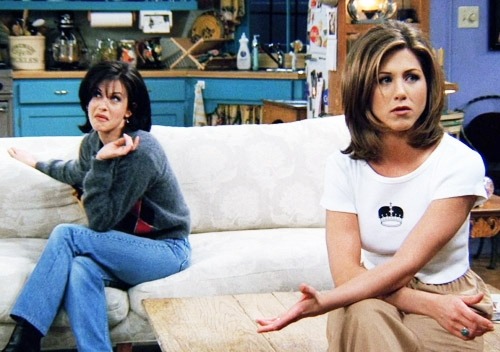
Friends Season 1 Monica and Rachel Image source: 'FRIENDS' TV show via Hello Giggles

Friends Season 1 Monica and Rachel
Image source: ‘FRIENDS’ TV show via Hello Giggles

Rachel:                Oh, and I’m sorry I said you were a cow in high school.

Monica:               That’s okay. I was a cow.

Rachel:                Yes, but I’m still sorry I said it.

– Friends, Season 1, Episode 17 “The One With Two Parts”

Disclaimer:

This post offers a broad overview of defamation law but is not intended to be read as legal advice. This is a complex legal issue that should not be taken lightly. If you have concerns about your own writing with regards to libel liability, you should seek independent legal advice.

I’ve had authors who were worried about writing about the people in their family. Memoirs are always a bit tricky like that. It’s your story, but it’s also the story of how your life was affected by them.

It’s more complicated than just which details to include and which to leave out. It becomes a question of, do you even want to represent them as themselves, or would you rather change their name, age, occupation, everything, in fact, apart from what they did for you or how they impacted on your life?

It doesn’t have to be for negative reasons. Some people really don’t want the credit. One of the writers I knew in uni wrote their own stories as novels because they didn’t want their subject to be embarrassed by how the writer looked up to them as their role model, their hero.

At the Brisbane Writers Festival, I heard a great talk by Sian Prior about her memoir, ‘Shy’, which chronicles her struggles with social anxiety. She wrote about living in the shadow of an ex of hers who was very famous. In her case, she said she didn’t need to check with him before writing about him. They had already parted ways, but more importantly, he had already written about their relationship in his own book! He’d already set the rules by not asking her before he wrote about her.

Her approach, knowing that she would uncover things about their relationship that people didn’t know, was to be rigorous about being honest. By contrast, she did check with her family about her portrayal of each of them, and they were all surprised but happy with her including them in her story.

Lots of people worry about defamation law – specifically, the written form, ‘libel’. Here’s the raw basics:

Continue reading

The Anti-Cliché Challenge: Describe the scene

Centennial Park, Sydney, before the rains hit (Image Source: My camera)

Centennial Park, Sydney, before the rains hit
(Image Source: My camera)

“Don’t tell me the moon is shining; show me the glint of light on broken glass.” ~ Anton Chekhov

The most challenging writing exercise I have been set to date is very simple:

Describe this scene. Right here, right now, where we are. Without using any clichés.

So, how do you describe a scene without it being a cliché? As Rory from Gilmore Girls complained in Season 4, “A ‘rain-soaked highway’ is not a cliché, it’s just how you describe a rain-soaked highway!” Well, I’ll give you a few tips, so you can use them next week when NaNoWriMo 2014 kicks off! Then I’ll show you some scenes descriptions I’ve recorded during this week’s visit to Sydney.

Continue reading

Short stories to wrestle with

Summer in the park in London. Image source: IWOM We know no limits

Image source: IWOM We know no limits (London)

“The formula seems to lie solely in the aching urge of the writer to convey something he feels important to the reader. If the writer has that urge, he may sometimes but by no means always find the way to do it.” – John Steinbeck


Juni Desiree (Awrestlingwriter) is a prolific blogger I happily stumbled into this year. This week she kindly shared with us the link to one of her short stories, ‘Summer’, published in The Australia Times.

I loved it! Laughed. Nearly cried. Finished it feeling warm and fuzzy and re-balanced. Which is just what a short story should do.

And it is seriously short (700 words), which makes it a solid example of one particular structure for short fiction – the “whole narrative” told briefly – for young writers who are just starting out to follow.

Last month I was editing a short story for someone, and this month I’ll be writing a book review of one (I’ll post the link when it’s up), and so I’ve spent a lot of time thinking about the various purposes of short stories in general, and whether or not these and other stories have achieved those purposes.

Continue reading