I forgot to post this one in March when I drafted it! Everyone, pretend you already saw it in March! 😅
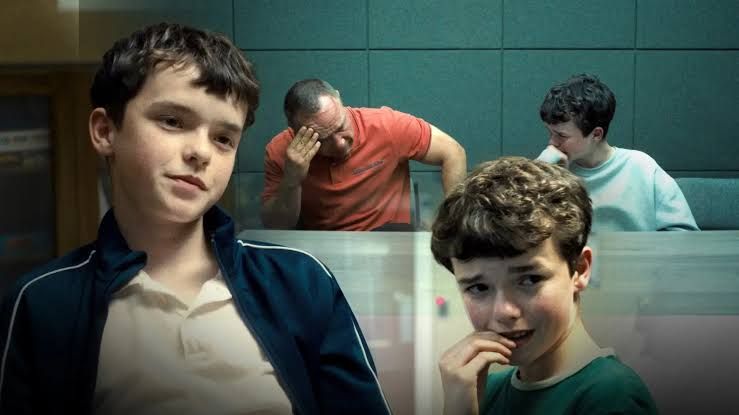
Image source: compilation of stills from Adolescence on Netflix
Netflix’s popular new 4-episode show, Adolescence, is being hailed as a masterpiece in unveiling incel culture in young boys. And I agree, it is a brilliant performance by talented actors, and it is well-filmed, with each hour -long episode being filmed in one shot.
But even the show’s male producer, Stephen Graham, doesn’t seem to understand how his own misogyny creeps into his performance as Jamie’s father on the show.
In an interview with Rolling Stone, Graham claims that his character is just an ordinary Dad, “a hard-working man” who works long hours.
“I didn’t want him to be a violent dad who would raise his hand to his children,” says Graham.
So why do we see this supposedly non-violent male character, being abusive against his wife and children throughout the series, before he violently attacks a young man in public in episode 4?
If this is what the “good guys” think makes a good father… If this is the type of non-violent man who “couldn’t stop” his son from becoming a murder?
Or – more likely – is this series just one more example of a man looking for someone else to blame for men’s violence?
In fact, social media itself isn’t the only scapegoat in this series.
Katie, the girl who was brutally murdered by Jamie, is blamed for her own death.
The detectives and Jamie’s family claimed Katie was “bullying” Jamie, when all she really did was say “no” when he asked her to go out with him, and posting a single emoji – albeit loaded with meaning – on one of Jamie’s posts.
Yes, and this gets cleared up fairly early in the series: In Episode 1, CCTV footage shows Jamie and Katie in an altercation. She pushes him, and he pushes her, and then he stabs her repeatedly.
What’s being said on the internet is not new. This was first all said in grumbling tones by men at the pub, and then shouted at women when those men stumbled home.
Social media isn’t the problem.
Men’s violence is.
Take action against men’s violence today:
Sign the petition to the federal government petition to STOP abusers from suing victims who dare to report to police or speak up to warn others.
Donate to frontline services who are actively helping women and children leave – and stay out of – violent relationships. I recommend DVConnect for their crisis helpline, RizeUp Australia for providing accommodation and emergency furniture, BRISSC for free counselling and art therapy, and Women’s Health and Equality Qld (WHEQ) for community events and education.
Loudly disagree whenever you hear victim-blaming language. (No matter who’s saying it!)
Hold boys accountable whenever they hurt girls or women.
The Family Court of Australia has made some really odd decisions in the past decade, which it uses as precedents when making decisions now.
There are a long list of cases that will blow your mind, and today, here’s just one of them.
In Josey & Meibos [2009] FMCAfam 470, the Family Court harshly reprimanded a mother when she changed her kids’ school to try to keep herself and her children safe from their father, who had a history of violence and anger against them.
Not only that, but the court ordered her to re-enroll the kids in their original school and creche, and ordered the mum to make all decisions like this jointly together with the dad in future.
Horrifically, during 2025’s Australian federal election campaign cycle so far, 4 women have died in one week (see Women’s Agenda).
A 45-year-old woman was murdered and her two young children grievously injured in Sydney.
Louise Hunt (42 years old) was allegedly murdered by her husband in Geham, Queensland.
Kim Duncan (65) was shot in her own living room.
And Claire Austin (38), who died in hospital after fleeing from a man believed to be her abuser. She had a court date set to get an apprehended violence order (a restraining order / protection order).
The men involved were all known or suspected of being violent or abusive before killing these women.
So with the election on this Saturday, and early voting happening at record levels, we should all ask ourselves: What are the political parties doing to keep women and children in Australia alive?
It’s a huge question, but the response from the Big Boys, Peggy Sue (Peter Dutton) and Albo (Hon. Prime Minister Anthony Albanese), has been tiny, and tokenistic at best.
In contrast, the response from The Greens and some keys independents has been massive, and meaningful for victim-survivors.
Want to keep women and children alive? Here’s who you should vote for in the Australian election.
Let’s break it down by political party.
What The Greens are doing to stop domestic violence
The Greens already do a lot to help victim-survivors of domestic and family violence (DFV) and advocate to prevent further men’s violence.
My local Greens MP Max Chandler-Mather puts a huge amount of their own salary into providing free community dinners every Monday, free school breakfasts, and advocating for housing for people at risk of being evicted.
They work with residents to fight against big developers who are trying to force them out of their own homes.
They were in the mud during the floods of Cyclone Alfred, making sandbags together with volunteers, and helping people get back on their feet.
They’re campaigning to stop pubs and clubs from adding more pokies, because we know that along with alcohol, gambling and debt are some of the most common factors in men choosing to commit violence against women.
They even have a free food pantry at their office, so you can come for a free meal, and ask for help with housing or homelessness.
Looking to the future, The Greens have launched a $15 billion comprehensive plan to address the national crisis of family, domestic, and sexual violence.
And it’s all funded by making the big corporations and mining giants pay tax – because they currently pay less tax than I do as a student teacher and support worker.
So the Greens’ plan will protect women and children, without any tax hikes against vulnerable workers like women, non-binary, and child workers.
But they’re not waiting until election day to act!
If you’re ready for a hilarious and engaging listen this weekend, start with Pod Like A Girl’s breakdown of the charity fails by “The Better Blokes” podcast.
You can listen to Pod Like A Girl on all the podcast apps, or visit the website to listen to it there:
Or you can watch this important conversation with video on YouTube:
Or you can even download the mp3 file to listen to it another way.
Full disclosure, it’s not just amazing, it’s also enraging, but only because we’re talking about the unashamed misogyny and idiocy of these two man childs.
And Rach and Mia are absolutely the right women for the job, because they’re intelligent and informed.
They’ve also spent years advocating to eliminate misogyny, sexism, and violence from Australia’s culture – and advocating for victims of this misogyny, which we know also harms men themselves.
The men who are going to The Better Blokes project for advice are more likely to be harmed, not helped, by what these blokes are spouting.
It’s the Aussie brand of the Andrew Tate manosphere, where men are encouraged to be a real man, and women are NOT welcome.
Like their videos telling women to “shut the f*** up” and let men speak (direct quote). 🤢 🤮
Which is a problem, because their governing legal documents, their charity charter, says they exist to improve men’s mental health… Not to indoctrinate men with misogyny and encourage violence against women, non-binary people, and even kids.
Every 4 days in Australia in 2024, another woman was murdered by a man. In addition, men were responsible for killing people of colour, children, people throughout the gender and sexuality spectrums, disabled people, and more.
Just like I did in 2024, I want to record the names and tributes to the woman who have been killed by men in 2025. I don’t want to forget them. My goal, as a writer, is to focus on the lives they lived, rather than the brutal and tragic way in which they died.
Because their death was not their fault. In each case, a man made a violent choice to hurt a woman or child, and that is the only reason why that person died.
Most of the deaths were caused by acts of domestic and family violence (DFV) committed by men. Almost always, that man is a straight, white man who was sentenced to less than the maximum sentence designed for their crimes.
(Want to see those sentences? You can filter by crime type in databases such as SCL Queensland.)
And as you will see below, most of these murders could have been easily prevented:
Politicians should be making laws to stop men’s violence (instead of tax breaks for the rich), funding programs to help victim-survivors recover and rebuild their lives, and commissioning programs targeted at men to reform them before they kill someone.
Police should be investigating and making arrests and prosecutions, which research shows is one of the most effective ways to prevent future DV crimes… instead of what they do at the moment, which is to dismiss most reports of domestic violence and frequently arrest victims.
Courts should be convicting and sentencing these crimes in a way that recognises the heinous and deliberate nature of these crimes.
The corrections system should be doing more restorative justice to prevent future offending.
These institutions have benefited – directly or indirectly – from doing less work than they could have. In failing to do their jobs adequately, they have sentenced women and children to death. For example, we knew in October 2024 that the Queensland Police Service (QPS) had deliberately blocked “damaging” reports about their Service Delivery Program’s dealings with DFV victim-survivors. To date, I am not aware of QPS apologising for this, or making any plans to do better to protect women and children from men and domestic violence.
Aboriginal and Torres Strait Islander readers, please be aware there are some photographs of women who have died. I won’t include any images of women I know are First Nations Australians.
Women killed by men in Australia in 2025
I have made every effort to only hyperlink to articles that included names and photographs after seeking consent from the families of these women; however, the media doesn’t always do this. And if you are a First Nations reader, please know that some of the articles I’ve linked to might include photographs of the women who have died.
Alice Springs Woman, 51
This woman was an Aboriginal Australian, so we are not sharing her name out of respect for culture. She was an amazing artist, a mother, and a loved and respected elder. She was 51 years old and lived in Alice Springs, Northern Territory (NT). She had lived a hard life, but she deserved dignity and respect.
This Aboriginal Australian woman was murdered on Monday, 13 January 2025. Her husband Patrick Jungala Nolan (49 years old), a Papunya man, was charged with murdering her, after he called emergency services to the crime scene near the Todd River. She was the first confirmed Australian victim of femicide and domestic violence homicide this year.
This should have been prevented. Patrick Jungala Nolan was on a domestic violence restraining order when he killed his wife. Northern Territory Police knew he was violent, and dangerous. And according to police reports to the media, he was continually breaching domestic violence orders against her, and he had been violent with other women previously. So why wasn’t he behind bars? Each breach of a domestic violence order is punishable with jail time – even in the territory – as far as I can tell. And the previous assaults against women – why did he get away with that? Why did he walk away from every interaction with police knowing that he could get away with murder?
See more details in Femicide Watch by Sherele Moody, or see some of the least objectionable media reports about this NT woman. (I don’t think you’ll be surprised to see that both of the articles I’ve hyperlinked here were written by women writers. There were plenty of other articles written by straight, white men about how she was living with addiction – but those articles were hideously misogynistic and encouraging racist stereotypes. They are not worth the keystrokes they were typed with.)
WA Woman, 81
This WA woman was 81 years old and she was coming home from a holiday with her daughter (56 years old).
This WA woman was murdered on 13 January 2025 in Cloverdale, WA. It was a deliberate car crash that also killed her daughter and their taxi driver, Sendeku Tesema (58 years old). The killer, Rabin Rawal (43 years old), then committed suicide on the Leach Highway. Police said the killer did not know this woman or the other victims, meaning he hadn’t cared who he hurt in his attempts to kill himself.
I was very disappointed to see more media reporting about the taxi driver and the male killer than about these women. Everyone carries some form of identification, so it’s strange they identified a male taxi driver, but not the two female passengers. This is very clearly gendered reporting, which dehumanises these women. The media haven’t tried to find out these women’s names, and multiple channels have focused their reports on the male victim and the male killer. To make matters worse, the WA Premier Roger Cook started his victim-blaming almost immediately, saying that he could only focus on investments in road infrastructure: “But we need people to make good decisions, as well.”
This type of reporting deliberately encourages the misogynistic thinking that creates more male killers like this.
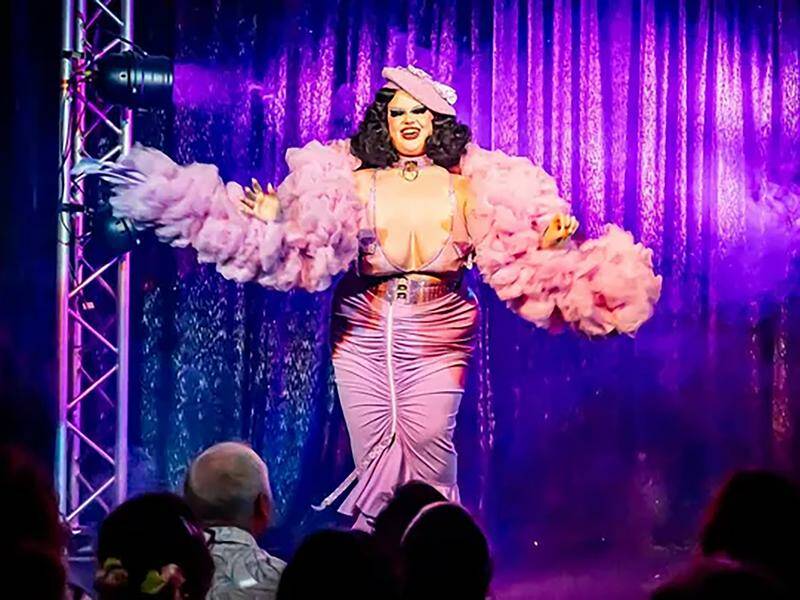
Katie was a popular burlesque performer and plus-size model in Melbourne, performing as Vivien May-Royale, and she also worked at Victoria University. Her vivacious nature springs out of every photo of her, and I found it hard to choose just one photo to remember her by.
Image source: Canberra Times, ACT.
Katie’s mum called her “our beautiful soul”. Friends told Femicide Watch that she had “incredible talent and creative skills” and she was “the kindest soul you had ever met”. She was 27 years old.
Katie Tangey was murdered on 17 January 2025 in Truganina, Victoria, while house-sitting and pet-sitting for her brother. Two men are accused of killing her by firebombing the house, and police believe the killers chose entirely the wrong property, because no one in Tangey’s family has any criminal history or criminal associates.
Victorian Police have not found the two killers at the time of writing. And in a surprising act of negligence, they did not release a safety alert to warn people in the area who might be accidentally targeted by these killers.
Merril was a school teacher, Chair of the board of Northern District Community Health (NDCH), where she served for 27 years, and a volunteer described as “a force to be reckoned with”. She founded the Quambatook Community Resource Centre, which is now providing free counselling to people living in her region of Quambatook, Victoria.
She was 70 years old when she died, and her friends joked that although she was “diminutive in stature”, she was a “giant in spirit”. She personally made sure the Quambatook Memorial Pool stayed open every summer. And a whole generation of Quambatook school kids remembered her reading Enid Blyton’s The Faraway Tree to them. They knew her for “always seeing the best in people and giving more than anyone could ask”.
Her town’s residents came together to write a tribute to Merril, which was full of love and praise for her:
“A truly caring, humble, modest and unpretentious leader of our community, Merril was the mortar that connected the individual groups into a cohesive force.
“Her diplomacy, steady leadership, and never-give-up attitude were essential in keeping community projects alive.”
Merril Kelly was murdered on 21 January 2025, in Quambatook, Victoria. Brian Barnes (67 years old) has been charged with murdering her. He can’t crush her community, though.
I loved seeing this quote from NDCH’s new Chair, Meghan Stewart: “I often find myself saying, ‘What would Merril do?’“
Hazley was only 8 weeks old, and she was beautiful and perfect. She is one of the youngest victims of Australia’s epidemic of men’s violence.
Hazley Ellen Shanks was murdered on 22 January 2025. She died in hospital three days after a domestic violence assault by her father, in Gracemere (QLD).
Hazley’s mum, Sarah Shanks, wrote, “I love you baby girl. I’ll carry your heart always; I’ll carry it in my heart.”
Rachel was a loving and devoted mum to her 7-year-old son, Leo, and her family said she “looked forward to many adventures with her precious son”. She was known as generous, vibrant, and loyal.
Rachel McKenna was murdered on 31 January 2025, in Ascot Vale (Melbourne), Victoria. Her estranged, male partner killed her, then fled the scene and killed himself, to avoid any accountability for his horrific actions.
Rachel’s family made this powerful call for justice in public statements:
“Her death was an unnecessary tragedy, one we never dreamed would impact our family.
“Something must be done to stem violence against women in this country.”
Rachel was a quiet, friendly person who loved her pets. She could remember the lines from her favourite movies. She was loved by her family and friends, including her friends at AC Care. She was a memorable figure, with her big, “frizzy” hair, always wearing a work jacket, and a slight limp when she walked. She was 55 years old and lived in Mount Gambier, South Australia (SA).
A close friend of Rachel’s, Jarad, said despite her struggles, she always bounced back in ways that inspired him: “If something had to be done, she would build her way to it. She had freedom, so she made the most of her life and lifestyle to improve it.”
Friends said Rachel was “in a good mood” the night before she died, because she had recently ended a relationship. Frustratingly, we know from Australian research in 2024 that the most vulnerable time for a woman to be attacked by a male ex-partner is when she breaks up with them or tries to leave, and sadly, this was true for Rachel.
Rachel Moresi was murdered on 5 February 2025 in her home. Her ex-partner, Troy Earle James (53 years old), was charged with murdering her, and attempted to destroy the evidence in a horrific and dehumanising way.
I loved reading this quote from Rachel’s friend Jarad:
“I helped her believe in herself, and she taught me the same thing. Believe in ourselves.”
This woman was an Aboriginal Australian, so we are not sharing her name out of respect for culture. She was a mum of four and a talented Aboriginal artist. She was 41 years old and was an Alice Springs local, staying in the Warlpiri town camp in Braitling, Northern Territory (NT).
This Warlpiri woman was murdered on 9 February 2025, at Ilperye Tyathe (Warlpiri) town camp in Alice Springs, Northern Territory (NT). Her partner, Christopher Dickson (39 years old) was charged with murdering her.
Jussy was a loving mum to two daughters, and worked for a local gardening and cleaning business. She was going to turn 43 years old in just a few days. Friends and her family in Aoteroa (New Zealand) say she was a “kind, amazing, warm-hearted person”.
Jussy Hammond was murdered on 9 February 2025, in Nashdale, NSW. Her partner Rolong Stanley (30 years old) was charged with killing her through negligent driving causing death in his attempted murder-suicide, and with breaching an AVO (domestic violence restraining order) that should have protected her.
Elizabeth was a marine biologist, and she was a clever young person who was just starting out in her scientific career. She was 24 years old and lived in Perth, Western Australia (WA). Her family said, “Our beautiful, bright girl brought sunshine to our lives.”
Elizabeth Pearce was murdered on 15 February 2025 in Dalkeith, WA. Rhys Bellinge (45 years old) was charged with manslaughter, for killing her by speeding in his high-powered car and crashing into the Uber she was in.
Why was Rhys Bellinge not charged with murder, when his actions were intentional? His lawyer said he was angry because he had recently been dumped – not by Elizabeth – SO WHAT? Anger is not an excuse for deliberately killing people, driving drunk, or any other horrific things he did that day. The media has been reporting about how this man’s career as an obstetrician, and his rich family. What they should be reporting is how callous it is (for a doctor, of all people!) to end a young person’s life, and making it clear that anger is no excuse. Thankfully, at least the Magistrate took Elizabeth’s death seriously, and refused bail or house arrest, saying Rhys Bellinge poses “an unacceptable risk to the community” because of his behaviour.
Elizabeth’s Uber driver, Muhammad Usman, was also severely injured in the crash and attended her funeral in a wheelchair. He called Elizabeth a “young and pure soul” and asked everyone to keep her in his thoughts and prayers, as he did.
Kara was a mum of three, and she had recently celebrated her son finishing primary school and winning an award. She was 27 years old and an Aboriginal woman, so I’m following the lead of the National Indigenous Times in sharing her name here. Her family is devastated by her death, which came so soon after the death of her brother Nicholas in November 2024.
Kara Jade Weribone was murdered on 26 February 2025, in Toowoomba, Queensland. James Ramsey (29 years old) was charged with murdering her. He knew her, and he shot her down in broad daylight.
This page is in the process of being edited, so please come back regularly for updated life stories.
In addition, men in Australia have murdered several children so far in 2025, tragically cutting short these little lives.
One of these precious children was Kingsley Field, who was only 2 years old; he was killed by a man the family knew, in an act of domestic violence (see Femicide Watch for details).
An unnamed 4-month-old boy was murdered on 21 January in Tamsworth, NSW, in an act of domestic violence (see Femicide Watch for details).
Some people were lucky, and survived horrifying attacks by men. Linley Anyos was shot by a male on 8 January 2025, in Tallebudgera, NSW, suffering life-threatening wounds. She survived – a brave fighter – but her dad says this violent act has understandably broken her faith in humanity, and she no longer wants to be around people.
Destiny Otton-Rakuraku survived her former partner’s attempt to murder her. Her family say she is “strong and determined” despite severe ongoing pain. The psychological trauma of these experiences is another type of malicious wound from men’s violence, and it’s one which all victim-survivors are familiar with.
From the point of view of many victims, there is no excuse for men’s violence – not their mental health, not their level of education, and not any claims of “provocation” (a long-disproven concept).
So as always, friends, we must condemn men’s violence against women, and keep condemning it until men change.
Until the governments believe victims, and act on it.
I just read the most heartbreaking message from 41 children who have been ignored and unheard when going through the Family Court of Australia.
One, 15-year-old said they felt “squashed”.
I just had to do what I was told and be quiet and suck it up, even if it wasn’t what I wanted.
Two sisters were ordered by the court to spend time with their father, even though they told the court they didn’t want to because they would not be safe with him. One of the sisters said:
That was always one of my biggest regrets because I’m like, maybe if I had said something differently, or emphasised it more, they would have understood what I was trying to say and actually listened… It wouldn’t have made such traumatic memories, which happened afterwards, when we were forced to see him.
The main themes they highlighted match previous research that looked into the fundamental flaws in Australia’s national “child-centred”, “DV aware” court.
For example, studies about the Family Court process and judges’ decision-making have found that:
“The courts are seemingly prioritising protection of the child from the risk of psychological harm by the mother due to her failure to facilitate meaningful ties with a father over the risk of alleged physical or sexual harm by the father. We see this as a serious concern.” (Easteal, Prest, & Thornton, 2019)
There is a “lack of fit” between the types of cases that end up in the Family Court, which “are invariably complex, and likely to involve allegations of domestic violence and/or child abuse, mental health concerns, high conflict, and substance misuse”, and the court’s repeated focus on shared parenting by both parents, “reflected in decisions that appear not to reflect the system’s overarching principle of the ‘best interests’ of children and may also pay insufficient attention to the safety of women and children.” (Laing, 2017)
So what is the Family Court of Australia actually supposed to be doing for children, and why is it refusing to meet its legal obligations?
It’s harder to say “happy new year” when you remember that 101 women were killed by men in 2024 (Femicide Watch Australia, 2024).
It might not sound like a huge number, until you compare it to the 46 women who were killed by men in the 2022-23 financial year (AIHW, 2024).
Men killing 101 women in 12 months is horrific because it is a doubling of violence against women in Australia.
Domestic and family violence is a national emergency, with 1 in 4 Australian women having experienced violence from a male partner (White Ribbon, 2024).
With that in mind, I read the following books last year, and I believe they would help any Australian man who wants to understand the current war on women and children in our nation.
More importantly, this information can help any person who wants to help us end the war on women.
I was thoroughly impressed by the way these writers gathered measurable data and research from all around Australia and sometimes internationally.
I’m sure you’ll find the statistics astounding – because I did, and I’ve already been reading on these topics for 20 years.
A note on gender references: All references in this article to “women” include trans women. Much of the data on “women” also includes non-binary people, who are routinely marked as female “for insurance purposes”.
This post was originally published in October for Domestic Violence Awareness Month. As you know, in Australia, we have been in a femicide epidemic since 2022.
Every 4 days in Australia in 2024, another woman is murdered by a man.
Usually a man she knows.
Usually, she is a First Nations woman, or a disabled woman, who are both attacked and murdered at much higher rates than others.
Almost always, the attacker is a straight, white male.
This matters. It matters so much.
No one deserves to be brutally murdered, like these women have been. No one.
And especially as you will see below, most of these murders could have been easily prevented by police, courts, and the government.
So we have to condemn men’s violence against women, by talking about them until it changes.
Until the governments believe us, and act on it.
Until the police believe us, and act on it.
Until the courts believe us, and act on it.
Today, I’ll be focussing on the ways the police in every state and territory across Australia has been failing women, children, women of colour, non-binary people, trans people, queer people, etc.
This choice to focus on the police is validated by the fact that so many states’ police forces tried in 2024 to suppress the results of internal and external investigations that showed they were failing DFV victims.
For example, it was uncovered in October 2024 that Queensland Police Service (QPS) had deliberately blocked “damaging” reports about their Service Delivery Program’s dealings with DFV victims. Internal emails about Queensland Police’s failure were confirmed by direct quotes from their own leadership.
Throughout this post, I’ve linked to reports about police failing to catch male killers and failing to protect the women and children whom these killers targeted.
What you need to know about women’s lives and men’s violence while reading this article
I want to honour the lives of the 102 women killed by men in 2024, because they are so much more than just statistics.
Each of them were loved by family and friends.
I have included links to my main sources for this information, including the amazing resources created by journalist Sherele Moody. I have tried to source only articles that included names and photographs after seeking consent from the families of these women; however, the media doesn’t always do this, so I couldn’t always find respectful sources. If you are a First Nations reader, please know that some of the articles I’ve linked to include photographs of the women who were killed.
I have also made my best attempt to uncover the correct gender identity and pronouns for each of these people, and after more than 2 days of research, I have reached the limits of what I can find out online for free. If you find any misgendering errors, please let me know and I will update this article with sincere apologies. I want to stop men’s violence against all humans, whether they are women, children, people of colour, non-binary people, trans people, other men, etc.
Finally, I could not write about men’s violence against women in Australia without acknowledging the atrocities that male political leaders, male soldiers, male police, and other men are committing right now across the world. War, genocide, and other violence against women continues unchecked in Gaza, Lebanon, Sudan, Darfur, the Democratic Republic of Congo, Ukraine, Afghanistan, Syria, and many more countries as I write this.
What can I do to stop domestic violence in Australia?
For those who cannot read about injustice without acting on it – like me – I recommend these actions:
If you’re a man, I want to see you posting about domestic violence issues. I firmly believe all men should be actively working to prevent men’s violence against women and children, and demanding systemic changes from the government so that victim-survivors can leave and stay safe. What about “not all men”? No. Until all men are actively campaigning to stop men’s violence … it is all men.
Donate to your local DV support services, or to the families. Women’s shelters, domestic violence shelters, and DV support services are all ridiculously underfunded by local, state, and federal governments. In 2024 alone, many DV shelters have had to close their doors, including the one that was controversially closed by the Perth Mayor and WA Premier. If you can afford it, give a little – every little bit helps, and it’s tax-deductible. If you prefer to donate directly to the families of these 63+ women, you can find and donate to their GoFundMe campaigns, to help them raise money for funeral or memorial services.
Email your federal and state Members of Parliament (MP). You can find the contact details for Queensland MPs easily, and you can usually find contact details for most federal Senators and MPs. Ask them which women’s shelters and women’s legal services they are directly funding, and demand that they pay more. Tell them to increase staffing at courthouses, so that victim-survivors can get DV protection orders faster. In Queensland, it currently takes up to 2 years to get a protection order that only lasts 5 years. Australia has a budget surplus in 2024 – THE GOVERNMENT CAN AFFORD TO DO BETTER!
Send a complaint to Centrelink, who routinely denies DV victim-survivors the financial help they need: the Crisis Payment for Extreme Circumstances Family and Domestic Violence, and the separate Escaping Violence Payment (EVP) program. Tell Centrelink to hire more people for their DV section and their Families Line. Because DV victim-survivors should be waiting on the phone for hours every day for weeks, just to hear, when they finally reach the top of the queue, “We can’t help you.” It’s not good enough. Australia’s budget surplus means the government – through Services Australia and Centrelink – can afford to help more vulnerable women and children than they do.
Send a complaint to the Police Commissioner in your state or territory about one of the 63+ women who have died this year so far. Ask the commissioner what they are doing today to prevent any other women dying in their state or territory. Because as you will see from the below records, many of these women would still be alive today if police would just do their damn jobs.
If you know a lawyer or have a lawyer, ask them how many pro bono cases they take on. Every lawyer in Australia should be helping at least one domestic violence victim-survivor with trying to get protection orders, parenting orders, Victim Assist payments, home loan contracts, workplace harassment suits, Wills and estates, and more. All of these factors can force victims to stay with violent men or stay in bad situations, unless they have the money to hire a lawyer – which most women do not.
If you’re worried about someone you know, phone your local police station and ask to speak to a sergeant. Ask them to make a “welfare check” and put it on record that you have reported concerns about someone’s violence or concerns for someone’s safety. Our taxpayer dollars are paying these cops’ salaries. It is literally their job to go and check that violent men are staying away from women and children like they should be. As you’ll see in the article below, most of these women’s bodies were only discovered because friends and family told police to go look.
Worried for your own safety? Call 000 in an emergency. Or call the 24/7 DV counselling line 1800 RESPECT. First Nations women can call 13YARN Crisis Supporters 24/7 on 13 92 76, for help that’s designed by mob for mob. And even if the police haven’t been helpful before, report every incident to them on 000 or PoliceLink, and ask them for an incident report number. Queensland Police has a “vulnerable person” SMS service you can register for, so you can text them to make a report.
This is a lesson plan I wrote in 2024, to align with the F-10 Australian Curriculum for an English class. I wrote the plan for one of my university assessments, so I’ve put the research receipts down the bottom of the page if you want to look closer into the background information.
I’m just a student teacher studying my Master of Education, so please feel free to provide kind, specific feedback. 😎
How to use this lesson plan: I designed this with multiple parts that you can mix and match if you want to run a single lesson … or you can run all parts over a few classes or a double period.
Duration (mins): 70 minutes per class, designed for 2 class sessions or a double period.
Resources needed:
PPT and projector
Downloaded video clips (for when the WiFi fails us)
Before we get into the lesson plan, though, I just want to clarify one very important question…
Why learn about the patriarchy in English class?
Understanding how the patriarchy perpetuates domestic and family violence (DFV) in Australia is a key part of being an active and informed citizen in 2024. Students are learning empathy as part of the personal and social capability general capability (GC) in the Australian curriculum, and we know that students can build empathy and advocate for others by learning about past and present human rights violations. And because adolescent students are often having their first romantic and sexual experiences, talking about the red flags of abusive relationships helps to protect them from harm.
In a future post, I plan to show you a lesson plan for a Year 10 Psychology class, about how harmful messages in patriarchal societies have affected most people’s implicit biases. Learning to spot our own implicit biases is one of the easiest places to start when learning self-awareness and learning to create psychological safety in our society.
Content for today’s lesson
This lesson focuses on spotting and analysing literary devices and understanding how audiences view a text differently depending on their social and political context. We’ll look at the song Labour by Paris Paloma, which I love as a teaching tool for two reasons.
See YouTube for the official music videos for labour and cacophony (labour) by Paris Paloma
First, many students already know this song because it went viral on Tiktok (and then on the rest of social media). So they’re familiar with some of the lyrics, making more brain space available to do the “thinking” analysis tasks of this lesson.
Secondly, it’s often easier to spot literary devices in poetry texts than in prose like articles or novels, and song lyrics are a highly-effective form of poetry. So teaching Labour as a poetry text means again, students can put more energy towards learning or remembering the content.
If you’re an education student like me, this reasoning provides evidence of you meeting Australian Professional Standards of Teaching (APST) number 2: knowing the content and how to teach it.
The second I saw this ad campaign by Bumble, I immediately uninstalled the app (I never use it anyway) and submitted a 1-star rating everywhere I could, and so did thousands of others.
Here’s why.
Note: This article refers to “women and other genders” and to “non-men” in an attempt to represent the reality of as many people as possible. Anytime I’ve written “women”, “trans women”, “trans men”, or “non-binary people”, know that I’m trying to remind people of a gender fluid spectrum, rather than trying to call out specific genders.
How Bumble offended every non-man in just 2 days
Bumble launched their “celibacy is not the answer” ad campaign in early May 2024, and it’s worse than anyone expected.




 TJ Withers