Laws that silence victims of DV and SA in Queensland

The incredible Grace Tame recently did an interview on the podcast The Imperfects, and it reminded me all over again that we need to keep talking about this. Thank you, Grace!

It may be 2024, but in Australia, most states and territories still do not allow victim-survivors of sexual assault and domestic violence to speak the truth.

Vulnerable people are silenced by the very legal system that claims it wants to protect us.

The legal system disproportionately favours the person with more money and power. That usually means abusers, who:

  • Have often spent years controlling or withholding household finances
  • Typically earn more thanks to the gender pay gap that still exists in Australia
  • Have the power of a respected position in the community, or
  • Are confident that their victim is not legally allowed to speak up about what they did.

With pro bono legal services and DFV support services across the state already stretched beyond capacity, vulnerable women, non-binary people, trans people, and children, are being left to fend entirely for themselves.

The current legal system in Queensland perpetuates abuse. Because it’s easier for an abuser to control a person when they know that person cannot “out” their abuser.

Read on to find out what laws we need to change.
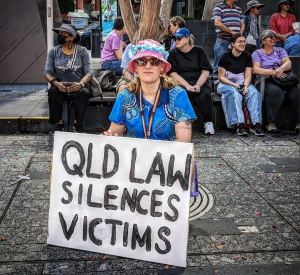
photo shows author TJ Withers at the Brisbane March against domestic violence in April 2024, holding a sign that says Queensland laws silence victims.
Continue reading

Writing about people you know – treading the fine line

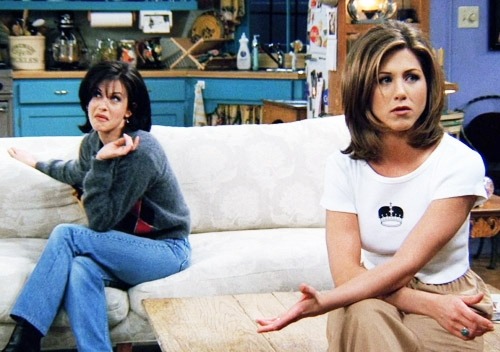
Friends Season 1 Monica and Rachel Image source: 'FRIENDS' TV show via Hello Giggles

Friends Season 1 Monica and Rachel
Image source: ‘FRIENDS’ TV show via Hello Giggles

Rachel:                Oh, and I’m sorry I said you were a cow in high school.

Monica:               That’s okay. I was a cow.

Rachel:                Yes, but I’m still sorry I said it.

– Friends, Season 1, Episode 17 “The One With Two Parts”

Disclaimer:

This post offers a broad overview of defamation law but is not intended to be read as legal advice. This is a complex legal issue that should not be taken lightly. If you have concerns about your own writing with regards to libel liability, you should seek independent legal advice.

I’ve had authors who were worried about writing about the people in their family. Memoirs are always a bit tricky like that. It’s your story, but it’s also the story of how your life was affected by them.

It’s more complicated than just which details to include and which to leave out. It becomes a question of, do you even want to represent them as themselves, or would you rather change their name, age, occupation, everything, in fact, apart from what they did for you or how they impacted on your life?

It doesn’t have to be for negative reasons. Some people really don’t want the credit. One of the writers I knew in uni wrote their own stories as novels because they didn’t want their subject to be embarrassed by how the writer looked up to them as their role model, their hero.

At the Brisbane Writers Festival, I heard a great talk by Sian Prior about her memoir, ‘Shy’, which chronicles her struggles with social anxiety. She wrote about living in the shadow of an ex of hers who was very famous. In her case, she said she didn’t need to check with him before writing about him. They had already parted ways, but more importantly, he had already written about their relationship in his own book! He’d already set the rules by not asking her before he wrote about her.

Her approach, knowing that she would uncover things about their relationship that people didn’t know, was to be rigorous about being honest. By contrast, she did check with her family about her portrayal of each of them, and they were all surprised but happy with her including them in her story.

Lots of people worry about defamation law – specifically, the written form, ‘libel’. Here’s the raw basics:

Continue reading