1 in 3 Aussie men admit to abusing their partner

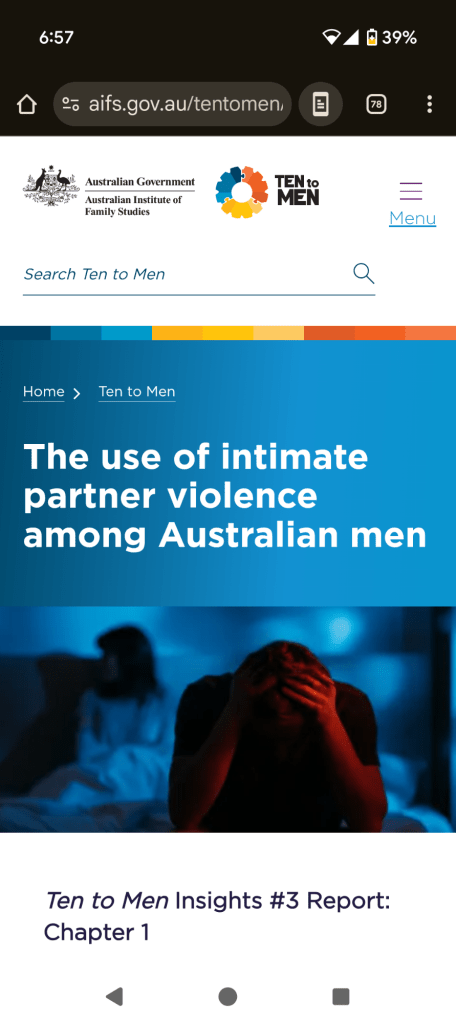
New research released by the Australian government has found that more than 1 in 3 average Aussie men freely admit to having committed domestic violence against their partner.

It proves what many women in Australia have known for years – even if it’s “not all men”, it’s more than 1 in 3.

And that is just the men who are happy to say, yep I’m committing violent acts against against people I claim to love. The rest, we are left to wonder about.

These statistics come from the Australian Institute of Family Studies (AIFS), in a longitudinal study that compares men’s health and self-reported behaviour in 2023-24 and 2013-14.

I dislike the name of this study, but I really hate the truths that the study uncovered.

In 2013-14, it was only 1 in 4 Australian men (25%) who freely admitted to having committed domestic violence against their partner.

It is not okay that more Aussie men than ever before are abusing women.

And it’s not okay that more men than ever before think this behaviour is so normal, that they’ll happily admit to committing literal crimes against women.

It cannot be overstated – these are self-reported behavioural statistics, from a huge sample size of 26,000 men.

This means these statistics really do represent what men think and do in Australia.

Continue reading

The Better Blokes podcast is the Aussie version of Andrew Tate, but less intelligent

If you’re ready for a hilarious and engaging listen this weekend, start with Pod Like A Girl’s breakdown of the charity fails by “The Better Blokes” podcast.

You can listen to Pod Like A Girl on all the podcast apps, or visit the website to listen to it there:

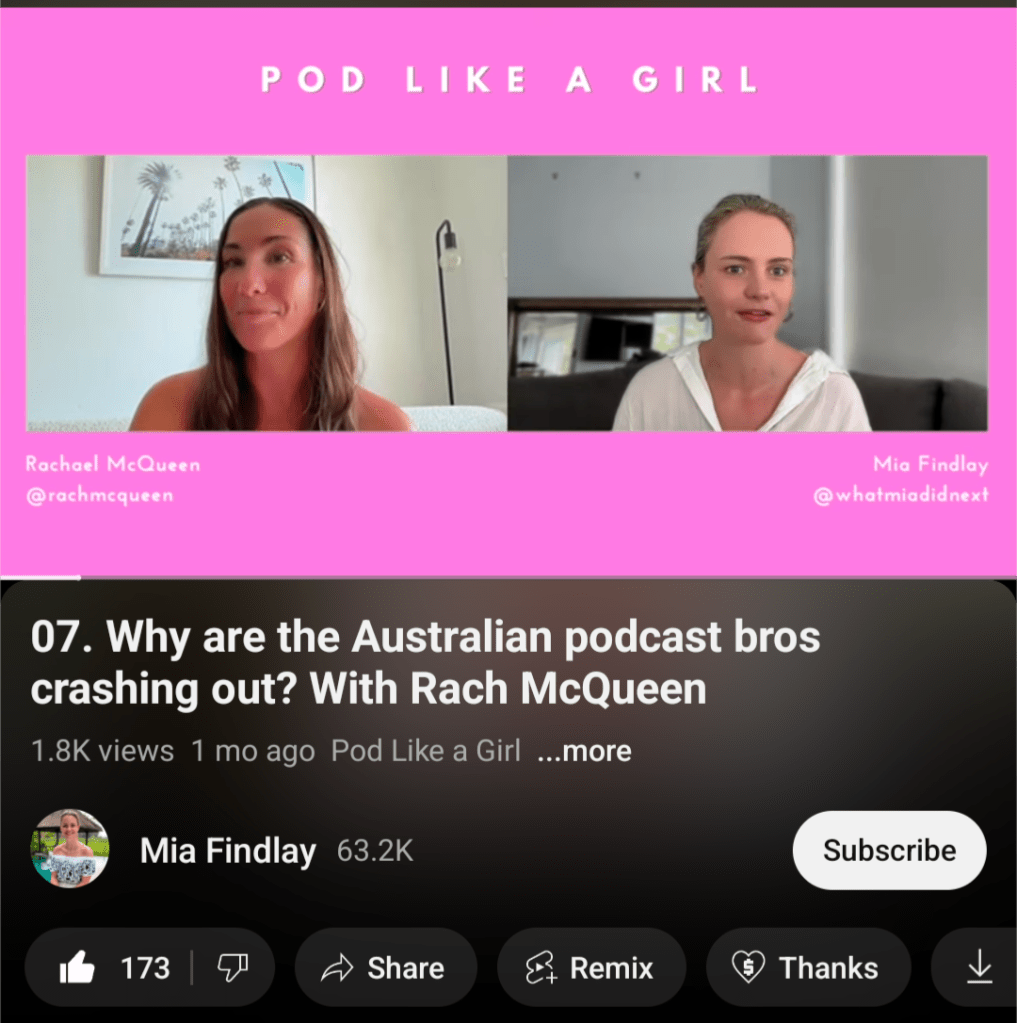
Pod Like a Girl: 07. Why are the Australian podcast bros crashing out? With Rach McQueen

Or you can watch this important conversation with video on YouTube:

Image from video of Mia and Rach speaking about how the Better Blokes project has been encouraging men's violence against women.

Or you can even download the mp3 file to listen to it another way.

Full disclosure, it’s not just amazing, it’s also enraging, but only because we’re talking about the unashamed misogyny and idiocy of these two man childs.

And Rach and Mia are absolutely the right women for the job, because they’re intelligent and informed.

They’ve also spent years advocating to eliminate misogyny, sexism, and violence from Australia’s culture – and advocating for victims of this misogyny, which we know also harms men themselves.

The men who are going to The Better Blokes project for advice are more likely to be harmed, not helped, by what these blokes are spouting.

It’s the Aussie brand of the Andrew Tate manosphere, where men are encouraged to be a real man, and women are NOT welcome.

Like their videos telling women to “shut the f*** up” and let men speak (direct quote). 🤢 🤮

Which is a problem, because their governing legal documents, their charity charter, says they exist to improve men’s mental health… Not to indoctrinate men with misogyny and encourage violence against women, non-binary people, and even kids.

Cover image of the Better Blokes podcast.

So are they actually helping men’s mental health?

Let’s see…

Continue reading

Laws that silence victims of DV and SA in Queensland

The incredible Grace Tame recently did an interview on the podcast The Imperfects, and it reminded me all over again that we need to keep talking about this. Thank you, Grace!

It may be 2024, but in Australia, most states and territories still do not allow victim-survivors of sexual assault and domestic violence to speak the truth.

Vulnerable people are silenced by the very legal system that claims it wants to protect us.

The legal system disproportionately favours the person with more money and power. That usually means abusers, who:

  • Have often spent years controlling or withholding household finances
  • Typically earn more thanks to the gender pay gap that still exists in Australia
  • Have the power of a respected position in the community, or
  • Are confident that their victim is not legally allowed to speak up about what they did.

With pro bono legal services and DFV support services across the state already stretched beyond capacity, vulnerable women, non-binary people, trans people, and children, are being left to fend entirely for themselves.

The current legal system in Queensland perpetuates abuse. Because it’s easier for an abuser to control a person when they know that person cannot “out” their abuser.

Read on to find out what laws we need to change.

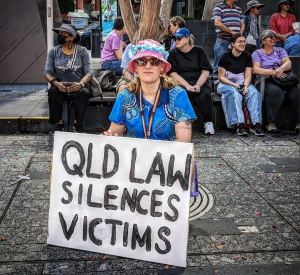
photo shows author TJ Withers at the Brisbane March against domestic violence in April 2024, holding a sign that says Queensland laws silence victims.
Continue reading

Free Lesson Plan: Unpacking the patriarchy in context (Year 10 English)

This is a lesson plan I wrote in 2024, to align with the F-10 Australian Curriculum for an English class. I wrote the plan for one of my university assessments, so I’ve put the research receipts down the bottom of the page if you want to look closer into the background information.

I’m just a student teacher studying my Master of Education, so please feel free to provide kind, specific feedback. 😎

How to use this lesson plan: I designed this with multiple parts that you can mix and match if you want to run a single lesson … or you can run all parts over a few classes or a double period.

Duration (mins): 70 minutes per class, designed for 2 class sessions or a double period.

Resources needed:

  • PPT and projector
  • Downloaded video clips (for when the WiFi fails us)

Before we get into the lesson plan, though, I just want to clarify one very important question…

Why learn about the patriarchy in English class?

Understanding how the patriarchy perpetuates domestic and family violence (DFV) in Australia is a key part of being an active and informed citizen in 2024. Students are learning empathy as part of the personal and social capability general capability (GC) in the Australian curriculum, and we know that students can build empathy and advocate for others by learning about past and present human rights violations. And because adolescent students are often having their first romantic and sexual experiences, talking about the red flags of abusive relationships helps to protect them from harm.

In a future post, I plan to show you a lesson plan for a Year 10 Psychology class, about how harmful messages in patriarchal societies have affected most people’s implicit biases. Learning to spot our own implicit biases is one of the easiest places to start when learning self-awareness and learning to create psychological safety in our society.

Content for today’s lesson

This lesson focuses on spotting and analysing literary devices and understanding how audiences view a text differently depending on their social and political context. We’ll look at the song Labour by Paris Paloma, which I love as a teaching tool for two reasons.

image shows thumbnail from YouTube video for the official music video of the song Labour by Paris Paloma, posted March 2023.

See YouTube for the official music videos for
labour and cacophony (labour)
by Paris Paloma

First, many students already know this song because it went viral on Tiktok (and then on the rest of social media). So they’re familiar with some of the lyrics, making more brain space available to do the “thinking” analysis tasks of this lesson.

    Secondly, it’s often easier to spot literary devices in poetry texts than in prose like articles or novels, and song lyrics are a highly-effective form of poetry. So teaching Labour as a poetry text means again, students can put more energy towards learning or remembering the content.

    If you’re an education student like me, this reasoning provides evidence of you meeting Australian Professional Standards of Teaching (APST) number 2: knowing the content and how to teach it.

    Continue reading

    Cultivate your curiosity

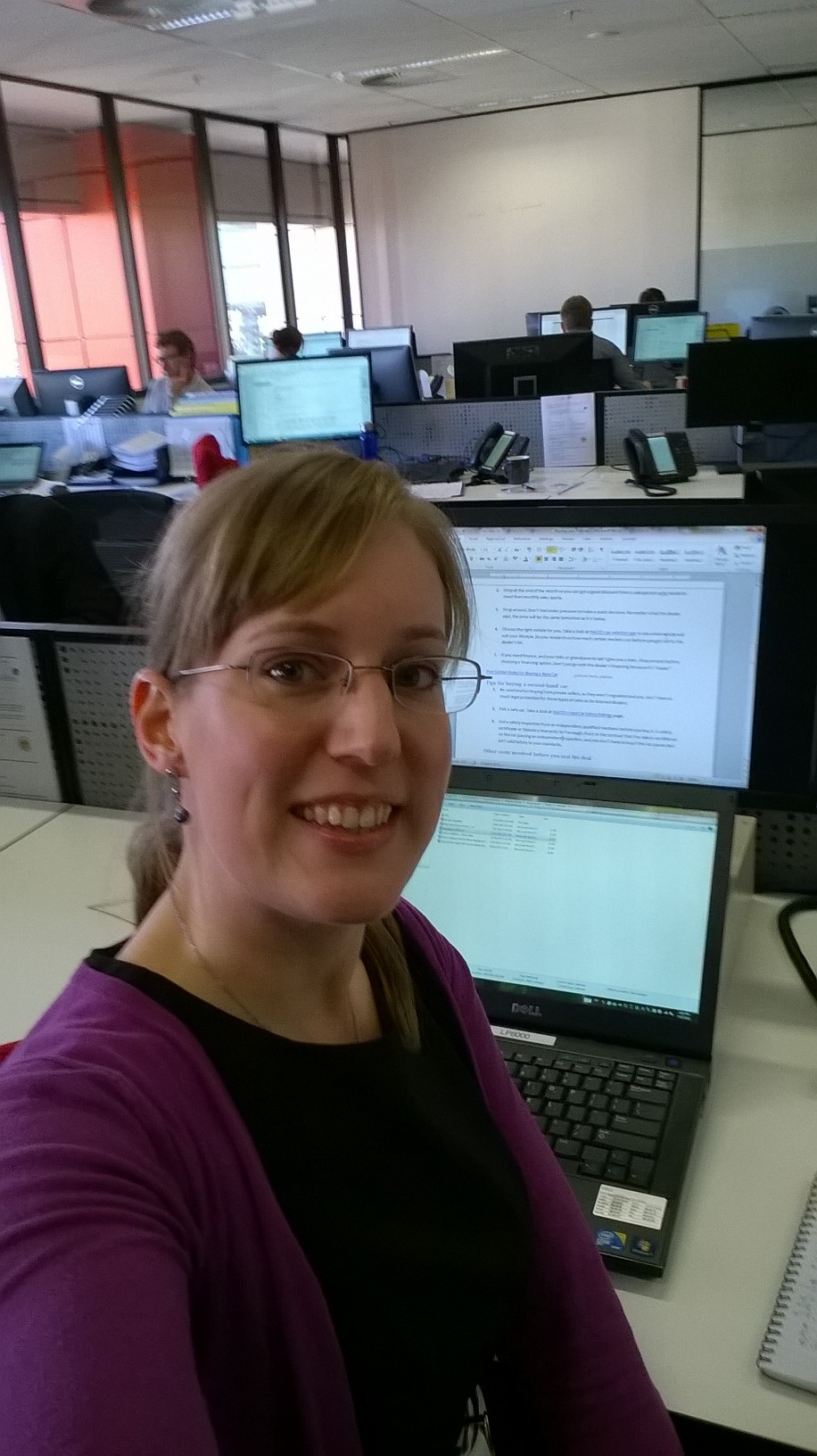
    Me hard at work in the new Canstar office in Brisbane CBD. I took this photo using my new Windows phone.

    Me hard at work in the new Canstar office in Brisbane CBD. I took this photo using my new Windows phone.

    I’ve been thrashing out the articles for my current contract employer, Canstar Blue. You can view all of my articles at this link, and I’ve compiled a ‘Best Of’ compilation at the bottom of this post…

    Have I mentioned lately how amazing it is to be writing for a living? I am thoroughly enjoying every day. And thankfully they like me, too, so I get to stay on for another 6 month contract. So thankful! Praise God.

    So here’s two of the things I’ve been thinking about this Friday…

    Every morning at 9am we start our day with an editorial team Brainstorm Meeting. Depending on what day it is, 3 to 7 of us get together in one of the meeting rooms and say, “Tomorrow’s product releases are 4WDs and pharmacies. What are some articles we can write today about that?” Then we chat about it and get a list of 5 to 10 ideas, divide them among us, and report on where we’re up to with our other article lists that we’re each responsible for.

    I love these meetings because writing is largely a solitary task, but for 15 minutes every day, we’re all part of a team working together. We’re all having our work and our ideas acknowledged and validated. Team managers, take note of the first thing I’ve been realising:

    Short, positive team meetings more often make for happier staff.

    Continue reading

    Why we should get to play jigsaw puzzles at work

    Image source: WHSmith 1000 Piece Jigsaw: ‘Hidden Tigers’ by Steve Read

    Image source: WHSmith 1000 Piece Jigsaw: ‘Hidden Tigers’ by Steve Read

    So where I work, we share a building with a biology research lab. It sounds cool but I never get to see them apart from a shared “hello” in the hallways. But the best part is that the path to the stockroom takes me near enough to see their staff room… which is filled with jigsaw puzzles!

    Every morning tea, lunch, and afternoon tea, you can spy them all in there, sitting or standing around a massive boardroom table covered in the latest masterpiece.

    Tigers in the jungle.

    Castles on the moors.

    Uluru at sunset.

    I swear I saw a Harry Potter puzzle once.

    This is how they incubate their ideas, and I think it’s genius.

    “Well, it sounds like we’ve hit a wall. Let’s take a break and come back after morning tea. To the puzzle room!”

    But let me tell you, the puzzles have more benefits than just having a nice little break from work.

    Continue reading

    Go where you find inspiration: Part 3: The airport and times of transition

    Go where you find inspiration, and go there often.

    Alain de Botton writing in the new Terminal 5 at Heathrow Airport. Image source: Zocalo Public Square

    Alain de Botton writing in the new Terminal 5 at Heathrow Airport
    Image source: Zocalo Public Square

    I’ve driven to the airport too many times recently, saying goodbye to people I love.

    But it’s gotten me thinking.

    How about visiting an airport to inspire new creativity for a “stuck” story?

    Airports have always inspired me, with their excitement and anticipation of new adventures and fond reunions. I love starting new adventures and seeing people saying their “goodbyes” and “welcomes homes”. What does it mean symbolically if a character is at the airport? And where could your character end up?

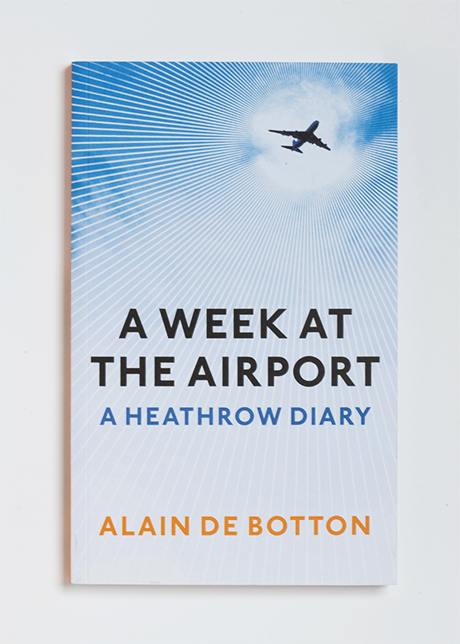
    'A week at the airport' book cover. Image source: Profile Books

    Image source: Profile Books

    I started thinking about this when I read an article about Alain de Botton, who did a one-week writers residency at Heathrow’s new Terminal 5. You can read about his experience and the book he wrote about it in his book, A Week at the Airport.

    For this project, he stayed in the airport and the hotel for 24 hours a day for one week. That was his only venue – and he said the confinement to one setting was great inspiration.

    He was inspired by the terminal itself – its technology, the design, and its sheer size and scale. He said he likes airports so much he often longs to be delayed in them.

    Continue reading

    The Withers Survey: Studying the presence or use of incubation in the creative process

    Everyone has their reasons...

    “Why are you creative?” from KKB101 lecture, 2011, QUT

    Last year I conducted a survey on creativity, mainly among friends and family, but also with some random people I found in the uni computer labs.  I asked everyone I knew, “Are you creative?  Would you like to talk about that?” and many people said yes.  Consider this thanks and an acknowledgement of those who spent time and effort doing my survey.

    As a brief introduction, the Withers Survey studied the presence of or use of an incubation period in the creative process.  The traditional theory of a universal creative process is Wallas’s four-stage creative process (1945), which I have discussed in an earlier post on the topic of incubation.  The four-stage process identifies four stages common to most creative disciplines (Davis, 2004, 121-124; CreativeIntensive, 2007):

    1. Preparation in exploring and clarifying a field or concept;
    2. Incubation, a fringe consciousness or unconscious activity related to the idea;
    3. Illumination or the moment of discovery; and
    4. Verification of the result.

    My hypothesis was that most people who consider themselves ‘creative’, or have been labelled ‘creative’ by others, engage in some form of incubation as part of their creative process.  This post will discuss the preliminary results and the survey itself.

    Continue reading

    Incubation: Creativity never sleeps… or does it?

    Everyone has their own method.

    Bill Watterson, “Calvin and Hobbes”

    Last year I did a subject that asked us as creators to answer two questions: “Why do we create?” and “How do we create?”   You have to love Creative Industries assessments.

    Mocking aside, however, these two questions are vital to understand if you intend to be creative successfully, or be creative for a living… or both.

    The reflective waffle which was our first assessment piece answered the first question, and I’ll post that shortly.   Literally.   The short answer after much research and navel-gazing amounts, almost universally, to: “We create because it’s fun.”   Bronowski says that humans do not choose to create unless they enjoy the process (1985, p 245).

    However, the second question led into hours of delightful research, culminating in a research essay.   My task was to argue that, although there are differences between the disciplines of art, design, and media, these differences do not affect the fundamental process of creativity, and that this creates links between these disciplines.

    What follows is my summary of the parts of my research related to one part of the traditional creative process: the incubation stage.   The full text of the research essay is available on my Full text research essays page.

    Continue reading