The Better Blokes podcast is the Aussie version of Andrew Tate, but less intelligent

If you’re ready for a hilarious and engaging listen this weekend, start with Pod Like A Girl’s breakdown of the charity fails by “The Better Blokes” podcast.

You can listen to Pod Like A Girl on all the podcast apps, or visit the website to listen to it there:

Pod Like a Girl: 07. Why are the Australian podcast bros crashing out? With Rach McQueen

Or you can watch this important conversation with video on YouTube:
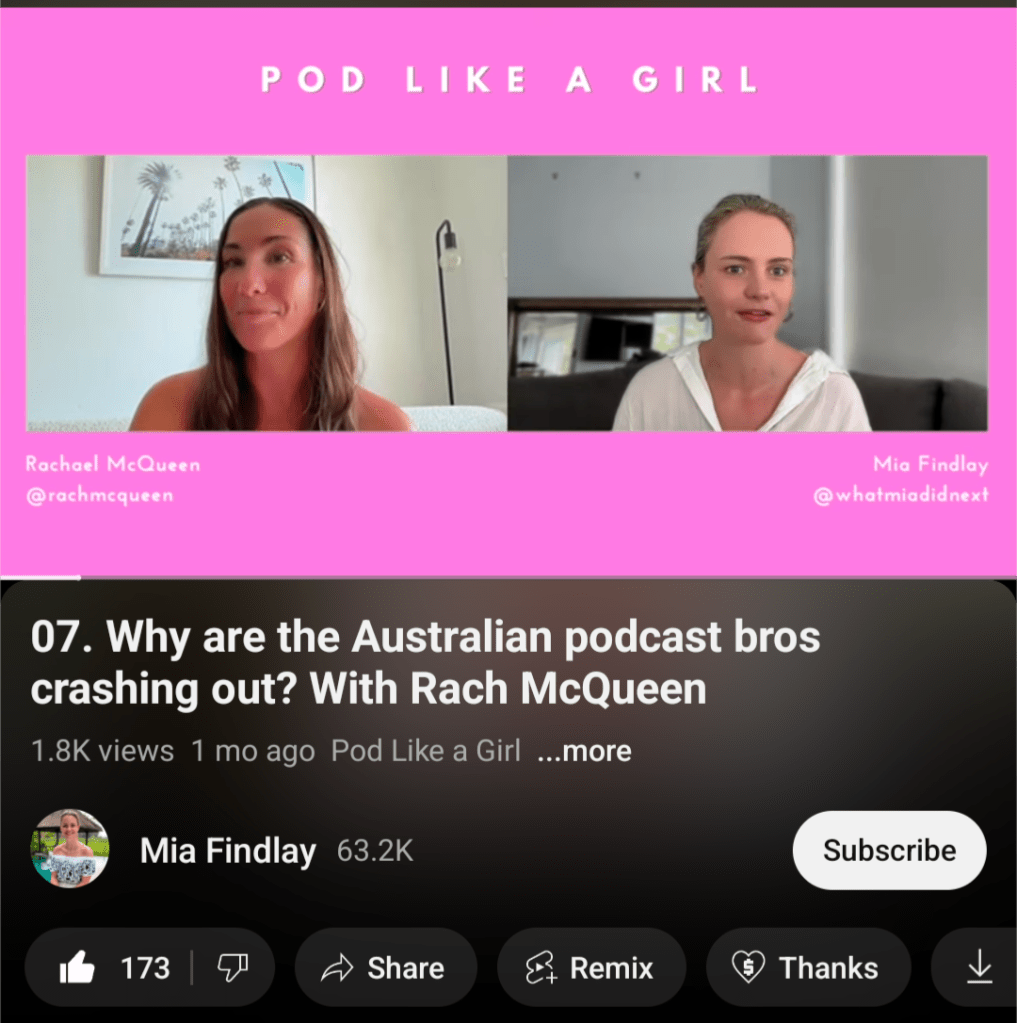
Image from video of Mia and Rach speaking about how the Better Blokes project has been encouraging men's violence against women.

Or you can even download the mp3 file to listen to it another way.

Full disclosure, it’s not just amazing, it’s also enraging, but only because we’re talking about the unashamed misogyny and idiocy of these two man childs.

And Rach and Mia are absolutely the right women for the job, because they’re intelligent and informed.

They’ve also spent years advocating to eliminate misogyny, sexism, and violence from Australia’s culture – and advocating for victims of this misogyny, which we know also harms men themselves.

The men who are going to The Better Blokes project for advice are more likely to be harmed, not helped, by what these blokes are spouting.

It’s the Aussie brand of the Andrew Tate manosphere, where men are encouraged to be a real man, and women are NOT welcome.

Like their videos telling women to “shut the f*** up” and let men speak (direct quote). 🤢 🤮

Which is a problem, because their governing legal documents, their charity charter, says they exist to improve men’s mental health… Not to indoctrinate men with misogyny and encourage violence against women, non-binary people, and even kids.
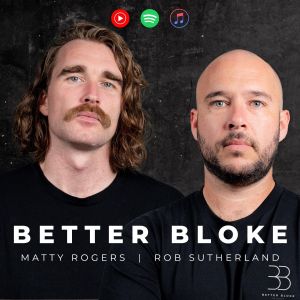
Cover image of the Better Blokes podcast.

So are they actually helping men’s mental health?

Let’s see…

Continue reading

Free Lesson Plan: Unpacking the patriarchy in context (Year 10 English)

This is a lesson plan I wrote in 2024, to align with the F-10 Australian Curriculum for an English class. I wrote the plan for one of my university assessments, so I’ve put the research receipts down the bottom of the page if you want to look closer into the background information.

I’m just a student teacher studying my Master of Education, so please feel free to provide kind, specific feedback. 😎

How to use this lesson plan: I designed this with multiple parts that you can mix and match if you want to run a single lesson … or you can run all parts over a few classes or a double period.

Duration (mins): 70 minutes per class, designed for 2 class sessions or a double period.

Resources needed:

  • PPT and projector
  • Downloaded video clips (for when the WiFi fails us)

Before we get into the lesson plan, though, I just want to clarify one very important question…

Why learn about the patriarchy in English class?

Understanding how the patriarchy perpetuates domestic and family violence (DFV) in Australia is a key part of being an active and informed citizen in 2024. Students are learning empathy as part of the personal and social capability general capability (GC) in the Australian curriculum, and we know that students can build empathy and advocate for others by learning about past and present human rights violations. And because adolescent students are often having their first romantic and sexual experiences, talking about the red flags of abusive relationships helps to protect them from harm.

In a future post, I plan to show you a lesson plan for a Year 10 Psychology class, about how harmful messages in patriarchal societies have affected most people’s implicit biases. Learning to spot our own implicit biases is one of the easiest places to start when learning self-awareness and learning to create psychological safety in our society.

Content for today’s lesson

This lesson focuses on spotting and analysing literary devices and understanding how audiences view a text differently depending on their social and political context. We’ll look at the song Labour by Paris Paloma, which I love as a teaching tool for two reasons.

image shows thumbnail from YouTube video for the official music video of the song Labour by Paris Paloma, posted March 2023.

See YouTube for the official music videos for
labour and cacophony (labour)
by Paris Paloma

First, many students already know this song because it went viral on Tiktok (and then on the rest of social media). So they’re familiar with some of the lyrics, making more brain space available to do the “thinking” analysis tasks of this lesson.

    Secondly, it’s often easier to spot literary devices in poetry texts than in prose like articles or novels, and song lyrics are a highly-effective form of poetry. So teaching Labour as a poetry text means again, students can put more energy towards learning or remembering the content.

    If you’re an education student like me, this reasoning provides evidence of you meeting Australian Professional Standards of Teaching (APST) number 2: knowing the content and how to teach it.

    Continue reading

    How to Make Money as a Content Creator (In Theory)

    I found myself Googling this exact phrase this week — don’t ask — and could not find the actual answer anywhere.

    As in, the numbers of followers you need to have on each platform before you can join a Creator Fund, get ad sponsors, or monetise your content.

    I’m not at all interested in all those posts that say they’re about how to make money, but they’re actually just about how to make good content. Nope, I’m all about trying to make some extra cash, thanks.

    So I’m collecting the answers here, for you and for me.

    This is all information collated from various sources; this is not from personal experience (sadly). As you’ll see, it’s a challenge, each platform is very different, and none of them make it terribly easy.

    Let me know if you’d like me to add information from any other social media platforms!

    Continue reading