Semantic satiation: Don’t kill your reader

Recently I was editing a novel where the author had used the “text method” of writing. I don’t mean that they included texts in their story. I mean that they wrote “dont” instead of “don’t”.

So I’ve just spent an hour straight hitting “Ctrl+F” (Find and Replace) to fix the variations of “dont” that have appeared throughout the story. I’ve literally looked at the same one word over and over, to the point where the correct word, “don’t”, doesn’t even seem like a real word anymore.

Dont.

Dont’.

Donnt.

Donut…? (Mmmmm, donuts… *immediately breaks diet*)

I was telling a well-educated friend of mine about it and he told me that this is called semantic satiation. (Not to be confused with Semantic Saturation, the progressive rock metal band.)

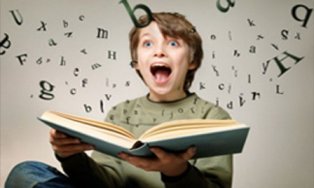
Semantic satiation is the proper term for when you’ve been looking at a word for so long that it loses its meaning to you and just looks weird. It happens because the neurons that are responsible for that word are temporarily worn out from overuse. But what can I do about it?

Continue reading

Is that a real word?

P.L. Travers (played by Emma Thompson) with the scriptwriter and songwriters responsible for the Disney movie version of Mary Poppins

P.L. Travers (played by Emma Thompson) with the scriptwriter and songwriters responsible for the Disney movie version of Mary Poppins
Image Source: Robert Deluce

Richard Sherman: Room here for everyone / Gather around / The constable’s “responstible”! / Now how does that sound?

P.L. Travers: No, no, no, no, no! “Responstible” is not a word!

Richard Sherman: We made it up.

P.L. Travers: Well, un-make it up.

Richard Sherman: [Hides sheet music of ‘Supercalifragilisticexpialidocious’.]

Scene from Saving Mr. Banks


I edited a book once by an author who used words wrong.  Just plain wrong.  There’s no other way to say it.

He said “supposably” and “supposedly” (those aren’t real words!) instead of “suspiciously” (which is not even close to the meaning of those “words”).

When I called him on it the first few times, he got all snippy.  “How do you know what’s a real word and what isn’t?  I hear people saying ‘supposably’ all the time.”

“Um, that’s my job.  I get paid to know correct grammar and spelling.  And that’s honestly not a real word.  And even if it was a real word now, which it’s not, it’s still not a word that a peasant would have used in medieval times.”

Continue reading

Happiness and creativity: Why you shouldn’t write a sad song until you’re feeling better

“I can shake off everything as I write; my sorrows disappear, my courage is reborn.” ― Anne Frank


Happy lightbulb man from Scientific American

Image Source: Scientific American

Do you need to be happy to be inspired? Or do you need to be a tortured artist in order to be inspired? It’s an age-old question, and there’s a growing body of science providing answers to it.


I’ve been studying a psychology unit through edX Berkeley online called GG101 ‘The Science of Happiness’, and the experimental studies that have been performed in this area of creativity-and-happiness have been fascinating.

Continue reading

The Dreaded Influenza

I was so excited last week (Brisbane Writers’ Festival!) and honestly had grand plans to post something every day about all the wonderful, inspiring talks I’d heard.

Then I caught the dreaded influenza that’s been roaming the halls of my fair city, and I’ve spent all this week in bed. (Look at me, sitting upright on the couch! Typing on my laptop! Small achievements!)

But even this is an opportunity, folks. Even this has been useful.

It’s been a long time since I was in high school, and I had an illness that produced chronic, endless fatigue that stretched into my uni degree. Sometime during those years, I wrote many story scenes and scribbles whingeing about my illness and imagining how it could be worse (deathbed scenes, etc.). Lots of these scribbles recently wound up in a novel where I cruelly give my main character a made-up alien illness so that she’ll have to make friends and rely on other people instead of just heroically “doing it tough”.

And this week – ugh! this week! – I’ve been rethinking lots of those scenes and checking against the facts of how I feel now. Did I feel this sick then? Is this how I would write that part now? How do I describe her head “swimming” without it sounding like a cliche?

It’s a good reminder of an old trope – to “write what you know”. Use every experience you’ve ever had to make your characters’ sufferings and joys more real.

Famous authors who were sick or dying when they wrote some of their most famous works (yes, I’m very melodramatic when I’m sick):

– Jane Austen worked until her death from a long mystery illness (possible culprits include (most recently) bovine tuberculosis, Brill-Zinsser disease following her child episode of typhus, Hodgkin’s lymphoma, or (according to her 1964 biographer) Addison’s disease);

– Ernest Hemingway gave himself liver disease, then was in two plane crashes that left him in pain and ill health for the rest of his life;

– Even John Green of The Fault in Our Stars says he wrote a book about different types of cancer because he suffers from that most terrible of illnesses, hypochondria.

Portrait of Jane Austen, drawn by her sister Cassandra (c. 1810)

Portrait of Jane Austen, drawn by her sister Cassandra (c. 1810)


This post was written by TJ Withers-Ryan © 2014. Reblogging is highly encouraged as long as you credit me as the author.

Being a promiscuous reader: Brisbane Writers Festival

Stack of books with spines open

Image source: Resource Freak

“I’m a very promiscuous reader; I believe we should take all kinds of genres to bed with us.” ― Lauren Beukes

Lauren Beukes

Lauren Beukes
(pronounced something like “Beeyohkes”)
Image source: The Audio Bookstore

Today I went to my first Brisbane Writers Festival session and thoroughly enjoyed it!  Lauren Beukes, South African author of science fiction and crime noir novels, says we should read everything we can get our hands on, no matter what genre we write for ourselves.  Here’s why…

Continue reading

Go where you find inspiration: Part 2: Real live animals that should be in fantasy novels

Go where you find inspiration, and go there often


My previous post was about the Art Gallery Museum and the intriguing characters I uncovered in the old portrait paintings there. Now let me tell you about the incredible animals I discovered, many for the first time, at the South Australian Museum.

The Mouflon, found in the Caucasus, northern and eastern Iraq, and northwestern Iran

The Mouflon, found in the Caucasus, northern and eastern Iraq, and northwestern Iran

Some of these guys really look like they should be in a fantasy or sci-fi novel, not in the real world. For that reason, I found these animals awakened in me again the desire to write fantasy, a genre I’ve spent many years in but often abandon for “more grown-up” genres like science fiction (haha) or drama.

I spent a few hours over three days walking through the ‘Mammals of the World’ taxidermy exhibit, because I just loved it the first day, but there was so much that I just felt I hadn’t taken it all in, needed another hit.

I was pacing back and forth behind the glass, getting a bit upset that these gorgeous things were dead, just carcasses posed for my viewing pleasure, and most of the living versions were endangered anyway, when it hit me. I wanted to write fantasy animals based on these real animals. Think about it – if I describe an animal to you just using the description, not labelling it by the name we know it, it would be harder for you to imagine, wouldn’t it? You might even think I was making it up.

My first mammal looks like some medieval fantasy writer got really tired of writing ad nauseum about wolves howling at the moon and running in packs and chasing our heroes through the woods, so he elongated the nose and tale of a fox and gave it giant ears, then shrunk it to cat size, and…

The Fennec Fox, found in the Sahara of North Africa

The Fennec Fox, found in the Sahara of North Africa

BAM! Fennec Fox. (Seriously, what’s with these adorable little guys? They’re so darn cute!)

Here are some of the other animals that inspired me:

Continue reading

Go where you find inspiration: Part 1: Intriguing characters found in portrait paintings

Go where you find inspiration, and go there often


I’m in Adelaide this week, and while I’ll save my excessive raving about how beautiful it is for later, I have to tell you about where I went yesterday.

I went to the South Australian Museum and the Art Gallery.

Sounds a little boring, maybe, if you hate animals or history or art. But I have to tell you, I found myself absolutely, 100% inspired there – the most inspired, in fact, that I’ve felt in months.

This first post will be about the South Australian Art Gallery and the beautiful portraits I admired there; my second post will illuminate the incredible animals that I discovered at the Museum.

Ever just see someone on the street and their face just tells you a story that you want to write instantly? They’re such a clear picture of a character that you can imagine. Maybe they look like a character you’ve already begun writing, or maybe they’re one that you’ve never considered before. You can almost hear their voice in dialogue before they speak.

That’s what the art gallery was like for me. I wandered the halls snapping shots of nearly every portrait – faces old and young, faces wise and bewildered, faces engaged and closed-off.

Because of the age of the paintings, and the gorgeous fashions on display, I couldn’t help myself – suddenly I wanted to write a history novel again! Someone asked me just last week to look over their historical romance novel (fun!), so it’s been on my mind. I also wished I could have taken my dress-maker friend through the halls of the gallery, just to gaze at the fabrics and dream of ways to make modern dresses based on these opulent draperies.

Here are some of the faces that inspired me…

Continue reading

Sting: overcoming years of writer’s block

StingIn March, Sting gave a TED talk called ‘How I started writing songs again’ (http://www.ted.com/talks/sting_how_i_started_writing_songs_again).

As a youth, he lived by a shipyard, and constantly thought of getting free. As we all know, he did, selling more than 100 million albums and earning 16 Grammy Awards.

But something changed – he got writer’s block, stretching on for years. To overcome this, he recently found himself writing new songs by returning to the stories of the shipyard workers he knew as a boy.

I found his talk incredibly moving, as a creator and as someone who remembers a difficult childhood. In his talk, Sting sings songs from his upcoming musical, as well as my favourite of his songs, ‘Message in a Bottle’.

This ties back to my posts about incubation and writer’s block. I’ve written about how incubation of years has helped me to rewrite stories that I first imagined in high school now, as an adult. In Sting’s case, an unwanted incubation period that stretched for years (the writer’s block preventing creation) was solved by returning to childhood stories that had been incubating from even longer ago, bringing new creation.

Have you ever struggled with writer’s block? How did you get past it?


This post was written by TJ Withers-Ryan © 2014. Reblogging is highly encouraged as long as you credit me as the author.

How not to write a speech

Disclaimer: In this post, I use a real speech as an example of how to write a better speech. If you were at the wedding and heard the speech I’m referring to, you know that it was a beautiful wedding, for a beautiful couple, and that I intend no personal offense to the speech writer or anyone else involved.

I did two subjects in uni that were all about speech writing and persuasive speaking for different purposes. I did well, so I’d happily say that it’s taught me how to structure a basic speech to make an effective effort, at least, to persuade my listeners to my point of view.

Image source: Corey Ann, "How to give a best man speech"

Image source: Corey Ann, “How to give a best man speech”

Then I went to a wedding recently, and I learnt how not to write a speech.

Continue reading

The power of the spoken word

Reading Aloud - from Douglas School PTO

Reading Aloud – from Douglas School PTO

The one piece of writing advice that’s been most useful to me over the years is very simple: Read it aloud first.

Whether it’s dialogue or description in a short story or novel, arguments in an essay, or jokes at the start of a speech, I’ve picked up many errors just by reading my own work aloud as I’m drafting it.  There’s no way to know if your dialogue is forced or unnatural unless you’re literally speaking out what your characters would be.  If your 5-year-old’s dialogue isn’t right, you’ll hear immediately if it sounds like a 12-year-old when you have to say it.

I can’t imagine a children’s book being written – to be read aloud by parents to kids, or vice versa – without being read aloud first.  Oh, the delight of alliteration, of rhyme!  I may wax lyrical.

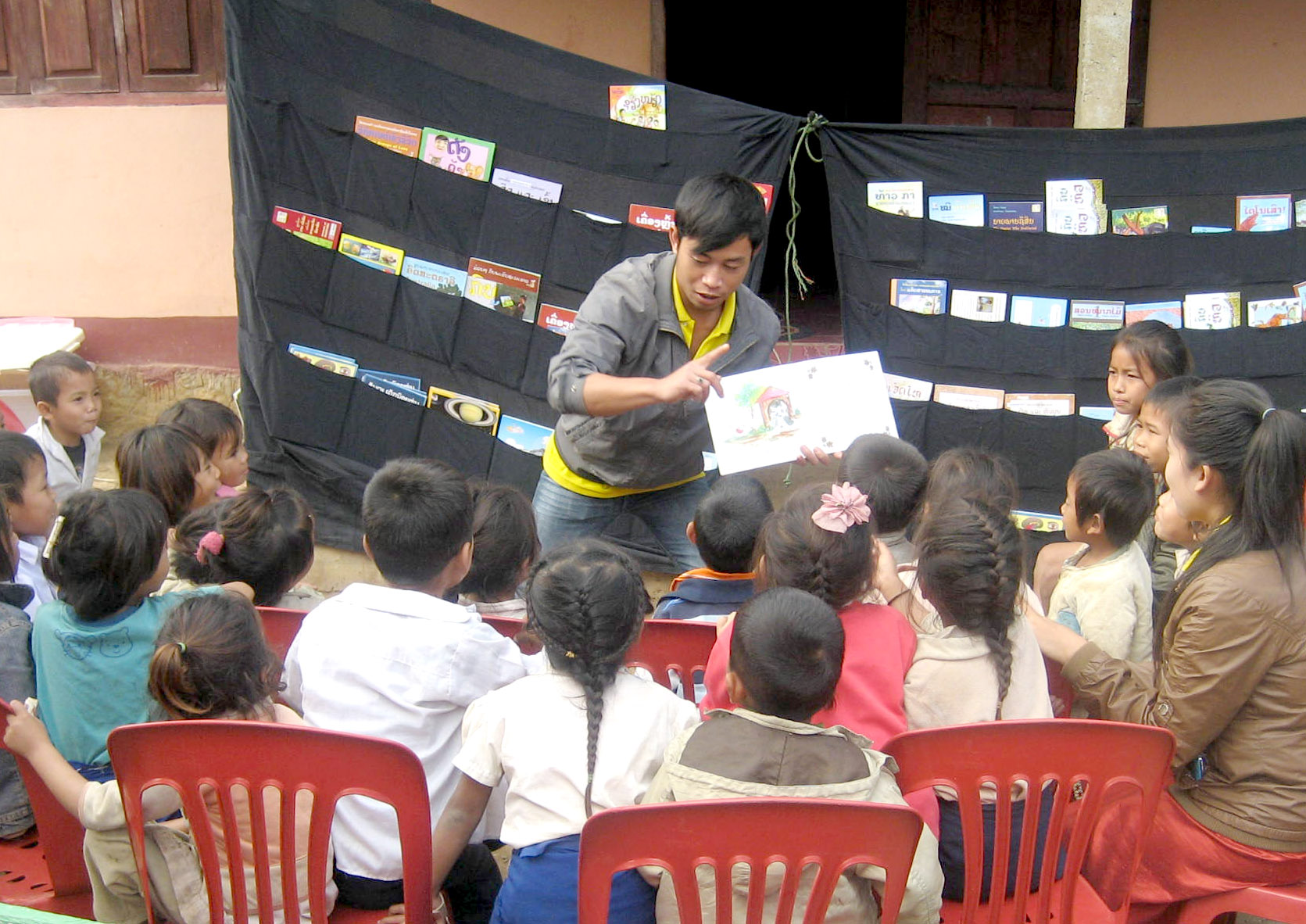
Addy Vannasy reads to village children on Discovery Day in Laos

Volunteer Addy Vannasy reads to village children on Discovery Day in Laos

Research has shown that young kids who don’t learn to “sound it out” find it harder to learn to read (sob), to master our complicated English spelling, and to create coherent sentences themselves when reading or speaking.  (See Blevins, W. Phonemic Awareness Activities for Early Reading Success for more detail.)

I will always remember one of my primary school principals, Mr O’Brien, reading out some of Shakespeare’s G-rated sonnets and complaining that no one used the verb “impignorate” anymore (no, I don’t know which one).   I think this “out loud” advice first came to my ears from him, in fact, this poetic principal who roamed the halls teaching poetry and theatre classes instead of filling in his endless paperwork.  I don’t know how efficient it was, but he inspired hundreds of Tamagotchi-obsessed children to read difficult and beautiful poetry – no mean feat.

These days, when I’m proofreading, I often mutter the words under my breath.  It must look and sound weird, but I usually work from home, so nobody sees it anyway.  Reading aloud as I’m proofreading makes sure that I don’t miss anything.  Your brain is happy to fill in the gaps if you’ve [left] out a word, or if you’ve misspelled something improtant [sic], or if there’s no full-stop.  (I simply cannot force myself to do that, even just for an example, sorry.)  But reading aloud makes your brain sloooow down to the pace of your mouth.  And your mouth won’t fill in gaps.  Sometimes it even trips over words, forcing you to reconsider your use of a certain adjective.

On a deeper note, when I think about the most powerful conversations in my life – the most encouraging, and the most damaging – they have all been literal, spoken conversations.  I remember them word for word.  And that says a lot, because I’m a letter-writer, preferring to hand someone my written words than work up the courage to say things out loud.

The “out loud” principle is true in our faith practices, as well.  I was at a workshop this week about conquering sin for women, and one of the most powerful things we talked about – among many helpful tips – was declaring God’s truths (scripture) out loud, and refuting the power of sin out loud.

The spiritual battle we face is real, and odd as it sounds, the devil who’s trying to tempt us doesn’t know what we’re thinking; he can only see our actions in giving in to temptation or hear us when we proclaim Jesus’ victory over ourselves and resist temptation.  James 4:7 says, “Submit yourselves, then, to God. Resist the devil, and he will flee from you.”

Drafting your novel?  Start drafting it out loud.  Thinking about telling someone they did an awesome job?  Don’t shoot them that five second email; have that five second conversation face-to-face if you can.  You’ll enjoy it more, and so will they.


Did I read this blog post aloud before I posted it?  You betcha.  And I definitely tripped over “impignorate”, but you can bet it’s staying!


This post was written by TJ Withers-Ryan © 2014. Reblogging is highly encouraged as long as you credit me as the author.