Go where you find inspiration: Part 3: The airport and times of transition

Go where you find inspiration, and go there often.

Alain de Botton writing in the new Terminal 5 at Heathrow Airport. Image source: Zocalo Public Square

Alain de Botton writing in the new Terminal 5 at Heathrow Airport
Image source: Zocalo Public Square

I’ve driven to the airport too many times recently, saying goodbye to people I love.

But it’s gotten me thinking.

How about visiting an airport to inspire new creativity for a “stuck” story?

Airports have always inspired me, with their excitement and anticipation of new adventures and fond reunions. I love starting new adventures and seeing people saying their “goodbyes” and “welcomes homes”. What does it mean symbolically if a character is at the airport? And where could your character end up?
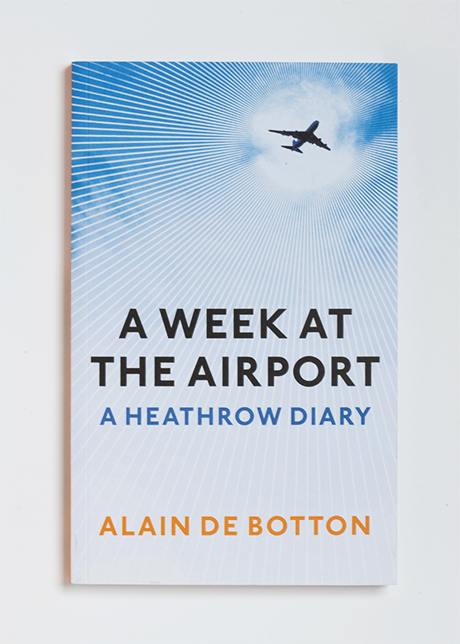
'A week at the airport' book cover. Image source: Profile Books

Image source: Profile Books

I started thinking about this when I read an article about Alain de Botton, who did a one-week writers residency at Heathrow’s new Terminal 5. You can read about his experience and the book he wrote about it in his book, A Week at the Airport.

For this project, he stayed in the airport and the hotel for 24 hours a day for one week. That was his only venue – and he said the confinement to one setting was great inspiration.

He was inspired by the terminal itself – its technology, the design, and its sheer size and scale. He said he likes airports so much he often longs to be delayed in them.
Continue reading

Welcome!

I’m TJ Withers-Ryan, a published author and copywriter/editor based in Australia, and a Jesus follower.

Read my first book, Fire Dancers in the Sand, released in April 2021.

IMG_20200513_132251

I previously offered freelance services but am currently only taking on the projects I’m most excited about. Get in touch if you need recommendations for a good editor, proofreader, or copywriter.

Follow me here or on social media for tips on the creative process for writers, artists, and other creators and living out your faith.

To all my regulars, welcome home – it’s always great to catch up. 🙂  TJ

When the deed is done: How to run an effective writer’s critique group

“Write. Rewrite. When not writing or rewriting, read. I know of no shortcuts.”
      — Larry L. King, WD

Once the writing is done, you should definitely pop a champagne and celebrate.

But guess what happens next?

You can either have a sucky first draft of your novel forever, or you can get stuck into editing it.

Unfortunately, almost everyone is absolutely terrible at seeing the story issues or the misspellings in their own writing, so you need a writers’ critique group (a “crit group”).

So how do you find a good group? What should you be looking for when you need someone to really dig into your work (a critiquer or “critter”)?

What should you focus on when it’s your turn to crit someone else’s work?

And what should you be aiming for when you are the one running the crit group?

I ran the Dugong Writer’s Critique Group for two years as Facilitator and served as Secretary for two years before that while it was run by our founder, Grace Dugan, author of The Silver Road (ebook available from Penguin or on Kindle from Amazon). The group ran from 2007 through 2010 and we learned many valuable lessons from the experience.

Read on for tips not just from my group, but also from BWF presenters Vision Writers Group and memoir author Claire Dunne.

Today’s post will be charmingly illustrated by the creative folk worldwide who put captions on photos of cats.

Continue reading

Music to write by

Music to write by - typewriter treble clef. Image source: Scores for Writers

Image source: Scores for Writers


Ever wondered what type of music will help you to focus when writing in different genres? Here’s what’s worked for me in the genres in which I’ve written or edited.


Okay, NaNoWriMo is nearly over, with only five days until the end is declared. So if you’re nearly there, here’s some final inspiration, to give you the last push you need to get that baby out (what a gross analogy, seriously). And if you’re boycotting NNWM and you’re kind of sick of hearing about it, soon we’ll be back to awesome posts that are not all about how to write a novel in the shortest possible timeframe.

Why does music help you write?

Studies have consistently shown that classical, Baroque era music can help students study things they’ve already learnt once, and can help workers to concentrate better during long or repetitive tasks. For those in a busy study or work environment, music has also been proven effective for blocking out distracting background noise. If you’re writing, editing, or creating art, music can help you stay focused and be more creative and open to new ideas.

By contrast, if you’re trying to learn new information that requires your full attention, music can distract you from what you’re reading. So if you’re doing research about historical methods of leather tanning for a new book, you might want to turn the stereo off and focus on the history.

Listening to lyrics can be distracting from writing, so most of the music I’ve featured in this post is purely instrumental. This is because lyrics are words and you’re already trying to think about other words when you’re writing. (People in other disciplines like maths, science or IT have no trouble with listening to lyrics while they work – in fact it helps, since their domain is largely numbers and code (Lesuik, 2005).)

So what can you use to inspire you when writing in different genres? Read on to find out!

Continue reading

How to keep healthy as a writer: body, mind and soul

'The happy writer' Image source: ToneBlog

‘The happy writer’
Image source: ToneBlog

This post is something different for me – a collation of all the research I’ve done into how I can stay happy and healthy as a writer and editor. We live in a stress-filled age, and writing requires us to not be stressed, because stressed people aren’t creative, as I’ve previously explained.

All the “health” tips here are ones that I personally have tried and found helpful, so I hope they help you, too!


Body:

At BWF in the Burbs this year, Australian fantasy author Trudi Canavan gave us this invaluable tip:

“Look after your bodies. Writing is hunched over a computer, fingers working furiously for extended periods. It’s an unnatural position that soon leads to RSI if you do it for years on end.”

She recommended we take lots of breaks from the hunched, sitting position.

For her, unfortunately, RSI is a daily issue, which is inconvenient now that she’s a full-time writer (the dream!). Because of the pain, she can now only sit down to write for half an hour at a time before getting up from the computer again. She does that over and over all day, because she has to. (Gosh! It takes me at least ten minutes just to get into the swing of things with my story again after a break – imagine only having twenty useful writing minutes each time you sit down to write.)

So don’t make the same mistake as Trudi and let it get too late to avoid RSI. Get up and walk around. Pat the dog. Do some quick yoga stretches at your computer! I got into this when I was working a job that was 8 hours a day at a computer, and it worked wonders for my lower back pain.

‘5 Office Yoga Poses (That Won't Freak Out Your Coworkers)’ Image source: Meredith Nordhem, Huffington Post http://www.huffingtonpost.com/meredith-nordhem/office-yoga-poses_b_5604195.html

‘5 Office Yoga Poses (That Won’t Freak Out Your Coworkers)’
Image source: Meredith Nordhem, Huffington Post
http://www.huffingtonpost.com/meredith-nordhem/office-yoga-poses_b_5604195.html

Continue reading

Commiserations over the struggle of writing, and how to keep going!

‘Mimi Does NaNoWriMo’ Image source: InkyGirl at http://inkygirl.com/wwfc/2011/11/9/mimi-does-nanowrimo.html

‘Mimi Does NaNoWriMo’
Image source: InkyGirl at http://inkygirl.com/wwfc/2011/11/9/mimi-does-nanowrimo.html

Today I’ll be talking about my two favourite web comics that provide inspiration or commiseration for writers – yay! And how to keep going when you feel like giving up (“halfway through NaNoWriMo” blues, anyone?).

Continue reading

NaNoWriMo storyboarding for plotters and pantsers

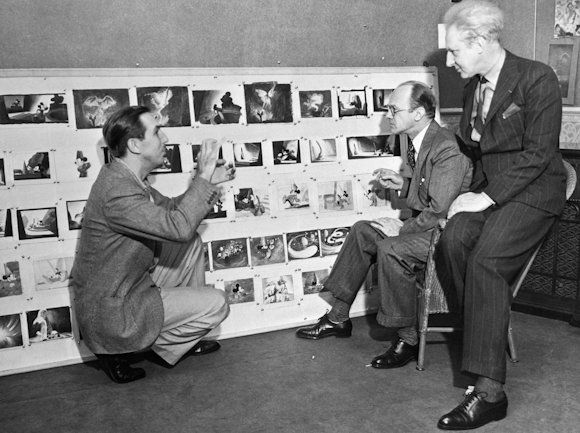
Walt Disney running through a storyboard with colleagues Image source: Kashinterest

Walt Disney running through a storyboard with Deems Taylor and Leopold Stokowski, music directors, in 1940, Burbank, California
Image source: Bettman/CORBIS

“A blank piece of paper is God’s way of telling us how hard it is to be God.” – Sidney Sheldon

If you’re eagerly gearing up for NaNoWriMo (National Novel Writing Month) [nanowrimo.org], like me, you’re probably counting down the days! Deciding who your main character will be. Picking a location. And getting ready for this weekend, when you and thousands of others worldwide will start writing furiously.

So, is writer’s block easier to get past for plotters or pantsers? And how can we get past writer’s block during NaNoWriMo, whether we’re a plotter or a pantser? Will storyboarding really help me or is it a waste of precious time?

If you’re saying, “Woah, woah, woah. What are ‘plotters’ and ‘pantsers’?”, let me tell you. (You can skip ahead if you know this bit.)

Someone who plans the plot and even the dialogue for every scene before they begin writing any words of their novel is called a plotter.

“The first sentence can’t be written until the final sentence is written.” —Joyce Carol Oates, WD

Someone who just starts writing and “goes with the flow” is a pantser, someone who flies by the seat of their pants. They don’t plan. They just put pen to paper and see what comes out.

“Writing a novel is like driving a car at night. You can only see as far as your headlights, but that’s okay; you can make the whole trip that way.” – E. L. Doctorow

Continue reading

The Anti-Cliché Challenge: Describe the scene

Centennial Park, Sydney, before the rains hit (Image Source: My camera)

Centennial Park, Sydney, before the rains hit
(Image Source: My camera)

“Don’t tell me the moon is shining; show me the glint of light on broken glass.” ~ Anton Chekhov

The most challenging writing exercise I have been set to date is very simple:

Describe this scene. Right here, right now, where we are. Without using any clichés.

So, how do you describe a scene without it being a cliché? As Rory from Gilmore Girls complained in Season 4, “A ‘rain-soaked highway’ is not a cliché, it’s just how you describe a rain-soaked highway!” Well, I’ll give you a few tips, so you can use them next week when NaNoWriMo 2014 kicks off! Then I’ll show you some scenes descriptions I’ve recorded during this week’s visit to Sydney.

Continue reading

Happiness and creativity: Why you shouldn’t write a sad song until you’re feeling better

“I can shake off everything as I write; my sorrows disappear, my courage is reborn.” ― Anne Frank


Happy lightbulb man from Scientific American

Image Source: Scientific American

Do you need to be happy to be inspired? Or do you need to be a tortured artist in order to be inspired? It’s an age-old question, and there’s a growing body of science providing answers to it.


I’ve been studying a psychology unit through edX Berkeley online called GG101 ‘The Science of Happiness’, and the experimental studies that have been performed in this area of creativity-and-happiness have been fascinating.

Continue reading

The Dreaded Influenza

I was so excited last week (Brisbane Writers’ Festival!) and honestly had grand plans to post something every day about all the wonderful, inspiring talks I’d heard.

Then I caught the dreaded influenza that’s been roaming the halls of my fair city, and I’ve spent all this week in bed. (Look at me, sitting upright on the couch! Typing on my laptop! Small achievements!)

But even this is an opportunity, folks. Even this has been useful.

It’s been a long time since I was in high school, and I had an illness that produced chronic, endless fatigue that stretched into my uni degree. Sometime during those years, I wrote many story scenes and scribbles whingeing about my illness and imagining how it could be worse (deathbed scenes, etc.). Lots of these scribbles recently wound up in a novel where I cruelly give my main character a made-up alien illness so that she’ll have to make friends and rely on other people instead of just heroically “doing it tough”.

And this week – ugh! this week! – I’ve been rethinking lots of those scenes and checking against the facts of how I feel now. Did I feel this sick then? Is this how I would write that part now? How do I describe her head “swimming” without it sounding like a cliche?

It’s a good reminder of an old trope – to “write what you know”. Use every experience you’ve ever had to make your characters’ sufferings and joys more real.

Famous authors who were sick or dying when they wrote some of their most famous works (yes, I’m very melodramatic when I’m sick):

– Jane Austen worked until her death from a long mystery illness (possible culprits include (most recently) bovine tuberculosis, Brill-Zinsser disease following her child episode of typhus, Hodgkin’s lymphoma, or (according to her 1964 biographer) Addison’s disease);

– Ernest Hemingway gave himself liver disease, then was in two plane crashes that left him in pain and ill health for the rest of his life;

– Even John Green of The Fault in Our Stars says he wrote a book about different types of cancer because he suffers from that most terrible of illnesses, hypochondria.

Portrait of Jane Austen, drawn by her sister Cassandra (c. 1810)

Portrait of Jane Austen, drawn by her sister Cassandra (c. 1810)


This post was written by TJ Withers-Ryan © 2014. Reblogging is highly encouraged as long as you credit me as the author.