Children’s books with bite

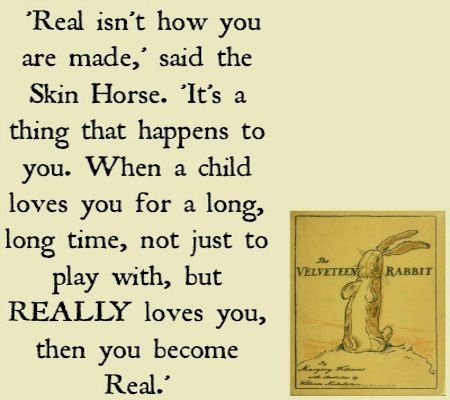
Quote from The Velveteen Rabbit. Image source: DisneyBaby.com on Pinterest

Quote from The Velveteen Rabbit.
Image source: DisneyBaby.com on Pinterest


A few years ago, I wrote a Terzanelle poem that I’m thinking I might turn into a hilarious children’s book – a children’s book to be reckoned with!

It was for uni, and I had to write a ‘fixed structure’ poem with a set rhyming scheme. I saw in the list of examples of fixed structures this ‘Terzanelle’ and I was like, WOAH! Because I have a beautifully weird real name (yes, TJ is my working nickname) and people will always try to mispronounce it as ‘terzah’ (ugh, that is not beautiful).

So what is a Terzanelle? I didn’t really care, since I picked it for its awesome name, but I soon learned that it is made up of five triplets and a Sicilian quatrain in a terza rima rhyme scheme: ABA BCB CDC DED EFE FGFG. (I cheated on the last line and made my rhyme scheme end AEAE, but I still passed the assessment item.) The key is that in a Terzanelle, the second line of each stanza becomes the last line of the next.

So here’s my poem:

Continue reading

NaNoWriMo storyboarding for plotters and pantsers

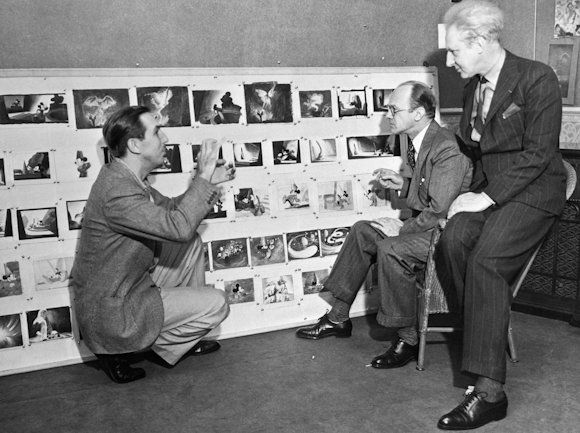
Walt Disney running through a storyboard with colleagues Image source: Kashinterest

Walt Disney running through a storyboard with Deems Taylor and Leopold Stokowski, music directors, in 1940, Burbank, California
Image source: Bettman/CORBIS

“A blank piece of paper is God’s way of telling us how hard it is to be God.” – Sidney Sheldon

If you’re eagerly gearing up for NaNoWriMo (National Novel Writing Month) [nanowrimo.org], like me, you’re probably counting down the days! Deciding who your main character will be. Picking a location. And getting ready for this weekend, when you and thousands of others worldwide will start writing furiously.

So, is writer’s block easier to get past for plotters or pantsers? And how can we get past writer’s block during NaNoWriMo, whether we’re a plotter or a pantser? Will storyboarding really help me or is it a waste of precious time?

If you’re saying, “Woah, woah, woah. What are ‘plotters’ and ‘pantsers’?”, let me tell you. (You can skip ahead if you know this bit.)

Someone who plans the plot and even the dialogue for every scene before they begin writing any words of their novel is called a plotter.

“The first sentence can’t be written until the final sentence is written.” —Joyce Carol Oates, WD

Someone who just starts writing and “goes with the flow” is a pantser, someone who flies by the seat of their pants. They don’t plan. They just put pen to paper and see what comes out.

“Writing a novel is like driving a car at night. You can only see as far as your headlights, but that’s okay; you can make the whole trip that way.” – E. L. Doctorow

Continue reading

Writing about people you know – treading the fine line

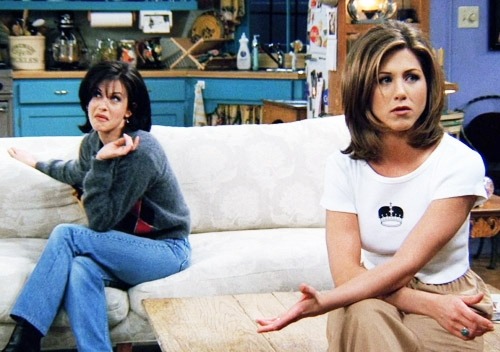
Friends Season 1 Monica and Rachel Image source: 'FRIENDS' TV show via Hello Giggles

Friends Season 1 Monica and Rachel
Image source: ‘FRIENDS’ TV show via Hello Giggles

Rachel:                Oh, and I’m sorry I said you were a cow in high school.

Monica:               That’s okay. I was a cow.

Rachel:                Yes, but I’m still sorry I said it.

– Friends, Season 1, Episode 17 “The One With Two Parts”

Disclaimer:

This post offers a broad overview of defamation law but is not intended to be read as legal advice. This is a complex legal issue that should not be taken lightly. If you have concerns about your own writing with regards to libel liability, you should seek independent legal advice.

I’ve had authors who were worried about writing about the people in their family. Memoirs are always a bit tricky like that. It’s your story, but it’s also the story of how your life was affected by them.

It’s more complicated than just which details to include and which to leave out. It becomes a question of, do you even want to represent them as themselves, or would you rather change their name, age, occupation, everything, in fact, apart from what they did for you or how they impacted on your life?

It doesn’t have to be for negative reasons. Some people really don’t want the credit. One of the writers I knew in uni wrote their own stories as novels because they didn’t want their subject to be embarrassed by how the writer looked up to them as their role model, their hero.

At the Brisbane Writers Festival, I heard a great talk by Sian Prior about her memoir, ‘Shy’, which chronicles her struggles with social anxiety. She wrote about living in the shadow of an ex of hers who was very famous. In her case, she said she didn’t need to check with him before writing about him. They had already parted ways, but more importantly, he had already written about their relationship in his own book! He’d already set the rules by not asking her before he wrote about her.

Her approach, knowing that she would uncover things about their relationship that people didn’t know, was to be rigorous about being honest. By contrast, she did check with her family about her portrayal of each of them, and they were all surprised but happy with her including them in her story.

Lots of people worry about defamation law – specifically, the written form, ‘libel’. Here’s the raw basics:

Continue reading

The Anti-Cliché Challenge: Describe the scene

Centennial Park, Sydney, before the rains hit (Image Source: My camera)

Centennial Park, Sydney, before the rains hit
(Image Source: My camera)

“Don’t tell me the moon is shining; show me the glint of light on broken glass.” ~ Anton Chekhov

The most challenging writing exercise I have been set to date is very simple:

Describe this scene. Right here, right now, where we are. Without using any clichés.

So, how do you describe a scene without it being a cliché? As Rory from Gilmore Girls complained in Season 4, “A ‘rain-soaked highway’ is not a cliché, it’s just how you describe a rain-soaked highway!” Well, I’ll give you a few tips, so you can use them next week when NaNoWriMo 2014 kicks off! Then I’ll show you some scenes descriptions I’ve recorded during this week’s visit to Sydney.

Continue reading

Short stories to wrestle with

Summer in the park in London. Image source: IWOM We know no limits

Image source: IWOM We know no limits (London)

“The formula seems to lie solely in the aching urge of the writer to convey something he feels important to the reader. If the writer has that urge, he may sometimes but by no means always find the way to do it.” – John Steinbeck


Juni Desiree (Awrestlingwriter) is a prolific blogger I happily stumbled into this year. This week she kindly shared with us the link to one of her short stories, ‘Summer’, published in The Australia Times.

I loved it! Laughed. Nearly cried. Finished it feeling warm and fuzzy and re-balanced. Which is just what a short story should do.

And it is seriously short (700 words), which makes it a solid example of one particular structure for short fiction – the “whole narrative” told briefly – for young writers who are just starting out to follow.

Last month I was editing a short story for someone, and this month I’ll be writing a book review of one (I’ll post the link when it’s up), and so I’ve spent a lot of time thinking about the various purposes of short stories in general, and whether or not these and other stories have achieved those purposes.

Continue reading

Semantic satiation: Don’t kill your reader

Recently I was editing a novel where the author had used the “text method” of writing. I don’t mean that they included texts in their story. I mean that they wrote “dont” instead of “don’t”.

So I’ve just spent an hour straight hitting “Ctrl+F” (Find and Replace) to fix the variations of “dont” that have appeared throughout the story. I’ve literally looked at the same one word over and over, to the point where the correct word, “don’t”, doesn’t even seem like a real word anymore.

Dont.

Dont’.

Donnt.

Donut…? (Mmmmm, donuts… *immediately breaks diet*)

I was telling a well-educated friend of mine about it and he told me that this is called semantic satiation. (Not to be confused with Semantic Saturation, the progressive rock metal band.)

Semantic satiation is the proper term for when you’ve been looking at a word for so long that it loses its meaning to you and just looks weird. It happens because the neurons that are responsible for that word are temporarily worn out from overuse. But what can I do about it?

Continue reading

Is that a real word?

P.L. Travers (played by Emma Thompson) with the scriptwriter and songwriters responsible for the Disney movie version of Mary Poppins

P.L. Travers (played by Emma Thompson) with the scriptwriter and songwriters responsible for the Disney movie version of Mary Poppins
Image Source: Robert Deluce

Richard Sherman: Room here for everyone / Gather around / The constable’s “responstible”! / Now how does that sound?

P.L. Travers: No, no, no, no, no! “Responstible” is not a word!

Richard Sherman: We made it up.

P.L. Travers: Well, un-make it up.

Richard Sherman: [Hides sheet music of ‘Supercalifragilisticexpialidocious’.]

Scene from Saving Mr. Banks


I edited a book once by an author who used words wrong.  Just plain wrong.  There’s no other way to say it.

He said “supposably” and “supposedly” (those aren’t real words!) instead of “suspiciously” (which is not even close to the meaning of those “words”).

When I called him on it the first few times, he got all snippy.  “How do you know what’s a real word and what isn’t?  I hear people saying ‘supposably’ all the time.”

“Um, that’s my job.  I get paid to know correct grammar and spelling.  And that’s honestly not a real word.  And even if it was a real word now, which it’s not, it’s still not a word that a peasant would have used in medieval times.”

Continue reading

Happiness and creativity: Why you shouldn’t write a sad song until you’re feeling better

“I can shake off everything as I write; my sorrows disappear, my courage is reborn.” ― Anne Frank


Happy lightbulb man from Scientific American

Image Source: Scientific American

Do you need to be happy to be inspired? Or do you need to be a tortured artist in order to be inspired? It’s an age-old question, and there’s a growing body of science providing answers to it.


I’ve been studying a psychology unit through edX Berkeley online called GG101 ‘The Science of Happiness’, and the experimental studies that have been performed in this area of creativity-and-happiness have been fascinating.

Continue reading

The Dreaded Influenza

I was so excited last week (Brisbane Writers’ Festival!) and honestly had grand plans to post something every day about all the wonderful, inspiring talks I’d heard.

Then I caught the dreaded influenza that’s been roaming the halls of my fair city, and I’ve spent all this week in bed. (Look at me, sitting upright on the couch! Typing on my laptop! Small achievements!)

But even this is an opportunity, folks. Even this has been useful.

It’s been a long time since I was in high school, and I had an illness that produced chronic, endless fatigue that stretched into my uni degree. Sometime during those years, I wrote many story scenes and scribbles whingeing about my illness and imagining how it could be worse (deathbed scenes, etc.). Lots of these scribbles recently wound up in a novel where I cruelly give my main character a made-up alien illness so that she’ll have to make friends and rely on other people instead of just heroically “doing it tough”.

And this week – ugh! this week! – I’ve been rethinking lots of those scenes and checking against the facts of how I feel now. Did I feel this sick then? Is this how I would write that part now? How do I describe her head “swimming” without it sounding like a cliche?

It’s a good reminder of an old trope – to “write what you know”. Use every experience you’ve ever had to make your characters’ sufferings and joys more real.

Famous authors who were sick or dying when they wrote some of their most famous works (yes, I’m very melodramatic when I’m sick):

– Jane Austen worked until her death from a long mystery illness (possible culprits include (most recently) bovine tuberculosis, Brill-Zinsser disease following her child episode of typhus, Hodgkin’s lymphoma, or (according to her 1964 biographer) Addison’s disease);

– Ernest Hemingway gave himself liver disease, then was in two plane crashes that left him in pain and ill health for the rest of his life;

– Even John Green of The Fault in Our Stars says he wrote a book about different types of cancer because he suffers from that most terrible of illnesses, hypochondria.

Portrait of Jane Austen, drawn by her sister Cassandra (c. 1810)

Portrait of Jane Austen, drawn by her sister Cassandra (c. 1810)


This post was written by TJ Withers-Ryan © 2014. Reblogging is highly encouraged as long as you credit me as the author.

Being a promiscuous reader: Brisbane Writers Festival

Stack of books with spines open

Image source: Resource Freak

“I’m a very promiscuous reader; I believe we should take all kinds of genres to bed with us.” ― Lauren Beukes

Lauren Beukes

Lauren Beukes
(pronounced something like “Beeyohkes”)
Image source: The Audio Bookstore

Today I went to my first Brisbane Writers Festival session and thoroughly enjoyed it!  Lauren Beukes, South African author of science fiction and crime noir novels, says we should read everything we can get our hands on, no matter what genre we write for ourselves.  Here’s why…

Continue reading