It’s harder to say “happy new year” when you remember that 101 women were killed by men in 2024 (Femicide Watch Australia, 2024).
It might not sound like a huge number, until you compare it to the 46 women who were killed by men in the 2022-23 financial year (AIHW, 2024).
Men killing 101 women in 12 months is horrific because it is a doubling of violence against women in Australia.
Domestic and family violence is a national emergency, with 1 in 4 Australian women having experienced violence from a male partner (White Ribbon, 2024).
With that in mind, I read the following books last year, and I believe they would help any Australian man who wants to understand the current war on women and children in our nation.
More importantly, this information can help any person who wants to help us end the war on women.
I was thoroughly impressed by the way these writers gathered measurable data and research from all around Australia and sometimes internationally.
I’m sure you’ll find the statistics astounding – because I did, and I’ve already been reading on these topics for 20 years.
A note on gender references: All references in this article to “women” include trans women. Much of the data on “women” also includes non-binary people, who are routinely marked as female “for insurance purposes”.
This original poem by TJ Withers is a response to the national OurWatch ad campaign and the global social media trend. See the hyperlinks within the poem to get all the context.
Men killed fifty-four women and four kiddies in seven months – who’ll be next?
It’s impossible to bear
Tiktok asked if we walked alone in the woods, would we rather see a wild bear, or a man?
Them men chose the man
We women choose the bear, because
If a bear attacks, people believe us
They don’t say, “He’s a good bear, though. He would never.”
If a bear attacks, you can see the scars
We can prove it happened
Hospital reports, doctor’s notes, days off work
If a bear attacks, the worst it can do is kill us
It don’t desire
To overpower
The bear mauls but won’t assault
If the bear attacks, and we tell someone what happened, the bear don’t sue us
The bear ain’t offended
The bear don’t deny their actions
The bear don’t have money and lawyers and an ego
If the bear killed us, people wouldn’t say,
“She should’ve chosen a better bear.”
If the bear attacks, police would say we were brave – not belligerent
But they say,
“She got aggressive”
“She provokes that bear”
“Put her in jail”
“Take her kids away”
No, nobody makes us raise kids with the bear afterwards
When the bear leaves, he’s gone
If the bear attacks, and it chews us up, spits us out,
They think it’s “not all men”, so good men should stop the bad ones
But if it’s not all men, where are the men?
At our July march, I see one
Old, white, brings a camera
Points it in the face of women without asking first
We cringe
He’s right up close
Up close is where it happens
We were worried about the stranger walking behind us, hoodie strings drawn
Clutched our car keys tight
But that’s not where it starts
No, it’s behind closed doors
They kill a woman every four days
They take what they want, then say she wanted it
They say they earn more, so she stayed home with the kids
They say she can’t see them, so she’s suddenly alone
They say they love her, so she tries not to talk about it
Feel bad
Know something’s wrong
But she’s in her own home
Relationships aren’t meant to be this hard, right?
When social media says more than the pollies
Because we’re the ones who care
It’s impossible to bear
That’s why we choose the bear
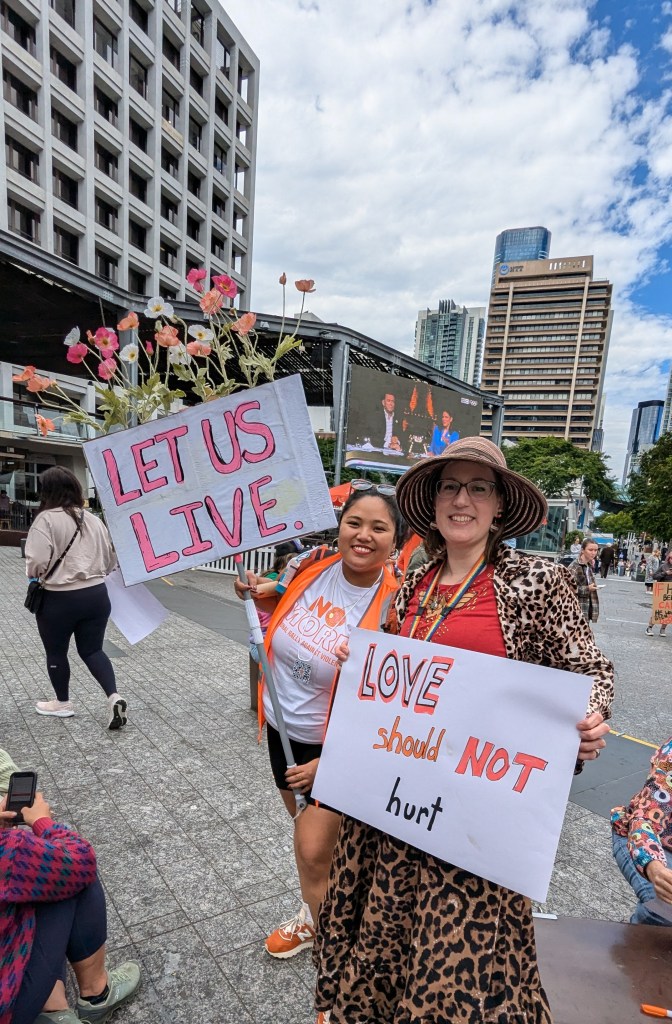
This is an original poem written by me, TJ Withers, as a reaction to the femicide epidemic of domestic and family violence (DFV) against women in Australia in 2024. All images are my own, taken at Brisbane’s July march in the series of national marches in the No More Violence Rally organised by the amazing humans and women and trans women and non-binary people at WWYW? Australia. This post does not implicate any men in the commission of DFV against the author or any other woman.
I was diagnosed with combined type ADHD about a year and a half ago, so technically, I am one of the many adult learners with a learning disability.
But even before I knew that, making learning about reading and writing accessible was one of my main passions in life.
So while I’ve been doing my Master of Teaching, I have been dyyyyyyying on the inside while trying to read all these academic texts. Almost none are written accessibly!
Academics are out here talking a great game about how we should make education inclusive and accessible to everyone … but when I read their writing, I experience true mental and physical anguish.
Happy holidays, everyone! I’ve made it through nearly the whole year without ranting about this, which I’m kind of proud of.
I cannot tell you how many books – both traditionally published and indie/self-published books – I’ve seen using the word “smirk” where it doesn’t belong.
A smirk is a one-sided smile. It can be smug, proud, fake, unpleasant, etc.
The easies way to remember the difference between a smirk and a smile is that if a person’s smirking, they’ve either won against the others, or they’re hiding something from the others (could be a good secret or something bad, doesn’t matter).
For example:
‘Merry Christmas,’ said the Grinch with a smirk. Later that night, he planned to press the big, red button in his lair and blow up all the presents.
But if a person’s happy, but not bragging or teasing or hiding a secret, they’re just smiling.
Can’t there be different types of smirk?
Yes, absolutely.
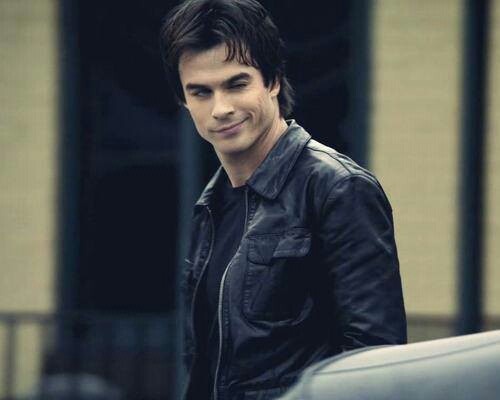
Damon from The Vampire Diaries is the classic example of the many different types of smirk. No one pulls off a smirk like Damon, and he does it in so many different ways or moods.
Here are some of the best examples I could gather for you of his different smirking styles…
Examples of Damon smirking in The Vampire Diaries
Cunning or evil smirk – like in the first few seasons:
You can’t tell what he’s thinking or planning – but the key is that his eyes are not smiling.
Playful or teasing smirk – Damon gives this type of smirk almost every time he interacts with Bonnie – once they become besties, that is.
Arrogant smirk – whenever Damon thinks he’s winning, or he’s managed to fool someone, you see this type of smirk… This screenshot is not the best because he’s talking, but you get the idea:
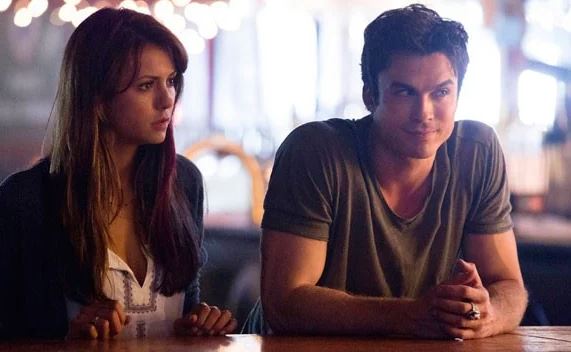
Loving smile that is sometimes a smirk – you could call Damon’s one-sided smile a smirk sometimes when he’s with the main character, Elena, because he’s hiding a secret from her. (Secret is: he loooooves her. Spoilers for 2011, I guess?)
This is the smile of someone who is proud of themselves for eliciting a reaction from their lover, or proud of their lover.
This versatility in expressions is just one of the many reasons why everyone loved to watch Ian Somerhalder play him in the 2000s and 2010s.
Damon was also a really well-rounded character, but I think I’ve fangirled enough for one post!
Incorrect times to say “smirk”
Sometimes a smile isn’t a smirk – it’s just a smile.
In a lot of novels I see these days, the male love interest is often smirking at the female hero – but not intentionally – he’s actually just smiling.
He’s not teasing her…
He doesn’t have bad intentions to pull one over on her…
He isn’t proudly smirking because he’s elicited a reaction from her…
He’s just smiling – so to say he’s “smirking” feels really jarring and just plain weird.
It makes the reader go, “Wait, what am I missing here? I thought this dude was in love with her?”
Pop quiz: Do you think Damon is smirking or smiling in this picture?
Y’all know I simply cannot let November pass by without attempting the #nanowrimo hullaballo. (NaNoWriMo = National Novel Writing Month. It’s a lot of fun trying to write a full novel in one month!)
And whether you’re a plotter or a pantser, you know playing music that matches the themes you’re writing can really get you in the mood … for prose. 😉
So if you, like me, are writing a fantasy novel this month, here’s some musical inspiration to listen to while you write…
Image credit: Fourth Wing fan art 🎨 by @jrtart_ (Jesslyn) as featured on X (Twitter)
(Oh, and there’s a new edition of book 1 with a new cover to match. 😎 If you already have the Kindle of book 1, you can download the new edition free.)
You’ll love Fire Warriors on the Mountain if you’ve ever gone through tough times in life, you love a good island holiday, and you love a well-muscled love interest… 😉🌴🌴🤿🍉🥭🌶
You don’t neeeeed to have read Fire Dancers in the Sand to understand Fire Warriors, but the paperback for Fire Dancers in the Sand is currently just $5 on Amazon — so why not buy both at once? 😉📖📗📘📚
And follow me if you’d like to hear first when Book 3 launches… Fire Gods in the Ice, aiming for a release in the next year! 📃📒⏰✅
The Oxford comma is when you put a comma before “and” or “or” or another conjunction, at the end of a list of three or more items.
e.g. I like to read books, write books, and talk about books.
e.g. I like to read, write, but not talk about books.
The Oxford comma is a special comma guidelines used by a lot of style guides here in Australia, including the style guides at QSuper and Canstar, which I wrote during my time there.
Why use the Oxford comma?
There are three reasons to use the Oxford comma:
Makes a sentence clearer if there are multiple “and”s.
Without the comma, the end of the sentence can become the observer/receiver of the sentence (incorrectly).
Without the comma, the end of the sentence can become a descriptive clause (incorrectly).
Image source: SayingImages.com
Using commas to make sentences easier to read
First, the Oxford comma is helpful because it separates the last item in the list from the second-last item, making the sentence clearer.
Here’s a comparison of using the Oxford comma vs not using it:
e.g. With the comma: QSuper now offers multiple different types of insurance, including death, total and permanent disability, and income protection cover.
e.g. Without the comma – less clear: QSuper now offers multiple different types of insurance, including death, total and permanent disability and income protection cover.
Using commas to keep sentences correct
Secondly, the Oxford comma is helpful because without the last comma, it can seem as if the end two items of the list are the observer or receiver of your sentence. An example can explain this better than I can:
e.g. With the comma: I love my pets, family, and friends.
e.g. Without the comma: I love my pets, family and friends. >>> You are actually telling your family and friends that you love your pets, i.e. “Family and friends, I love my pets.”
Thirdly, the Oxford comma is helpful because without it, it can seem as if the end two items of a list are describing the rest of the sentence (“a descriptive clause”, if you want to get nerdy).
e.g. With the comma: I love my pets, Mum, and Dad.
e.g. Without the comma: I love my pets, Mum and Dad. >>> I am saying that Mum and Dad are my pets, and they would really not be happy about that.
Why is it called the Oxford comma?
Now let’s get really nerdy! The “Oxford” comma is called by this name because it was traditionally used by the Oxford University Press editors and printers.
They also called it the “serial comma” because it’s used for lists, but since “serial” makes me think of serial killers, I don’t use that name.
Now, the Oxford Style Guide themselves dropped the “requirement” for an Oxford comma in all cases in 2011, and made it a guideline instead.
But there are still got many good reasons to use the Oxford comma, so I’m happy it’s sticking around.
As far as I’m concerned, there are three scenarios: using the Oxford comma correctly, not using the Oxford comma and being wrong.
(Joke. But seriously, it physically hurt me not to put the comma there.)
(C) TJ Withers-Ryan, 2022. Please credit me when you repost or share. Thanks!
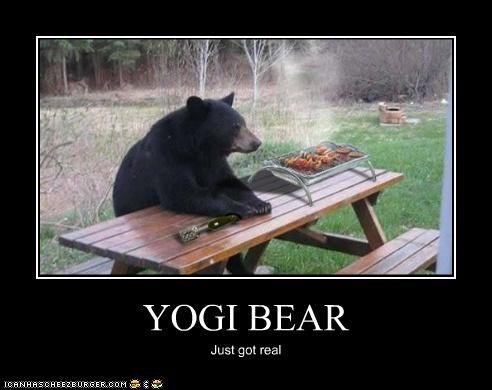
This is probably the most hilarious post we’ll ever see on this page – and I’m keeping it PG on purpose so just… What can I say?
Think clean.
Image source: icanhascheezburger.com
Is it ‘bare with me’ or ‘bear with me’?
“bare” = not clothed, simple, uncovered.
e.g. They bared their soul with me by talking about their childhood, and I appreciate it.
e.g. They got bare with me, and we went skinny dipping.
So if we were to say “bare with me”, just make really, really sure that you actually want something to be undressed or uncovered…
“to bear” = to be patient / to hold up under pressure / to hold on during adversity.
e.g. We’re asking you to bear with us while we make our decision.
e.g. I can’t bear the humiliation.
So if we were to say “bear with me”, we would be asking someone to be patient with us while we talk something through with them, take a while to find some information for them, ask them more questions, etc.
(C) TJ Withers-Ryan, 2022. Please credit me when you share or repost, thanks!
I saw the most awesome documentary last week about healers all over the world. Within 2 minutes, I had tears leaking out because of what a good story a healing makes. Before, broken and hurting and helpless to do anything about it; afterwards, healed and whole and grateful to God. The best part is that the story is true.
This post – and my free ebook you can download below – is for the life writers of true stories who want some “back to basics” reminders for how to get your story on paper. Whether you’re writing memoir, autobiography, or biography, a few simple principles hold true. And most of them are fairly easy to spot in your own writing, so you can save a lot of time by referring back to these principles as you write.
Memoirs and biographies need to feel real for the reader. They need real drama.
Yes, it’s your story, but it’s still a story. Your story – or the story of the person whose life you’re chronicling – has already captured your attention and imagination and heart. It needs to be written in a way that also captures the reader’s attention and their heart.
Here’s my 8 basic tips – one for every day of the week, plus an extra.
I have been waiting and waiting for this book to be released! It was still in the editing process while I was working in marketing this year, so I didn’t get to work on it, but I got to read the final manuscript and OH MY GOODNESS.
This one was simply amazing! I’m not a crier but I cried for joy over this happy ending.
Here’s a quick peek inside the book and how/why Kat Apel wrote this uplifting story.
On Track by Kathryn Apel: A heart-warming children’s book about sports, sibling rivalry and the courage to be yourself.









 TJ Withers