Writing about people you know – treading the fine line

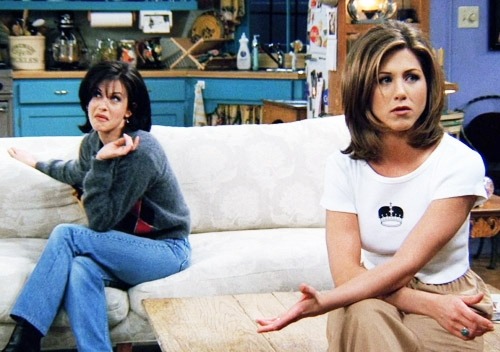
Friends Season 1 Monica and Rachel Image source: 'FRIENDS' TV show via Hello Giggles

Friends Season 1 Monica and Rachel
Image source: ‘FRIENDS’ TV show via Hello Giggles

Rachel:                Oh, and I’m sorry I said you were a cow in high school.

Monica:               That’s okay. I was a cow.

Rachel:                Yes, but I’m still sorry I said it.

– Friends, Season 1, Episode 17 “The One With Two Parts”

Disclaimer:

This post offers a broad overview of defamation law but is not intended to be read as legal advice. This is a complex legal issue that should not be taken lightly. If you have concerns about your own writing with regards to libel liability, you should seek independent legal advice.

I’ve had authors who were worried about writing about the people in their family. Memoirs are always a bit tricky like that. It’s your story, but it’s also the story of how your life was affected by them.

It’s more complicated than just which details to include and which to leave out. It becomes a question of, do you even want to represent them as themselves, or would you rather change their name, age, occupation, everything, in fact, apart from what they did for you or how they impacted on your life?

It doesn’t have to be for negative reasons. Some people really don’t want the credit. One of the writers I knew in uni wrote their own stories as novels because they didn’t want their subject to be embarrassed by how the writer looked up to them as their role model, their hero.

At the Brisbane Writers Festival, I heard a great talk by Sian Prior about her memoir, ‘Shy’, which chronicles her struggles with social anxiety. She wrote about living in the shadow of an ex of hers who was very famous. In her case, she said she didn’t need to check with him before writing about him. They had already parted ways, but more importantly, he had already written about their relationship in his own book! He’d already set the rules by not asking her before he wrote about her.

Her approach, knowing that she would uncover things about their relationship that people didn’t know, was to be rigorous about being honest. By contrast, she did check with her family about her portrayal of each of them, and they were all surprised but happy with her including them in her story.

Lots of people worry about defamation law – specifically, the written form, ‘libel’. Here’s the raw basics:

Continue reading

Short stories to wrestle with

Summer in the park in London. Image source: IWOM We know no limits

Image source: IWOM We know no limits (London)

“The formula seems to lie solely in the aching urge of the writer to convey something he feels important to the reader. If the writer has that urge, he may sometimes but by no means always find the way to do it.” – John Steinbeck


Juni Desiree (Awrestlingwriter) is a prolific blogger I happily stumbled into this year. This week she kindly shared with us the link to one of her short stories, ‘Summer’, published in The Australia Times.

I loved it! Laughed. Nearly cried. Finished it feeling warm and fuzzy and re-balanced. Which is just what a short story should do.

And it is seriously short (700 words), which makes it a solid example of one particular structure for short fiction – the “whole narrative” told briefly – for young writers who are just starting out to follow.

Last month I was editing a short story for someone, and this month I’ll be writing a book review of one (I’ll post the link when it’s up), and so I’ve spent a lot of time thinking about the various purposes of short stories in general, and whether or not these and other stories have achieved those purposes.

Continue reading

Semantic satiation: Don’t kill your reader

Recently I was editing a novel where the author had used the “text method” of writing. I don’t mean that they included texts in their story. I mean that they wrote “dont” instead of “don’t”.

So I’ve just spent an hour straight hitting “Ctrl+F” (Find and Replace) to fix the variations of “dont” that have appeared throughout the story. I’ve literally looked at the same one word over and over, to the point where the correct word, “don’t”, doesn’t even seem like a real word anymore.

Dont.

Dont’.

Donnt.

Donut…? (Mmmmm, donuts… *immediately breaks diet*)

I was telling a well-educated friend of mine about it and he told me that this is called semantic satiation. (Not to be confused with Semantic Saturation, the progressive rock metal band.)

Semantic satiation is the proper term for when you’ve been looking at a word for so long that it loses its meaning to you and just looks weird. It happens because the neurons that are responsible for that word are temporarily worn out from overuse. But what can I do about it?

Continue reading

Being a promiscuous reader: Brisbane Writers Festival

Stack of books with spines open

Image source: Resource Freak

“I’m a very promiscuous reader; I believe we should take all kinds of genres to bed with us.” ― Lauren Beukes

Lauren Beukes

Lauren Beukes
(pronounced something like “Beeyohkes”)
Image source: The Audio Bookstore

Today I went to my first Brisbane Writers Festival session and thoroughly enjoyed it!  Lauren Beukes, South African author of science fiction and crime noir novels, says we should read everything we can get our hands on, no matter what genre we write for ourselves.  Here’s why…

Continue reading

Go where you find inspiration: Part 1: Intriguing characters found in portrait paintings

Go where you find inspiration, and go there often


I’m in Adelaide this week, and while I’ll save my excessive raving about how beautiful it is for later, I have to tell you about where I went yesterday.

I went to the South Australian Museum and the Art Gallery.

Sounds a little boring, maybe, if you hate animals or history or art. But I have to tell you, I found myself absolutely, 100% inspired there – the most inspired, in fact, that I’ve felt in months.

This first post will be about the South Australian Art Gallery and the beautiful portraits I admired there; my second post will illuminate the incredible animals that I discovered at the Museum.

Ever just see someone on the street and their face just tells you a story that you want to write instantly? They’re such a clear picture of a character that you can imagine. Maybe they look like a character you’ve already begun writing, or maybe they’re one that you’ve never considered before. You can almost hear their voice in dialogue before they speak.

That’s what the art gallery was like for me. I wandered the halls snapping shots of nearly every portrait – faces old and young, faces wise and bewildered, faces engaged and closed-off.

Because of the age of the paintings, and the gorgeous fashions on display, I couldn’t help myself – suddenly I wanted to write a history novel again! Someone asked me just last week to look over their historical romance novel (fun!), so it’s been on my mind. I also wished I could have taken my dress-maker friend through the halls of the gallery, just to gaze at the fabrics and dream of ways to make modern dresses based on these opulent draperies.

Here are some of the faces that inspired me…

Continue reading

The power of the spoken word

Reading Aloud - from Douglas School PTO

Reading Aloud – from Douglas School PTO

The one piece of writing advice that’s been most useful to me over the years is very simple: Read it aloud first.

Whether it’s dialogue or description in a short story or novel, arguments in an essay, or jokes at the start of a speech, I’ve picked up many errors just by reading my own work aloud as I’m drafting it.  There’s no way to know if your dialogue is forced or unnatural unless you’re literally speaking out what your characters would be.  If your 5-year-old’s dialogue isn’t right, you’ll hear immediately if it sounds like a 12-year-old when you have to say it.

I can’t imagine a children’s book being written – to be read aloud by parents to kids, or vice versa – without being read aloud first.  Oh, the delight of alliteration, of rhyme!  I may wax lyrical.

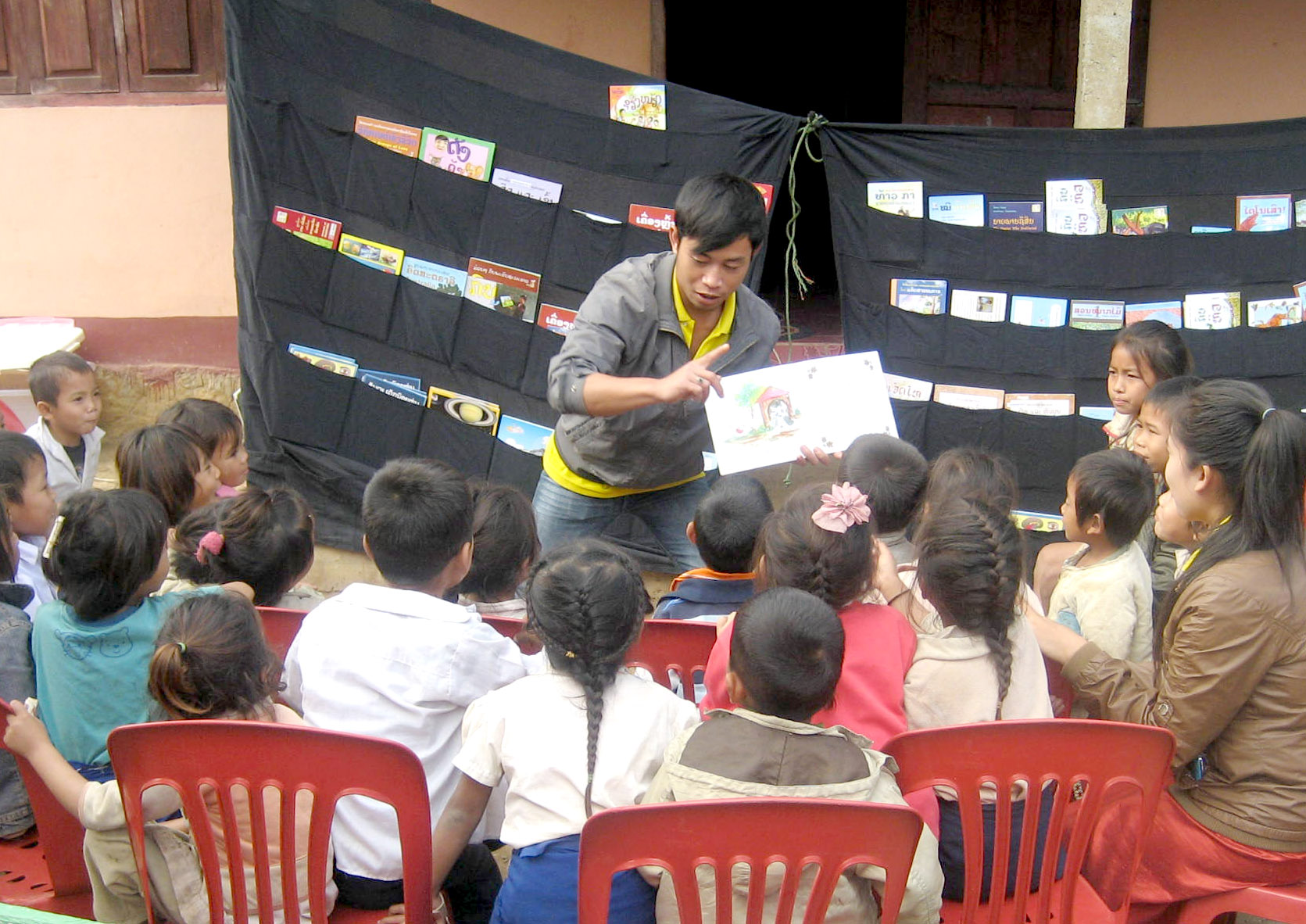
Addy Vannasy reads to village children on Discovery Day in Laos

Volunteer Addy Vannasy reads to village children on Discovery Day in Laos

Research has shown that young kids who don’t learn to “sound it out” find it harder to learn to read (sob), to master our complicated English spelling, and to create coherent sentences themselves when reading or speaking.  (See Blevins, W. Phonemic Awareness Activities for Early Reading Success for more detail.)

I will always remember one of my primary school principals, Mr O’Brien, reading out some of Shakespeare’s G-rated sonnets and complaining that no one used the verb “impignorate” anymore (no, I don’t know which one).   I think this “out loud” advice first came to my ears from him, in fact, this poetic principal who roamed the halls teaching poetry and theatre classes instead of filling in his endless paperwork.  I don’t know how efficient it was, but he inspired hundreds of Tamagotchi-obsessed children to read difficult and beautiful poetry – no mean feat.

These days, when I’m proofreading, I often mutter the words under my breath.  It must look and sound weird, but I usually work from home, so nobody sees it anyway.  Reading aloud as I’m proofreading makes sure that I don’t miss anything.  Your brain is happy to fill in the gaps if you’ve [left] out a word, or if you’ve misspelled something improtant [sic], or if there’s no full-stop.  (I simply cannot force myself to do that, even just for an example, sorry.)  But reading aloud makes your brain sloooow down to the pace of your mouth.  And your mouth won’t fill in gaps.  Sometimes it even trips over words, forcing you to reconsider your use of a certain adjective.

On a deeper note, when I think about the most powerful conversations in my life – the most encouraging, and the most damaging – they have all been literal, spoken conversations.  I remember them word for word.  And that says a lot, because I’m a letter-writer, preferring to hand someone my written words than work up the courage to say things out loud.

The “out loud” principle is true in our faith practices, as well.  I was at a workshop this week about conquering sin for women, and one of the most powerful things we talked about – among many helpful tips – was declaring God’s truths (scripture) out loud, and refuting the power of sin out loud.

The spiritual battle we face is real, and odd as it sounds, the devil who’s trying to tempt us doesn’t know what we’re thinking; he can only see our actions in giving in to temptation or hear us when we proclaim Jesus’ victory over ourselves and resist temptation.  James 4:7 says, “Submit yourselves, then, to God. Resist the devil, and he will flee from you.”

Drafting your novel?  Start drafting it out loud.  Thinking about telling someone they did an awesome job?  Don’t shoot them that five second email; have that five second conversation face-to-face if you can.  You’ll enjoy it more, and so will they.


Did I read this blog post aloud before I posted it?  You betcha.  And I definitely tripped over “impignorate”, but you can bet it’s staying!


This post was written by TJ Withers-Ryan © 2014. Reblogging is highly encouraged as long as you credit me as the author.

NaNoWriMo

Are you running the NaNoWriMo race with me this year? Let me know by writing a comment! We can cheer each other on to victory!

‘Tis my first year, and I’m pretty excited!

I’m using this as an extrinsic force motivating me to just get my novel finished already!


Remember what I talked about in my last post, the one about Scheherazade and the king of Persia? Sometimes you need a gun to your head to just get things done, right? So this should be great.


P.S. I made it!

2013 Winner of NaNoWriMo!

2013 Winner of NaNoWriMo!


This post was written by TJ Withers-Ryan © 2013. Reblogging is highly encouraged as long as you credit me as the author.